Texas education officials are poised to mandate Bible stories as required reading in public schools statewide, igniting a fierce battle over whether the move represents essential cultural literacy or government-sponsored religious indoctrination.
Story Snapshot
- Texas State Board of Education reviewing first-in-the-nation mandatory reading list including at least seven Bible stories for K-12 students
- Proposal would require stories like “Jonah and the Whale” and “The Prodigal Son” alongside classic literature starting in 2030 school year
- Board delayed vote until April 2026 after heated public debate over religious diversity and First Amendment concerns
- Critics argue the curriculum favors Christianity while lacking equivalent texts from other major world religions
Statewide Canon Breaks New Ground
The Texas Education Agency developed a comprehensive literary canon featuring over 300 required works spanning kindergarten through 12th grade, marking an unprecedented state-level approach to standardized reading lists. The proposal embeds Bible excerpts throughout grade levels, including “The Golden Rule” for kindergarteners, “David and Goliath” for first graders, and “The Road to Damascus” for third graders. Unlike the 2024 Bluebonnet Learning curriculum that offered optional Bible-themed lessons, this plan would mandate uniform readings across all Texas public schools. The distinction matters because local districts overwhelmingly rejected the voluntary program, but a statewide requirement would eliminate that choice entirely.
Cultural Knowledge or Religious Favoritism
Supporters frame biblical inclusion as recognizing foundational influences on Western literature and American culture. Republican board member Brandon Hall emphasized the Bible’s “huge impact” on historical and literary development, while Deputy Commissioner Shannon Trejo defended the selections as building shared foundational knowledge necessary for understanding literary allusions in works from Shakespeare to contemporary fiction. Attorney General Ken Paxton provided legal cover in a 2025 opinion affirming schools can include religious content if presented non-devotionally. Yet opponents point to glaring imbalances: while the list incorporates multiple Christian texts drawn from the King James Version, it includes virtually no equivalent sacred writings from Islam, Judaism beyond Hebrew Bible excerpts, Hinduism, or other major faiths represented in Texas’ diverse student population.
Parents and Educators Push Back
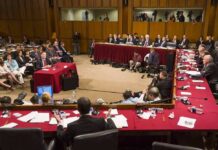
The January 2026 State Board of Education meeting erupted in confrontations as parents, teachers, and advocacy groups clashed over the proposal’s implications. Parent Kevin Jackson articulated widespread concerns among non-Christian families, insisting religious readings belong in houses of worship rather than mandatory public school curricula. Dr. Duncan Klussmann from the University of Houston highlighted representation problems extending beyond religion, noting the list’s heavy emphasis on older works at the expense of racial and gender diversity. The board’s 13-1 vote to delay final approval until April signals unease even among conservative members who otherwise champion traditional curricula, suggesting revisions may address some diversity gaps while retaining core biblical content.
National Precedent at Stake
Texas’ decision carries implications far beyond state borders as the second-largest education market in America. If implemented by the 2030 school year, the mandatory biblical canon would establish a template other conservative-led states might replicate, fundamentally reshaping how public schools approach religious content nationwide. Legal challenges appear inevitable, with civil liberties organizations likely to argue the curriculum violates Establishment Clause prohibitions against government promotion of religion. For families across the political spectrum increasingly frustrated with educational elites imposing one-size-fits-all mandates, the controversy reinforces concerns that bureaucrats in Austin prioritize ideological agendas over local control and parental rights. Whether framed as preserving cultural heritage or breaching church-state separation, the outcome will test constitutional boundaries and public tolerance for government dictating children’s exposure to religious texts.
April Decision Looms
Board members face mounting pressure from competing constituencies as the April 2026 vote approaches. One member has already circulated a shortened alternative list that retains many Bible stories while potentially adding diverse religious or philosophical texts to address balance concerns. The revisions under consideration will determine whether Texas charts a legally defensible course respecting religious pluralism or invites protracted litigation that could delay implementation indefinitely. For the estimated 40 percent of Texas students from Hispanic, Latino, and other communities representing non-Christian traditions, the stakes involve more than literary education—they touch fundamental questions about whose values public institutions validate and whose children truly belong in the American classroom.
Sources:
Texas could require Bible reading in public schools – Texas Public Radio
Is the Bible Part of the U.S. Literary Canon? Texas Reading List Sparks Debate – Education Week
Most Texas Districts Said No to Bible Lessons. The State Could Require Them Anyway – The 74