Three Nobel Prizes redrew the map of what we can see, shape, and make: ghosts in ice, thoughts lit by lasers, and chemistry’s mirror trick finally tamed.
At a Glance
- Medicine honored optogenetics, a light switch for brain circuits that control behavior.
- Physics recognized the IceCube telescope for finding cosmic neutrinos in Antarctic ice.
- Chemistry rewarded breakthroughs that make one mirror-image molecule win over the other.
- Each prize shows science turning hard problems into working tools with real-world payoff.
Light as a switch for the living brain
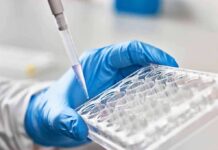
The Nobel Assembly awarded the 2026 Prize in Physiology or Medicine to Karl Deisseroth, Peter Hegemann, and Georg Nagel for optogenetics, which uses light-gated channels to control specific neurons in living brains. The method starts by putting a light-sensitive protein into a chosen set of cells. A thin fiber delivers blue or yellow light. Neurons fire on command, and behavior shifts in real time. This turned brain science from watching storms to steering them with a fingertip beam.
Clinicians see paths to new therapies. Lab teams now map fear, hunger, and movement with precise on and off switches. The same tools test how circuits go wrong in depression, Parkinson’s disease, and addiction. This is not mind reading. It is precise cause-and-effect. When one circuit flips, a behavior changes. The power lies in linking a symptom to a wire you can find and, one day, fix. That logic matches a core conservative value: target the cause, not the symptom.
Ghost particles traced under the South Pole
The Royal Swedish Academy of Sciences awarded the 2026 Prize in Physics to Francis Halzen for decisive work on the IceCube Neutrino Observatory and the discovery of high-energy neutrinos from deep space. IceCube is a cubic kilometer of sensors buried in Antarctic ice. It listens for tiny blue flashes when a rare neutrino hits an atom. These “ghost particles” cross galaxies and carry straight-line maps back to violent events. The prize marks the birth of neutrino astronomy as a working field.
IceCube’s reach changes the cosmic playbook. Light can be blocked or bent. Charged particles spiral in magnetic fields. Neutrinos fly through matter and point back to the source. That gives a clean read on black holes, star explosions, and jets that light cannot fully trace. The value is not abstract. Better models of cosmic engines help protect satellites, power grids, and navigation that the modern economy needs. The signal from the ice now feeds a practical map for risk and discovery.
Winning the mirror game in chemistry
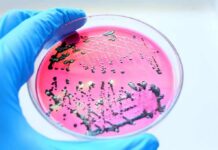
The 2026 Prize in Chemistry went to Henri B. Kagan and Kenso Soai for breakthroughs that solve a stubborn mirror-image problem in molecules, through non-linear effects and autocatalysis in asymmetric synthesis. Many molecules come in left and right forms. One may heal; the other can harm. Drug makers need methods that pick one hand fast and clean. Kagan showed how weak biases can get amplified in catalysts. Soai revealed a self-boosting reaction where the desired hand makes more of itself.
These ideas anchor modern routes to single-handed drugs, flavors, and materials. They also speak to a deeper riddle: why life on Earth chose one hand for amino acids and the other for sugars. The science here is elegant but also bluntly useful. Cleaner “handed” routes cut waste, lower costs, and speed scale-up. That leans into common-sense goals: do more with less, reduce errors, and deliver safer products to market without years of costly trial-and-error.
The three-person rule meets the teamwork era
Each prize highlights the power of focused tools built by large teams over many years. Optogenetics rose from cross-border work in microbiology, genetics, and engineering. IceCube depends on a global collaboration in brutal conditions. Asymmetric synthesis stands on decades of shared methods and catalysts. The Nobel charter limits each award to three people. That sparks repeat debates in a world where big science is normal and credit is spread across many hands.
OPTOGENETICS: WHAT IF LIGHT BECOMES ONE OF THE MOST PRECISE MEDICINES WE HAVE EVER DEVELOPED?
Imagine treating a disease not by flooding the body with medication, but by activating selected cells with light.
This is no longer purely science fiction.
The 2026 Nobel Prize in… pic.twitter.com/xvvagD1mNR
— Dr. Alex Ehsan, MD, PhD (@DrAlexEhsan) October 9, 2026
The credit cap will not change soon, but the incentives are clear. A Nobel can boost labs, funders, and students who bet on patient, tool-driven work. It also leaves others in the shadows. That tension does not weaken these wins. It explains why names on the stage do not match the long author lists behind them. The best answer is plain: keep building tools that solve real problems, keep the records clean, and let the work, not the headlines, set the legacy.
Sources:
sciencenews.org, nobelprize.org, nytimes.com, hindustantimes.com
© totalconservative.com 2026. All rights reserved.