
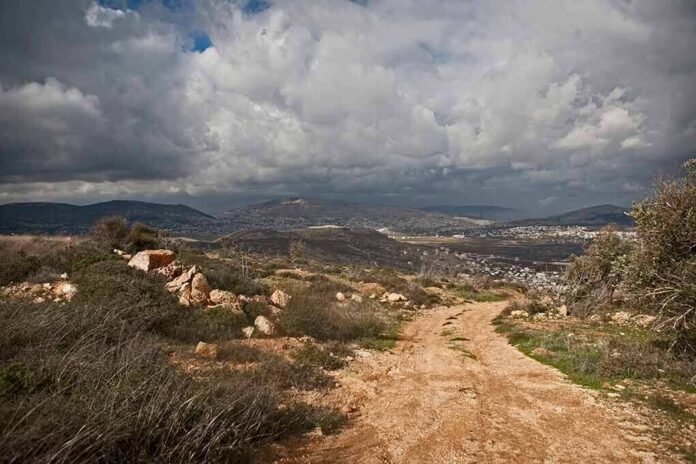
Eight villagers vanished from a remote Mexican hamlet, and survivors say armed men took them to seize the town’s forests.
Story Snapshot
- Armed men abducted eight villagers from El Balcón; seven returned, one remains missing.
- Survivors say kidnappers aimed to control local forests and territory.
- Mexico’s army said it found six missing residents after an intelligence operation.
- Similar attacks on farmers show a wider pattern of coercion beyond drug trafficking.
What Happened in El Balcón
Associated Press reporting says dozens of armed men stormed El Balcón, Guerrero, on September 24, and abducted eight villagers. The mountain community holds about 750 residents and sits six hours from the nearest town by rugged roads. Seven abductees returned after more than three weeks. One farmer is still missing. Survivors told reporters their captors wanted the community’s forests and nearby territory. The Mexican army later announced it had located six missing residents through intelligence work.
The account matches a larger security problem in rural Mexico. Many remote towns have little reliable police presence. Bad roads, long distances, and fear slow help. This creates space for criminal groups to push people around and collect payments. Survivors described beatings, fear, and pressure. They said armed men used the kidnappings to make the town submit. That kind of coercion targets not only people, but also the land, the timber, and future earnings the land can produce.
Why Farmers Are Targeted
Over the past decade, criminal groups have widened their money streams. They no longer rely only on drugs. They often extort local businesses and farms. Reporting on the killing of community defender Hipólito Mora stated that the group known as the Viagras, also called United Cartels, kidnapped, killed, and extorted farmers and businesses. The goal is stable income and local control. These acts build influence that can outlast a single crime scene or police patrol.
National and academic research shows how cartels often operate beside government offices, not just in places the state has left. They may tax trade, set rules, and settle disputes while city halls still function. This is not formal law, but it exerts real force on daily life. It also explains why kidnap threats can shift how a town votes, farms, hires guards, or pays fees. Control can layer over official institutions and bend them to criminal needs.
A Pattern Beyond One Village
A separate case in the State of Mexico in 2023 showed how fast violence against farmers can escalate. After residents in Texcaltitlán killed 10 suspected gunmen during a clash over extortion, authorities said a cartel kidnapped 14 people, including four children. Officials described the abductions as retaliation for the uprising. The episode showed how a community’s pushback can bring new cycles of coercion, with families caught in the middle.
Earlier reporting from Morelos described kidnappings of teachers, shopkeepers, and prosperous farmers as a cash stream for a weakened cartel branch. When leaders are hit, local cells sometimes turn harder to ransom, local “taxes,” and land control to keep cash flowing. Farmers become prime targets because they hold land, tools, and harvests that can be taxed, stolen, or used to hide armed groups. These crimes also spread fear that keeps people silent.
How Territorial Pressure Works
Survivors from El Balcón said their captors wanted timber and control of forest routes. Trees are assets. So are roads that move logs. When armed groups set the price and take a cut, they gain leverage over families and town councils. Experts note that cartels can rule alongside the state by setting “fees,” punishing defiance, and deciding who can work. That is why a kidnapping does more than take a person. It sends a message that the land and its income must obey.
A brief summary of the latest NABU released video, which is, unsurprisingly, just crazy as hell. Then again, maybe not, it's Ukraine we are talking about here.
NABU and SAP are about to drop a bomb that reveals the absolute clusterfuck that Zelensky's Ukraine is.
The… pic.twitter.com/g5l7NR72TW
— Olga Bazova (@OlgaBazova) November 6, 2026
This pattern raises shared concerns for Americans across party lines. People see a government, in Mexico and often at our own border, that struggles to protect basic rights. They see armed groups taxing food, fuel, and timber while families flee or pay. They worry that corruption and fear let the strong prey on the weak. The El Balcón case shows how far criminal power can reach when the state is distant and when honest work, like farming, becomes a target instead of a shield.
Sources:
apnews.com, nbcnews.com, socialnews.xyz, hoymx.mx, cambridge.org
© totalconservative.com 2026. All rights reserved.