A new call for criminal charges against George Soros raises questions on the politicization of justice.
Story Snapshot
- Trump demands criminal charges against George Soros, citing unproven allegations.
- No formal legal actions have been taken despite the accusations.
- Soros remains a key target in political narratives and misinformation.
- The lack of evidence underscores concerns over political discourse.
Trump’s Accusations Against Soros
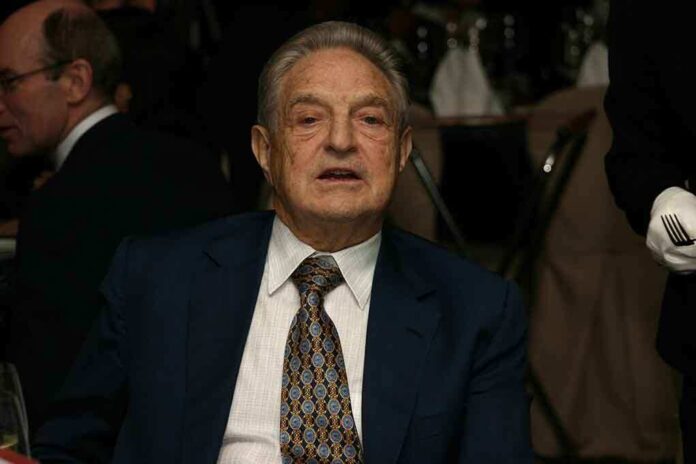
In April 2024, former President Donald Trump issued a public statement demanding criminal charges against billionaire philanthropist George Soros and his son, Alexander. Trump accused Soros of being responsible for “violent protests” across the United States, despite the absence of credible evidence supporting these claims. This statement is part of a recurring pattern in U.S. politics where Soros is often depicted as a behind-the-scenes orchestrator of left-wing activism, a view that resonates within certain conservative circles.
Soros has long been a focal point for conspiracy theories, particularly from right-wing media, who accuse him of funding protests and immigration without substantiation. These allegations have been consistently debunked by credible sources, yet they persist in the political discourse, illustrating the polarized environment where such narratives thrive. Trump’s demands echo a broader strategy of using high-profile figures as symbols to rally political support and delegitimize opponents.
The Influence of George Soros
George Soros, through his Open Society Foundations (OSF), has been a prominent figure in global philanthropy, supporting democracy, education, and civil society initiatives worldwide. Despite his contributions, Soros’s activities have drawn criticism and unfounded allegations, particularly from authoritarian regimes and right-wing groups. The Hungarian government’s legislative actions against Soros’s foundation, which forced OSF to relocate from Budapest to Berlin, highlight the contentious nature of his influence. Soros’s work, while controversial to some, is recognized by leading human rights organizations as essential to promoting justice and democracy.
Notably, the OSF has disbursed over $23 billion since 1993, funding numerous initiatives aimed at fostering open societies. Despite Trump’s accusations, there has been no formal investigation or legal proceedings initiated against Soros or his son, reinforcing the notion that these claims are more about political maneuvering than factual evidence.
Implications of Unfounded Allegations
The persistent targeting of George Soros highlights the challenges posed by misinformation and conspiracy theories in modern political discourse. These narratives not only polarize public opinion but also pose real threats to individuals and organizations. In the short term, the Soros family and OSF staff face increased security risks and harassment. Long-term, such unfounded allegations can erode trust in civil society organizations, normalize conspiracy theories, and undermine democratic norms.
The broader implications for philanthropy are significant. As charitable actions become politicized, the sector may face increased scrutiny and challenges, potentially deterring funding for progressive causes. Moreover, the media faces difficulties in countering misinformation, which can distort public perception and fuel divisive rhetoric. The continuing politicization of figures like Soros underscores the need for vigilance in safeguarding truth and democratic values.
Sources:
Open Society Foundations – Wikipedia
Our History – Open Society Foundations
Open Society Foundations and George Soros – Newsroom
Who We Are – Open Society Foundations