A Trump-pardoned Capitol rioter is charged with plotting the assassination of House Minority Leader Hakeem Jeffries, reigniting debates over presidential clemency and political violence.
Story Highlights
- Christopher Moynihan, a pardoned January 6 participant, charged with threatening Jeffries.
- The arrest raises questions about the potential for recidivism among pardoned individuals.
- Donald Trump previously pardoned Moynihan and other January 6 rioters early in 2025.
- Law enforcement is reviewing the case amidst rising threats against public officials.
Trump’s Blanket Pardon Sparks Controversy
In early 2025, President Donald Trump issued a blanket pardon to many January 6 defendants, including Christopher Moynihan. This decision was met with mixed reactions, with supporters praising the move as rectifying perceived political persecution. However, critics warned of potential recidivism and the message it sends about accountability for politically motivated violence. The arrest of Moynihan, accused of plotting to kill House Minority Leader Hakeem Jeffries, has intensified these debates, highlighting the complexities of clemency in cases of political violence.
Moynihan was arrested on October 19, 2025, by New York State Police, following a tip-off about his alleged intentions to assassinate Jeffries. The tipster cited concerns over Moynihan’s drug abuse and homicidal ideations. The charges against Moynihan include making a terroristic threat, to which he has pleaded not guilty. This incident underscores the challenges of balancing rehabilitation and public safety in the context of presidential pardons.
Political and Security Implications
Hakeem Jeffries, the alleged target, has been vocal in condemning the pardons, linking them to increased threats against lawmakers. His stance reflects broader concerns about the safety of elected officials, as Capitol Police report a surge in threat assessments, projecting around 14,000 cases in 2025 alone. This rise in threats is indicative of the heightened political polarization and the normalization of violent rhetoric in recent years.
Speaker Mike Johnson’s response to the incident focused on condemning violence but deflected questions about the implications of Trump’s pardons. Instead, he highlighted perceived violence from the political left, pointing to a broader trend of partisan narratives overshadowing bipartisan condemnation of political violence. This reflects ongoing tensions between the major political parties over accountability for January 6 and the broader issue of political violence.
The Broader Context of Political Violence
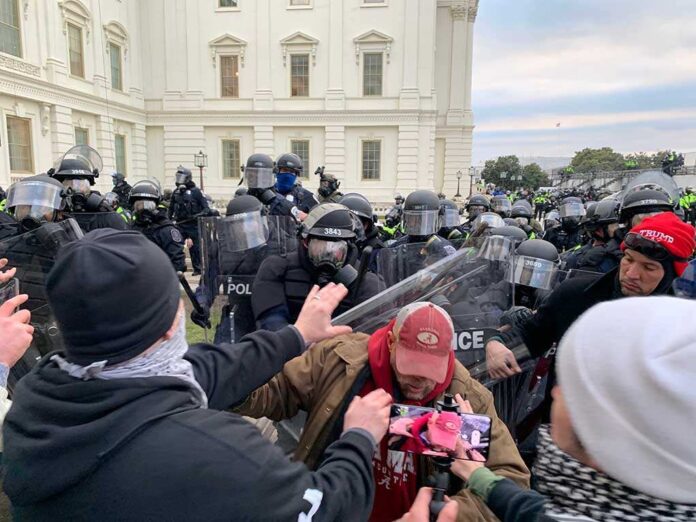
The January 6, 2021, Capitol riot remains a significant event in American history, with ongoing repercussions in the legal and political arenas. The riot resulted in numerous arrests and convictions, becoming a focal point of national discourse. Moynihan’s case is unique in that it involves a pardoned individual, previously convicted of a politically motivated crime, now accused of a direct threat against a congressional leader. This incident highlights the intersection of executive power, legislative security, and law enforcement priorities.
As the investigation into Moynihan’s actions continues, the incident is likely to fuel ongoing debates over the limitations of the pardon process, especially concerning politically motivated crimes. The implications of this case may lead to calls for reform in how pardons are granted and the role of clemency in political violence cases.
Sources:
Pardoned Jan. 6 Rioter Charged with Plotting Jeffries’ Assassination