
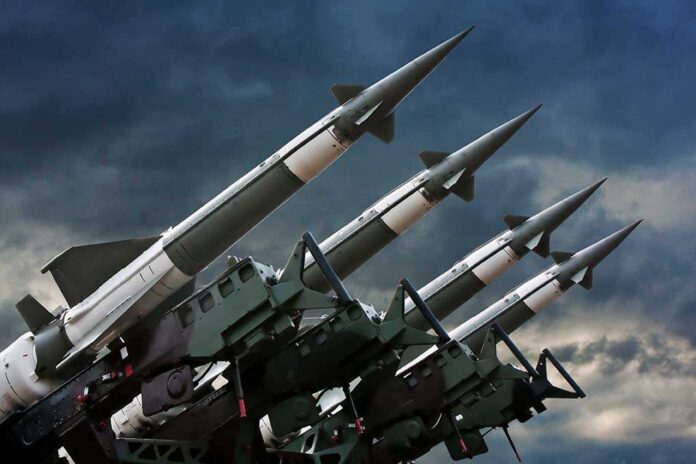
The Pentagon’s unprecedented missile production surge exposes how years of leftist defense neglect and globalist distractions have left America vulnerable as China accelerates its military buildup.
Story Highlights
- The Pentagon is demanding U.S. missile makers double or quadruple output, citing depleted stockpiles and China’s growing threat.
- Decades of prioritizing foreign entanglements and “woke” agendas left U.S. manufacturing capacity dangerously low.
- Industry leaders warn the surge may be unrealistic without firm funding and government commitment.
- America’s ability to deter adversaries and protect allies now hangs in the balance amid supply chain and labor woes.
Pentagon Sounds Alarm Over Missile Shortages and China’s Rapid Military Rise
In June 2025, the Pentagon convened top American defense contractors, urging them to boost production of a dozen critical missile systems by as much as fourfold within two years. The urgency, officials said, is driven by China’s accelerated military buildup and the dangerous depletion of U.S. missile stockpiles after years of supplying Ukraine and Israel. The Army’s recent $10 billion contract with Lockheed Martin for some 2,000 Patriot PAC-3 missiles highlights the scale and seriousness of the effort. For many conservatives, this scramble exposes the high cost of past policies that put global alliances and political correctness above core U.S. security.
Defense industry leaders have voiced skepticism about the Pentagon’s ambitious targets, arguing that years of underinvestment, regulatory red tape, and Biden-era distractions have left American manufacturing capacity stretched thin. While the Pentagon now seeks to double or even quadruple output of key missiles, contractors like Lockheed Martin and Raytheon say such targets are unrealistic without major, sustained funding and streamlined government support. The Munitions Acceleration Council—led by Deputy Secretary of War Stephen Feinberg—holds weekly meetings with industry, but progress remains slow as companies seek firm financial commitments before expanding factories or hiring new workers.
Trump Administration’s Response: Rebuilding American Strength
President Trump and Secretary of War Pete Hegseth are exploring extraordinary measures to accelerate missile production, making clear that restoring American military readiness is a top priority. Unlike the previous administration, which allowed stockpiles to dwindle in pursuit of globalist and “woke” distractions, Trump’s team has prioritized direct investment in the defense industrial base and cut through bureaucratic barriers. The administration’s goal is to ensure the U.S. is fully prepared to deter any aggression from China or other adversaries, while also reassuring allies who rely on American missile systems for their own security.
Despite these efforts, U.S. missile stockpiles remain critically low—Patriot reserves are reportedly at just 25% of required levels. This shortfall has alarmed military planners and conservative watchdogs alike, who see it as a direct consequence of years of fiscal mismanagement and misplaced priorities. The rush to replenish stockpiles and ramp up production comes at a time when global demand for advanced missile systems is surging, with U.S. allies scrambling to shore up their own defenses in the face of rising geopolitical tensions.
Industry Skepticism and the Limits of America’s Defense Base
While the Pentagon’s sense of urgency is clear, industry experts warn that production bottlenecks, labor shortages, and supply chain disruptions could undermine the ramp-up. Professor Shen Yi of Fudan University has called the Pentagon’s targets “unrealistic,” pointing to deep-rooted structural problems in American manufacturing. The lack of a European equivalent to the Patriot system further increases the burden on U.S. producers, who must now balance domestic needs with escalating foreign orders. Contractors are cautious about investing in new capacity without guarantees that the government will follow through with long-term funding, a hesitation born of past political flip-flops and budget uncertainties.
This crisis has reignited debate about the wisdom of previous “progressive” policies that prioritized social engineering and foreign aid over core defense capabilities. Many conservatives argue that the current scramble for missiles is the inevitable result of years of misplaced priorities—where securing the homeland took a back seat to virtue-signaling and global entanglements. The Trump administration’s push to rebuild America’s defense industrial base is seen by supporters as a necessary correction, one that puts national security and constitutional priorities first.
Long-Term Implications: America’s Security and the Conservative Mandate
If the Pentagon’s production surge succeeds, it could reshape the U.S. defense sector and restore America’s military advantage for years to come. Billions in new contracts may drive job growth and innovation, but only if government and industry align on funding and execution. Failure, on the other hand, risks leaving America and its allies dangerously exposed as adversaries like China grow bolder. For conservatives, this episode is a stark reminder of why strong national defense, robust manufacturing, and unwavering commitment to American interests must always come before fleeting political trends or government overreach.
Pentagon urges suppliers to massively boost missile production amid China war fears https://t.co/ROa71eg00Q
— BPR (@BIZPACReview) September 30, 2025
Ultimately, the missile production crisis is both a warning and a call to action: after years of drift, America must return to its founding principles—prioritizing security, individual liberty, and constitutional government. Only then can the U.S. maintain its leadership and protect its people in an increasingly dangerous world.
Sources:
Pentagon Urges Suppliers To Massively Boost Missile Production Amid China War Fears
U.S. to Increase Missile Production for Possible Conflict with China