
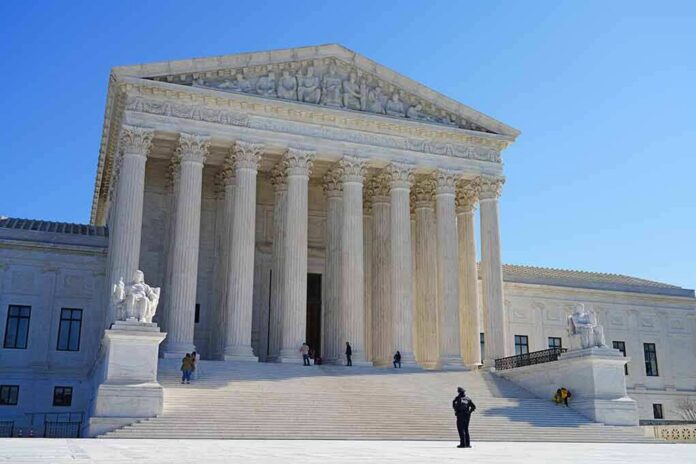
Indiana’s highest court is weighing whether a law once sold as protecting faith could force the state to allow abortions for those whose religions permit or require them.
Story Highlights
- Indiana Supreme Court heard arguments on a religious exemption to the state’s abortion ban.
- Plaintiffs argue Indiana’s Religious Freedom Restoration Act shields abortions required by sincere beliefs.
- Appeals court earlier affirmed an injunction protecting the plaintiffs while the case continues.
- Opponents warn this would create the first religious exception to a state abortion ban.
What The Justices Are Deciding
Indiana Supreme Court justices heard arguments on whether the state’s near-total abortion ban must include a religious exemption. The case asks if Indiana’s Religious Freedom Restoration Act protects people whose sincere beliefs allow or require abortion in certain cases. The state’s 2015 law says the government cannot burden religious exercise unless that is the least restrictive way to serve a compelling interest. The court will decide how that standard applies to abortion after the federal Dobbs ruling.
The legal question turns on the law’s test. The government must show a compelling interest and prove no less-restrictive option will work. Plaintiffs say a narrow exemption for those with documented, sincere religious beliefs is that less-restrictive option. The state says any such carveout would undercut enforcement and conflict with the ban’s purpose to protect fetal life. The justices pressed both sides to explain how courts should measure sincerity and burden under the statute.
How We Got Here: Procedural Path And Prior Rulings
An Indiana Court of Appeals panel earlier affirmed a challenge to the ban under the state’s religious freedom law and sent the case back for a narrower injunction. The appellate record recognized that Hoosier Jews for Choice could press claims on behalf of its members. Trial courts have granted injunctive relief that shields the named plaintiffs while the claims proceed. Those steps set the stage for review by the Indiana Supreme Court on the core legal issues.
The case grew out of a 2022 lawsuit filed after lawmakers passed Senate Enrolled Act 1. Plaintiffs include several anonymous women and Hoosier Jews for Choice. They argue the ban conflicts with their faith traditions, which in some circumstances favor the health and life of the pregnant person, or do not define life’s start at conception. They say the ban forces them to violate their beliefs. The state responds that existing exceptions already cover medical crises under the law.
The Competing Arguments On Religious Freedom
Plaintiffs rely on the text of Indiana’s Religious Freedom Restoration Act. They argue the ban “substantially burdens” their religious exercise by blocking abortions their beliefs permit or require. They claim the state can protect its interests while allowing a focused religious exemption. They point to prior rulings that said religious freedom claims are individualized and can succeed when the claimant proves a sincere burden under the statutory test, not a general right to abortion.
https://t.co/20HnzhaWDg
The ACLU of Indiana was at the Indiana Supreme Court last week, arguing our religious freedom challenge to the state's abortion ban in the halls of the court and outside with the community.This video shows some of the highlights from our rally outside.
— ACLU of Indiana (@ACLUIndiana) September 14, 2026
Opponents, including amicus filers, warn the court against creating a new religious right to abortion. They argue neither the United States Constitution nor the Indiana Constitution recognizes abortion as a religious entitlement, and that the statute does not require one. They add that Indiana would be the first state to adopt a religious exception to a broad abortion ban, which they say would be hard to police and easy to abuse across nonreligious claims.
Why This Fight Resonates Beyond Indiana
States have shifted abortion battles to state constitutions and religious freedom laws after Dobbs. This case tests how far a legislature can go with a near-total ban when a religious freedom law is on the books. A ruling that orders a tailored exemption could model a path for other states with similar laws. A ruling against the plaintiffs could narrow how religious freedom applies when the state asserts protection of fetal life as a compelling interest.
For many readers, the stakes cut across the usual partisan lines. People who distrust government see a clash between two promises lawmakers made: strict abortion limits and strong protection for religious exercise. If the court says the state must honor both through a narrow exemption, it will show that laws must fit the people they govern. If it rejects that, it will signal that when laws collide, broad state power can override personal faith claims.
What Changes If The Plaintiffs Win Or Lose
If plaintiffs win, the court would likely order a limited religious exemption. The state would still enforce the ban, but it would need a clear process to assess sincere beliefs and medical facts. Doctors would need guidance to avoid risk. If plaintiffs lose, Indiana’s current exceptions for rape, incest, lethal fetal anomaly, and serious health risk would remain the only paths to legal abortion, and religious claims would not add new relief under this statute.
The court did not set a firm date for a decision. Rulings in statewide cases often arrive in weeks or months. Whatever the outcome, lawmakers may face pressure to clarify the religious freedom law or the abortion statute. Voters who feel the system serves insiders more than citizens will watch to see if the court’s answer squares with what the law promises on paper and how it works in real life.
Sources:
public.courts.in.gov, forward.com, indianacapitalchronicle.com, theindianalawyer.com, caselaw.findlaw.com
© totalconservative.com 2026. All rights reserved.