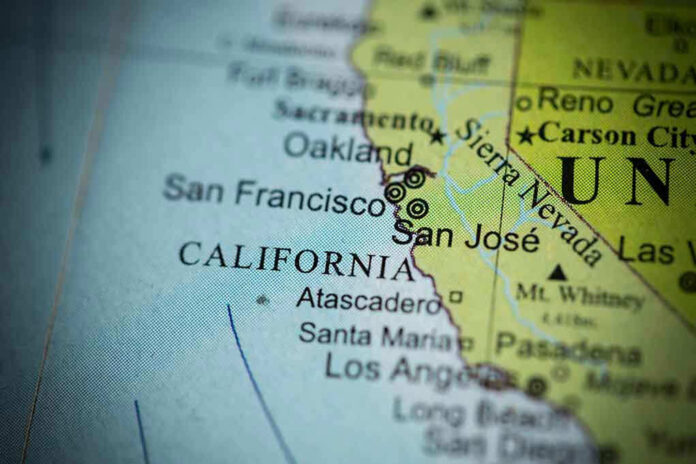
President Trump’s recent warning to deploy military forces in San Francisco signals a dramatic escalation in the federal response to Democrat-led cities, raising urgent questions about the future of constitutional rights and local control.
Story Snapshot
- Trump threatens military intervention in San Francisco, citing lawlessness and government failure.
- Federal actions reflect a broader push to restore order and challenge local policies on immigration and crime.
- Constitutional concerns emerge as the federal government tests the limits of executive power in Democratic strongholds.
- Public debate intensifies over the balance between national security, states’ rights, and individual freedoms.
Trump’s Military Threat in San Francisco: New Federal Tactics
President Donald Trump’s recent statement about sending military troops into San Francisco has reignited fierce national debate over federal intervention in Democrat-controlled cities. During a televised interview this week, Trump attributed rising crime, drug use, and homelessness to what he called “failed progressive policies,” and asserted that the federal government can no longer stand by while law-abiding citizens suffer. This pronouncement comes as Trump’s administration has previously authorized the National Guard for similar interventions elsewhere, signaling a willingness to further expand federal authority in cities resistant to conservative reforms.
Immigration Crackdowns and Executive Power Expansion
Trump’s warning aligns with his administration’s aggressive immigration agenda, which has rapidly evolved since his return to office in January 2025. One of the earliest executive orders declared a national emergency at the southern border, blocked asylum seekers, and ended “catch and release.” The administration also signed the Laken Riley Act, mandating detention for immigrants charged with certain crimes. These measures, coupled with mass-deportation operations and raids in urban centers, underscore a broader strategy to exert federal power over local jurisdictions, especially those with sanctuary policies or resistant leadership.
The decision to eliminate the “sensitive locations” policy, allowing Immigration and Customs Enforcement (ICE) to conduct arrests in schools and churches, has heightened tensions in cities like San Francisco. Federal authorities now openly pressure states and localities to cooperate with immigration enforcement, leveraging funding and legal threats to compel compliance. Critics argue this undermines due process and disrupts communities, while supporters claim it is a necessary response to years of unchecked illegal immigration and lenient local enforcement.
Constitutional Questions and Local Resistance
Trump’s approach in San Francisco raises constitutional questions about the limits of federal power and the preservation of civil liberties. The New York City Bar Association and legal observers have noted that recent executive actions “test the limits of executive power,” particularly when federal forces operate in defiance of local governments’ wishes. Legal challenges are mounting as advocacy groups and city officials question whether military intervention for domestic law enforcement is consistent with the Posse Comitatus Act and the foundational principles of American federalism. The administration insists its actions are justified by the urgent need to restore order and protect citizens, while critics warn of dangerous precedents for government overreach.
Despite these concerns, early results show a sharp decrease in illegal border crossings and a visible federal presence in targeted cities. As Trump’s team touts these outcomes as victories for law and order, many residents remain wary of the long-term consequences for local autonomy and constitutional protections.
Impact on Conservative Values and National Debate
For conservative Americans frustrated by years of progressive policies, Trump’s hardline stance resonates as a restoration of law, order, and constitutional intent. The administration frames its actions as a defense of individual liberty, the rule of law, and protection against what many view as the excesses of globalism, government overreach, and erosion of traditional values. Yet, the national conversation grows more polarized, as supporters see bold leadership while critics see threats to civil rights and local control. The coming months will test whether this new federal assertiveness can deliver real solutions without sacrificing the foundational freedoms at the heart of the American experiment.
As the situation in San Francisco unfolds, the nation watches closely, aware that the outcome may shape the balance of power between Washington, state governments, and the American people for years to come.
Sources:
Immigration policy of the second Trump administration – Wikipedia
The Trump Administration’s 2025 Changes to Immigration Law …
Protecting The American People Against Invasion – The White House
The First 100 Days of the Second Trump Administration