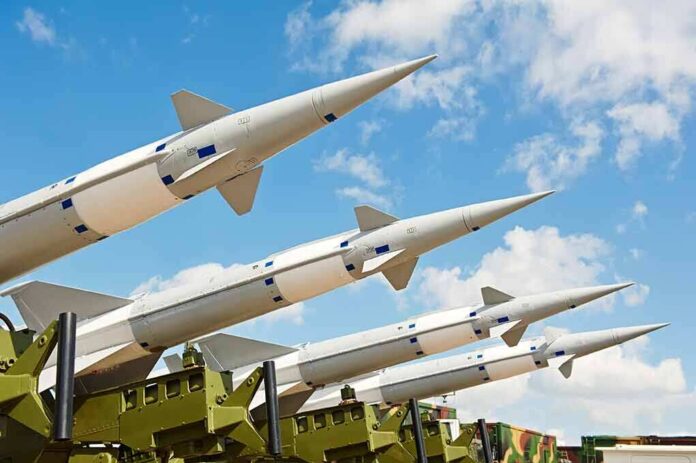
America’s missile stockpiles have become dangerously depleted as the Pentagon continues supporting multiple global conflicts, leaving the U.S. potentially unprepared for a prolonged war with China or other major adversaries.
Key Takeaways
- Acting Chief of Naval Operations James Kilby has warned Congress about critical shortages of Tomahawk missiles, torpedoes, and anti-ship weaponry needed for U.S. defense readiness.
- Military experts predict the U.S. could deplete certain critical munitions in less than a week during a potential conflict with China.
- The Biden administration’s simultaneous support for Ukraine, Israel, and Taiwan has severely strained America’s defense manufacturing capacity.
- Manufacturing challenges, including workforce shortages, supply chain issues, and excessive regulations, have hampered the Pentagon’s ability to replenish missile stocks.
- The Trump administration recently secured a historic $142 billion defense deal with Saudi Arabia to strengthen regional security partnerships.
Critical Missile Shortages Exposed in Congressional Testimony
U.S. military leaders have sounded the alarm about America’s dwindling missile stockpiles during recent congressional hearings, revealing the nation’s diminished capacity to sustain prolonged military conflicts. Acting Chief of Naval Operations James Kilby candidly informed lawmakers that the U.S. Navy faces serious shortages of Tomahawk missiles, torpedoes, and anti-ship weaponry. The situation has become so dire that Kilby recommended the Defense Department seek additional manufacturers to produce similar weapons as replacements for depleted inventories.
“If we go to war with China, it’s going to be bloody and there’s going to be casualties and it’s going to take plenty of munitions, so our stocks need to be full,” James Kilby, Acting Chief of Naval Operations.
The current shortages stem from multiple factors, including the Biden administration’s support for Ukraine and Israel’s conflicts, which have diverted significant quantities of American munitions overseas. This has exposed long-standing weaknesses in America’s defense industrial base that were previously concealed from public awareness. Military operations in the Red Sea have further strained already limited missile inventories, with some experts warning that America could exhaust certain critical munitions within days of engaging in a serious conflict with China.
Biden Administration Depletes Munitions Through Multiple Fronts
The Biden administration’s simultaneous commitment to arming Ukraine, Israel, and potentially Taiwan has placed unprecedented strain on America’s weapons stockpiles. Since Hamas’ October 7 attack, the U.S. has transferred substantial quantities of bombs and shells to Israel, yet cannot fulfill all Israeli requests due to inventory constraints. Similarly, massive arms shipments to Ukraine have further depleted American reserves. The Pentagon now finds itself conducting delicate “risk management” assessments when deciding which allies receive what weapons, essentially managing a zero-sum game where supporting one ally means shortchanging U.S. readiness or another partner nation.
“There are very few places where we have what you might call surplus stockpiles,” said Mark Cancian, a senior adviser at the Center for Strategic and International Studies think tank.
Military wargaming exercises have revealed particularly alarming projections. One Pentagon simulation predicted the U.S. would run out of long-range precision munitions in less than a week during a conflict with China. This vulnerability exists because America has historically prioritized investing in platforms like ships and aircraft over the munitions these systems deploy. The situation has been especially problematic for Taiwan, which has experienced significant delays in receiving ordered munitions due to industrial base constraints.
Manufacturing Challenges Impede Replenishment Efforts
America’s ability to rapidly replenish missile stockpiles faces multiple obstacles. Workforce shortages, supply chain disruptions, and excessive government regulation have all hampered the defense industrial base. Republican lawmakers have specifically highlighted how environmental and labor regulations have driven manufacturing overseas, creating a national security vulnerability. Rep. Eric Burlison pointed out that while China now produces approximately 40% of the world’s manufacturing output, the United States has fallen to just 11%, representing a dramatic shift in industrial capacity that directly impacts America’s ability to arm itself.
“We have been hostile to our manufacturing sector through our crazy energy policies and crazy EPA regulations and OSHA, right? We’ve driven so much manufacturing overseas, and that’s what Trump has recognized, and it has now become a national security issue,” said Eric Burlison.
While Congress has authorized multiyear contracts for critical munitions to provide manufacturers with stable demand signals, lawmakers have been reluctant to approve a dedicated munitions acquisition fund that could help address these shortfalls. The Pentagon has essentially gambled by running down inventory levels, assuming Congress will eventually fund replenishment efforts. This approach creates significant risk if rapid replenishment becomes necessary during a crisis, as production lines cannot be easily or quickly expanded.
Trump Administration Takes Action Through Historic Saudi Defense Deal
President Trump’s administration has taken significant steps to strengthen America’s defense partnerships through a historic $142 billion defense sales agreement with Saudi Arabia. This deal, described as the largest in history, covers five broad categories, including air force and space capabilities, air and missile defense systems, maritime security, land forces modernization, and information systems upgrades. The agreement will help recapitalize Saudi air defenses, particularly with Patriot systems, while potentially creating new manufacturing opportunities for American defense contractors.
“Our defense relationship with the Kingdom of Saudi Arabia is stronger than ever under President [Donald] Trump’s leadership, and the package signed today, the largest defense cooperation deal in U.S. history, is a clear demonstration of our commitment to strengthening our partnership,” stated the White House fact sheet.
Defense experts note that the missile shortage problem has persisted for over a decade but has only recently received proper attention. Brent Sadler of the Heritage Foundation revealed that discussions about these shortfalls had been classified during previous administrations, obscuring public awareness of the problem. With mounting global threats and continued demands on America’s weapons stockpiles, addressing these shortfalls has become an urgent national security priority requiring comprehensive action from both the Pentagon and Congress.
Exclusive: AUKUS nuclear submarine sale under scrutiny as Trump tariffs rattle Australia
Should keep in mind that the US has a trade surplus with Australia.
The sale of nuclear-powered submarines to Australia under the AUKUS treaty faces new doubts as U.S. President Donald… pic.twitter.com/LEog2KNyZG
— Indo-Pacific News – Geo-Politics & Defense (@IndoPac_Info) April 12, 2025