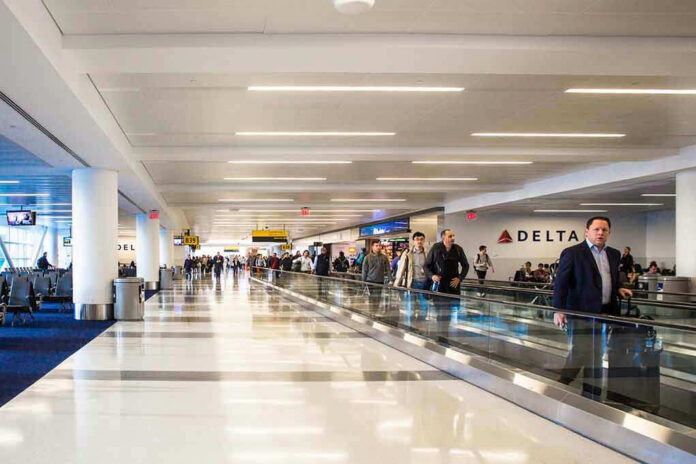
Europe’s airports don’t run on optimism—they run on jet fuel, and the International Energy Agency says the continent may have only six weeks left.
Story Snapshot
- The IEA chief warned Europe’s jet fuel cushion has shrunk to roughly six weeks.
- The trigger is disruption tied to the Strait of Hormuz, a critical global energy chokepoint.
- The practical risk is flight reductions and prioritization of fuel for essential routes.
- The political lesson is blunt: energy security is national security, and choke points punish complacency.
A Six-Week Clock Turns Aviation Into a National Priority
The International Energy Agency’s warning lands like a ground-stop order: Europe’s jet fuel reserves may cover about six weeks, and the countdown started the moment supply flows through the Strait of Hormuz became uncertain. Jet fuel looks like a niche product until it isn’t. When planes can’t fly, business travel collapses, tourism freezes, and high-value air cargo gets stranded. That’s not an airline problem; it’s a whole-economy problem.
The details matter because “oil” isn’t a single interchangeable thing. Even if crude is available somewhere, the system still has to refine, ship, store, and deliver Jet A-1 to the right airports at the right time. Europe’s supply chain is built for steady, predictable maritime movement. When a chokepoint becomes a question mark, buyers scramble, prices spike, and physical supply becomes the real battleground.
Why the Strait of Hormuz Can Freeze a Continent’s Travel Plans
The Strait of Hormuz is narrow, busy, and globally consequential—about a third of seaborne traded oil passes through it, according to the research summary that frames this crisis. That statistic isn’t trivia; it’s the reason a localized disruption becomes a faraway shortage. Europe sits downstream of that traffic in more ways than one. If tankers hesitate, reroute, or get delayed, inventories across the chain start shrinking fast.
The conservative, common-sense takeaway is hard to dodge: reliance on fragile routes invites leverage by whoever can threaten them. Markets reward resilience, but governments often subsidize fragility by assuming emergencies won’t happen. This time, the IEA didn’t describe a theoretical vulnerability; it put a number on it. “Six weeks” forces officials to answer a simple question voters understand: what happens when the fuel actually runs out?
What “Millions of Flights Could Be Grounded” Looks Like in Real Life
Airlines won’t wait for empty tanks to act. They start trimming schedules, swapping to more fuel-efficient aircraft, and consolidating routes. Airports and governments begin prioritizing: medical flights, strategic cargo, and essential connections first; discretionary leisure routes last. Expect pressure to ration indirectly through pricing and slot decisions rather than overt government edicts at the start. The public notices when cancellations cascade, not when planners quietly restructure timetables.
Air freight adds another twist. Modern supply chains use planes for high-value, time-sensitive goods: pharmaceuticals, electronics, specialized machine parts, and perishable food. When jet fuel tightens, freight rates jump and delivery times stretch. That hits small businesses first, then consumers. People over 40 remember when “out of stock” meant a store problem. In a fuel crunch, it becomes an everywhere problem with a geopolitical cause.
The EU’s Narrow Options: Pay More, Fly Less, or Rethink Energy Security
Europe can chase alternative supplies, but alternatives aren’t magic. Redirecting shipments takes time, money, and spare capacity that may not exist during a broader panic. Refiners can adjust yields, but jet fuel competes with diesel and other products, and those markets have their own political constraints. Strategic reserves help, yet “six weeks” implies reserves are already being counted with nervous precision. The fastest lever is demand reduction, which means fewer flights.
Diplomacy becomes a logistics tool. Restoring predictable passage through Hormuz—or reducing perceived risk—matters as much as buying barrels on a screen. The cynical view says diplomacy is talk. The practical view says tanker insurance, shipping schedules, and port commitments all respond to perceived stability. When officials treat maritime security as optional, consumers eventually pay for the lesson in canceled trips and higher prices.
The Longer Game: Resilience Beats Wishful Thinking
The crisis also exposes a familiar policy habit: treating “energy transition” rhetoric as a substitute for hard infrastructure reality. Sustainable aviation fuel may grow, but it cannot replace conventional jet fuel at continental scale overnight. Electrified commercial aviation remains limited by physics and economics. The adult approach is diversification: more storage, more flexible refining, more domestic capacity where feasible, and supply routes that don’t hinge on one narrow strait staying calm.
Europe’s leaders now face a credibility test. Voters don’t need to understand refinery crack spreads to grasp a simple principle: a government that can’t keep planes fueled can’t credibly promise broader economic stability. The IEA warning reads like an early alert, not a final verdict. The next few weeks decide whether this becomes a temporary shock—or a case study in what happens when energy security gets outsourced to hope.
Europe Has ‘Six Weeks’ of Jet Fuel Left Unless Strait of Hormuz is Opened — Millions of Flights Could Soon Be Grounded | The Gateway Pundit | by Ben Kew
Wait. Why isn’t Europe using their battery powered passenger jets ?
🤔 https://t.co/dfjIu9rctm— RedState (@BordersUSA) April 16, 2026
The most revealing detail isn’t the number of weeks; it’s how quickly “normal life” can get negotiated down once fuel becomes scarce. Airports will still look busy, screens will still flash departures, and officials will still hold press conferences. Then the quiet triage begins: which routes matter, which industries get priority, and which families learn that a faraway chokepoint can cancel a wedding, a funeral, or a long-planned reunion.
Sources:
Europe has six weeks of jet fuel left caused by ‘dire strait’ crisis, IEA chief warns