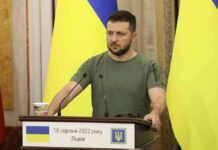
Cuba is openly daring the United States with “ready to fight back” rhetoric—even as it asks Washington for talks.
Quick Take
- Cuban Ambassador to the UN Ernesto Soberón Guzmán said Havana would defend itself if the U.S. attacked, while insisting it prefers dialogue.
- Cuba’s senior diplomats used conditional language about “military aggression,” pairing deterrence messaging with renewed negotiations.
- U.S.-Cuba talks resumed in April 2026 for the first substantive discussions in roughly a decade, with political prisoners and sanctions central to the dispute.
- Cuban officials blamed U.S. pressure for Cuba’s economic crisis, while also signaling limited willingness to release prisoners as part of broader talks.
Cuba’s Warning to Trump: Defense Talk Wrapped in Diplomacy
Cuban Ambassador to the United Nations Ernesto Soberón Guzmán told U.S. media that Havana sees “no reason” for an attack, but would “fight back” if one occurred. The message was framed as defensive and historically rooted, pointing to Cuba’s long independence narrative dating back to 1868. The timing matters: the remarks landed during renewed diplomatic contacts, creating a dual-track posture—dialogue in public, deterrence in parallel.
Cuban Deputy Foreign Minister Carlos Fernández de Cossío reinforced that approach on American television, saying Cuba’s military remains prepared and is actively preparing for possible aggression. He argued that global instability makes such readiness rational, while also claiming Cuba “has no quarrel with the United States” and wants a “respectful relationship.” Both officials emphasized sovereignty and self-determination, rejecting any arrangement that would turn Cuba into a dependent or “vassal” state.
Talks Resume After a Decade—But the Core Disputes Haven’t Moved
U.S.-Cuba dialogue restarted in April 2026, described by the Cuban side as professional, with no “taboo” topics off-limits. Public reporting indicates no formal deadlines or ultimatums have been announced. Political prisoners sit near the center of the conversation: U.S. negotiators want releases tied to progress, while Cuban officials signaled releases could be part of a broader agreement rather than a strict precondition. Specific negotiating terms have not been made public.
For American audiences, that ambiguity is the point to watch. When negotiations run behind closed doors, both governments often manage domestic expectations through media appearances. Conservatives generally want clarity: if sanctions relief is even discussed, what reforms or verifiable steps follow, and how are they enforced? Without transparent benchmarks, diplomacy can drift into symbolism—big statements, few measurable outcomes—while entrenched bureaucracies on all sides keep the status quo intact.
Economic Crisis and Energy Shortages Raise the Stakes on Both Sides
Cuba’s officials connected their defensive posture to internal strain: blackouts, energy shortages, and broader economic distress. They blamed U.S. embargo pressure and restrictions on fuel supply as drivers of the island’s crisis. The research provided does not independently verify the specific operational causes of fuel shortages, but it does show Cuba repeatedly presenting sanctions as the core explanation. That framing aims to build international sympathy while also strengthening Havana’s hand at the table.
Why This Matters for U.S. Interests: Deterrence, Migration, and Miscalculation
The United States holds overwhelming conventional military superiority, while Cuba’s deterrence message leans on asymmetric defense, geography, and political cost. Even so, escalatory rhetoric carries risks: misreading intentions, overreacting to exercises, or letting media-driven narratives harden policy. If Cuba’s economic crisis worsens, any shock—sanctions tightening, a diplomatic collapse, or a security incident—could accelerate outward pressures, including migration flows toward Florida and broader instability in the Caribbean.
Cuban Ambassador Tells Fox News Havana Is 'Ready to Defend' Island if Trump Attacks https://t.co/neBGSG32NF
— Mediaite (@Mediaite) May 4, 2026
The key limitation in the available reporting is intent: claims that the Trump administration signaled it is not planning an invasion were attributed to Cuban officials and were not independently confirmed in the research provided. That leaves Americans with a familiar frustration—high-stakes foreign policy filtered through competing narratives. The practical takeaway is simple: watch for concrete, verifiable steps in talks (prisoner releases, sanctions adjustments, enforcement mechanisms) rather than headline-grabbing threats from either side.
Sources:
carlos-fernandez-de-cossio-cuba-preparing-possibility-military-aggression
cuban-activist-trump-make-cuba-great-again-ending-communist-rule