The most hunted man in the Islamic State network died in the dark over Nigeria, and the real story is what that kill says about power, proof, and how quickly a narrative hardens in your news feed.
Story Snapshot
- U.S. and Nigerian forces say they killed Abu-Bilal al-Minuki, billed as the Islamic State’s global number two.[1]
- Donald Trump claims he ordered a “meticulously planned” joint raid after tracking the target across Africa.[1]
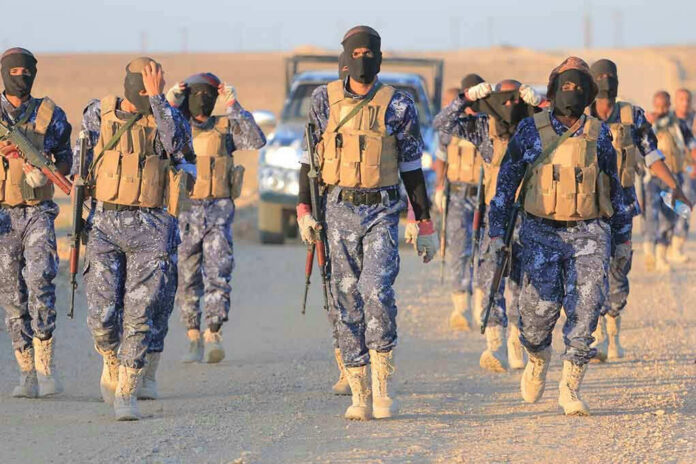
- Nigerian commanders describe a nighttime combined-arms assault in Borno State that boxed the target in.
- Disputes about al-Minuki’s true rank and the thin public evidence show how modern terror “victories” are sold.
The Night A “World’s Most Active Terrorist” Met An American Playbook
Donald Trump told the world that Abu-Bilal al-Minuki, “second in command of the militant group Islamic State globally,” learned the hard way that hiding in Africa does not beat American and Nigerian intelligence.[1] His Truth Social statement, echoed by television and online clips within hours, framed the mission as a “meticulously planned and highly complex operation” carried out at his direction, with United States and Nigerian forces moving in sync to hit one compound and decapitate a terror network.[1]
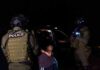
Nigerian reporting then filled in the shadows that the political announcement left blank. The Joint Task Force North-East, known as Operation Hadin Kai, said its troops, working “in collaboration with U.S. forces,” attacked al-Minuki’s position in Metele, in Borno State, during a four-hour overnight offensive that began just after midnight. Nigerian officers described precision air strikes, backed by ground units and special forces sealing escape routes, a textbook kinetic raid built to ensure the target did not slip out into the scrub and reappear online as a martyr.
Why Nigeria Became The Hunting Ground For A Global Jihadist
Borno and the Lake Chad Basin have sat at the crossroads of Islamist violence for nearly two decades, between the Islamic State’s West Africa Province and its rival Boko Haram, with villagers and Christian communities bearing the brunt.[2] Al-Minuki, who Nigerian reports say also used the name Abu Bakr ibn Muhammad ibn Ali al-Mainuki, allegedly oversaw Islamic State operations “across Africa and beyond,” turning this remote corner into a staging ground for attacks that reached far outside Nigerian borders.[2] United States officials previously listed him as a “specially designated global terrorist,” signaling they saw him as more than a local warlord.
That background helps explain why Washington invested in Nigeria’s fight, including sending American troops to train and support local forces long before this particular operation.[2] Trump’s public praise of Nigeria’s government after the strike contrasted sharply with his past criticism that Abuja had not done enough to protect Christians, a pivot that underlines a basic conservative instinct: reward partners when they actually take the fight to the extremists. For a Nigerian presidency often accused of weakness at home, joint credit for killing a high-profile Islamic State figure offered political capital as well as a security win.
How Much Proof Do Citizens Deserve When Leaders Declare A Kill?
Beneath the victory lap, the evidence available to the public remains thin. Media reports largely repeat Trump’s assertion that al-Minuki was Islamic State’s global number two, but they do not present captured documents, internal Islamic State rosters, or declassified intelligence that prove his formal place in the hierarchy.[1][2] Nigerian coverage ties the dead man to earlier sanctions and aliases, which supports the idea that intelligence agencies had tracked the same individual for years, yet the record still lacks biometric confirmation or a released casualty report.
Analysts outside government also question the exact rank. Long War Journal, citing a United Nations sanctions monitoring report, describes al-Minuki as head of the group’s Al Furqan office—an important position, but not clearly the universal “number two.” That difference matters. When presidents call someone “the most active terrorist in the world,” skeptics hear propaganda, and they are not always wrong. A conservative approach favors two things at once: take terrorists off the battlefield decisively, and demand that government prove its claims with as much declassified evidence as operational security allows.
Victory, Spin, And The Cost Of Taking Officials At Their Word
The pattern around this strike follows a familiar script. A fast presidential announcement lands first, cable channels and online clips echo the language about a “major blow,” and only later do slower, more granular reports from Nigerian units and independent analysts trickle out.[1][2] By then, the headline—“ISIS deputy killed”—has already hardened. That may boost morale and send a message to enemies, but it leaves citizens, and especially taxpayers who fund such missions, dependent on a narrow official narrative they cannot fully verify.
💥 BREAKING: AFRICOM confirms airstrike kills Abu-Bilal al-Minuki, ISIS deputy in Nigeria. Major blow to terror network, but retaliation fears loom. Oil & security risks in focus. pic.twitter.com/ikzbC5qSL7
— Dino breaking news (@DinoLeadingNews) May 16, 2026
Common sense and basic American conservative values point to a middle path. The joint Nigerian–U.S. operation, if accurately described, reflects exactly the kind of forward defense most right-of-center voters support: fight terrorists overseas with allied help instead of waiting for them to strike Western cities. At the same time, the burden of proof sits with leaders. When the government claims a historic kill, it should back that claim—eventually—with documents, declassified intelligence summaries, and clear answers about what changed on the ground after the dust settled.
Sources:
[1] YouTube – US President Trump Announces ISIS Deputy Abu-Bilal al …
[2] YouTube – Top ISIS Commander, Abu-Bilal Al-minuki Killed In U.S-Nigeria Joint …