Marco Rubio’s demand that China lean on Iran over the Strait of Hormuz is less a sound bite than a stress test of great-power interests colliding at the world’s most fragile energy chokepoint.
Story Snapshot
- Rubio frames Iran as the spoiler in the Strait of Hormuz and urges Beijing to deliver a blunt message to Tehran [1].
- Washington signals consequences at sea while pushing a United Nations track that spotlights Iranian maritime threats [4][6].
- China’s oil dependence makes stability in Hormuz a hard interest, but Beijing’s public stance remains opaque in the record [1][3].
- The evidence set amplifies U.S. claims; verified Iranian counter-documents are thin, heightening the perception gap [1][5][6].
Rubio’s bet: China’s oil math beats its Iran hedging
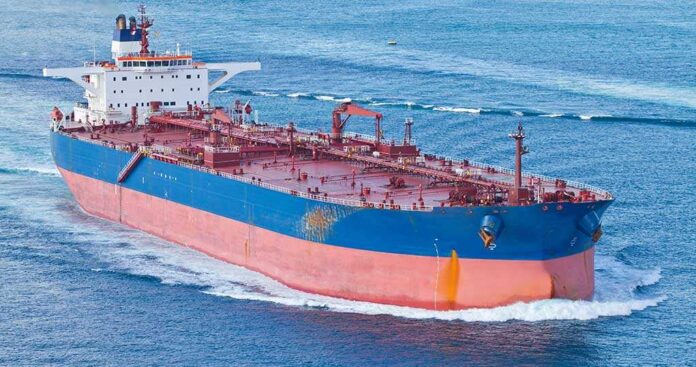
Rubio argues that Iran’s escalatory behavior in and around the Strait of Hormuz isolates Tehran and endangers the global economy, and he wants China to say it plainly to Iranian leadership [1]. He links that message to China’s self-interest, since the bulk of China’s imported crude sails through the same lanes Iran can threaten. Video remarks and reports emphasize that Washington views Chinese pressure as the fastest non-kinetic lever to cool tensions before shipping insurers, freight prices, and energy markets spiral [1][2].
Rubio’s push lands alongside warnings that the United States Navy will respond at sea if vessels or transit rights face attack, creating a twin track of deterrence and diplomacy [6]. This framing serves two audiences: Tehran, which understands the costs of miscalculation, and Beijing, which understands the costs of disruption. The combined signal tries to box Iran in without requiring an immediate shootout that would rattle markets more severely than any speech ever could [6].
The United Nations route and the narrative contest
Parallel to the China channel, Rubio champions a United Nations resolution condemning Iranian maritime threats, challenging the institution to “prove its worth” by defending freedom of navigation [4]. The reported draft cites continuing actions and threats by Iran, a formulation designed to codify a record of behavior and rally coalition support [4]. Even if Russia or China drag their feet in New York, the debate itself builds diplomatic pressure and sets a baseline against which future Iranian moves are judged.
Secondary outlets echo Rubio’s claim that Iranian conduct sits at the heart of a broader shipping crisis, a causal chain that resonates with consumers when fuel prices twitch and with shippers when war-risk premiums jump [5]. Yet the available record includes few primary Iranian counter-documents disputing specifics like mine use or targeted interdictions, which leaves the U.S. narrative with less friction than usual in a contested information space [5]. That vacuum matters; when tankers are nervous and insurers cautious, repetition can harden into perceived fact.
China’s calculus: quiet leverage versus public alignment
China’s dependence on stable seaborne oil imports creates a built-in incentive to prevent Hormuz from becoming a toll booth or a shooting gallery, but public readouts tying Beijing to Rubio’s ask are not present in the record [1][3]. That ambiguity fits Beijing’s style: work issues bilaterally, avoid endorsing Washington’s framing, and preserve ties with Tehran that hedge against Western influence. Rubio’s gambit banks on the idea that private Chinese pressure can still bite even if cameras never catch the squeeze [1][3].
Marco Rubio says China should pressure Iran to reduce tensions because instability in the Persian Gulf threatens China’s energy and shipping interests.
— Mel Gibson (@MelGibsongh7) May 13, 2026
Conservative common sense sets a straightforward bar: keep the sea lanes open, make the instigator carry the burden, and align diplomacy with deterrence so no adversary mistakes patience for permission. On the facts presented, Rubio’s core claim—that Iran’s threats to shipping isolate Tehran and risk global commerce—tracks with the stakes described at the United Nations and in maritime warnings [4][6]. If Tehran disputes the specifics, it should surface verifiable evidence. Until then, the power that most needs the oil should help keep the spigot’s strait clear.
Sources:
[1] Web – Rubio hopes China tells Iran’s FM they are ‘the bad guy’ in Hormuz …
[2] YouTube – Marco Rubio Says Iran May Impose Toll on Strait of Hormuz Shipping
[3] YouTube – Iran-Linked Tankers Breach Blockade Marco Rubio Signals …
[4] Web – Rubio challenges UN to prove its worth with Iran maritime resolution
[5] Web – Rubio Blames Iran For Global Shipping Crisis – Ommcom News
[6] YouTube – U.S. Navy Will Respond After Strait of Hormuz Escalation