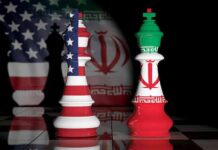
Israel’s defense minister just announced the nation stands ready to devastate Iran’s entire economic backbone—and waits only for Washington’s approval to begin strikes designed to collapse a regime.
Story Snapshot
- Defense Minister Israel Katz declared Thursday that Israel awaits U.S. green light to resume war against Iran with intent to eliminate the Khamenei dynasty
- Katz pledged strikes targeting Iran’s energy, electricity, and economic infrastructure to “return Iran to the Stone Age”
- The IDF claims full defensive and offensive readiness with targets already marked across Iranian territory
- Israel frames this as resumption of existing hostilities, not an initial strike, revealing dependence on American political backing despite operational autonomy
A Blunt Declaration From Tel Aviv
Israel Katz delivered his message Thursday from Tel Aviv during a high-level security assessment, leaving no ambiguity about Israeli intentions. The defense minister stated Israel is prepared to renew war against Iran, with the IDF positioned both defensively and offensively. Katz declared targets have been marked and forces stand ready. The sole remaining variable? United States approval. His video statement emphasized completing “the elimination of the Khamenei dynasty” and dismantling Iran’s critical infrastructure. The language—returning Iran to the Stone Age—evokes total economic collapse, not surgical precision.
This posture reveals a calculated strategy where military capability meets political constraint. Israel possesses the means to execute devastating strikes but chooses to wait for Washington’s blessing. That decision exposes the complex alliance dynamics at play in Middle Eastern security. American approval serves as both legitimizer and potential shield against international backlash. Katz framed the pending action as different and deadly, suggesting previous engagements failed to achieve decisive results. The IDF’s claimed readiness includes specific targeting of energy facilities, electricity grids, and economic nerve centers designed to cripple Iran’s functionality.
What Stone Age Really Means
Katz’s rhetoric about returning Iran to the Stone Age translates to infrastructure warfare at scale. Energy facilities supply power to cities, hospitals, and water treatment plants. Electricity grids enable communication, transportation, and basic commerce. Economic infrastructure encompasses ports, refineries, financial centers, and trade networks. Destroying these systems creates cascading failures that affect millions of civilians immediately. The defense minister explicitly stated Israel intends to dismantle Iran’s national economic infrastructure, suggesting strikes beyond military targets. This approach prioritizes regime pressure through civilian hardship rather than purely military degradation.
The humanitarian implications of such a campaign would be severe and lasting. Iran’s population of over 80 million depends on functioning utilities and economic systems for survival. Blackouts in major cities during extreme weather kill vulnerable populations. Collapsed energy sectors halt food distribution and medical services. Economic dismantlement triggers currency collapse, unemployment, and poverty. Katz’s strategy banks on this suffering forcing either regime change or capitulation. Whether this calculus proves accurate depends on factors beyond Israeli control, including Iranian resilience, international response, and regional proxy retaliation through Hezbollah, Houthi forces, or Iraqi militias.
The American Green Light Question
Israel’s wait for U.S. approval highlights a relationship more nuanced than simple alliance. Washington provides intelligence sharing, military aid, and diplomatic cover that enable Israeli operations. Without American support, Israel faces greater international isolation, potential sanctions, and diminished operational effectiveness. The Trump administration’s posture toward Iran remains aggressive, but approving infrastructure warfare that creates humanitarian catastrophe carries political risks domestically and globally. This creates a negotiation dynamic where Israel must convince Washington that Iran’s threat justifies the collateral damage Katz describes.
The defense minister’s public announcement also serves as pressure tactic, forcing American decision-makers to either endorse or restrain Israeli plans openly. By declaring readiness and waiting publicly, Katz puts Washington in a spotlight where delay or denial becomes visible. This maneuver suggests confidence that U.S. approval will eventually arrive, possibly with conditions or limitations. The alternative reading—that Israel announces publicly what it would execute privately regardless—cannot be dismissed. Public statements about awaiting permission might provide diplomatic cover while preparations continue independently. The coming weeks will reveal whether Katz’s declaration was genuine deference or strategic theater.
BREAKING – Israel awaiting US green light to 'return Iran to Stone Age': defence minister https://t.co/wXuNXkjIoQ pic.twitter.com/wBQ9J6WoyG
— Insider Paper (@TheInsiderPaper) April 23, 2026
Regime Targeting and Succession Crisis
Katz explicitly named the Khamenei dynasty as a primary target for elimination. Supreme Leader Ali Khamenei, 87 years old, has ruled Iran since 1989, wielding authority over military, judicial, and religious institutions. Eliminating this leadership structure—whether through direct strikes or induced collapse—creates succession uncertainty that could destabilize the Islamic Republic fundamentally. Iran lacks clear constitutional mechanisms for contested succession. The Assembly of Experts theoretically selects the Supreme Leader, but hardline Revolutionary Guard commanders hold decisive military power. A vacuum at the top could trigger internal power struggles, factional violence, or even civil conflict.
Israel calculates this instability serves its security interests by neutralizing an adversary that funds proxy forces across the region and pursues nuclear capabilities. The assumption—that chaos in Tehran benefits Jerusalem—carries significant risks. Failed states breed extremism, refugee crises, and power vacuums that hostile actors exploit. Iraq and Libya demonstrate how regime collapse without succession planning creates prolonged violence affecting entire regions. Syria’s civil war displaced millions and enabled ISIS expansion. Whether Israeli strategists have accounted for these possibilities or dismissed them as acceptable risks remains unclear from Katz’s public statements.
Energy Markets and Global Ripple Effects
Strikes on Iranian energy infrastructure would immediately affect global oil markets. Iran produces roughly 3 million barrels daily and holds proven reserves exceeding 150 billion barrels. Removing this supply from markets, even temporarily, spikes prices globally and affects economies dependent on stable energy costs. Asian buyers—particularly China and India—rely on Iranian crude at discounted rates. Disrupting these flows forces buyers to secure alternative supplies at higher prices, driving inflation. European markets already strained by geopolitical tensions would face additional pressure. American consumers, despite domestic production increases, remain exposed to global price volatility at the pump.
Beyond immediate price shocks, destroying Iranian energy facilities creates long-term supply constraints. Refineries and extraction infrastructure require years to rebuild and billions in investment. Insurance markets become reluctant to cover regional energy projects amid active conflict. Shipping routes through the Persian Gulf—carrying roughly 20 percent of global oil supply—become higher risk, increasing transport costs industry-wide. These compounding effects ripple through manufacturing, agriculture, and consumer goods sectors worldwide. Israel’s regional security calculations thus carry economic consequences felt in American households and European factories, complicating the political decision Washington faces regarding approval.
Sources:
Israel awaiting US green light to ‘return Iran to Stone Age’: defence minister – The Korea Times
Israel awaiting US green light to ‘return Iran to Stone Age’ – Ynetnews
Israel is prepared to renew war against Iran as targets are marked – i24NEWS