
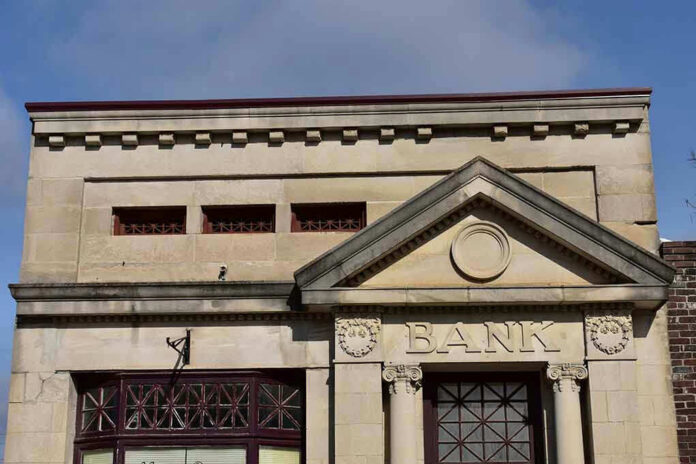
totalconservative.com — President Trump has signed an executive order directing federal banking regulators to scrutinize customer accounts based on immigration status — a move the White House calls a financial integrity measure but critics warn could sweep up millions of lawful residents in tightened compliance screenings.
Quick Take
- Trump’s executive order directs Treasury, the Consumer Financial Protection Bureau, and other federal regulators to tighten customer identification rules and flag suspicious activity tied to illegal immigration.
- The White House argues extending mortgages, credit cards, and auto loans to non-work-authorized immigrants creates structural risks to the national banking system.
- The order’s compliance requirements are system-wide, raising concerns that lawful residents, naturalized citizens, and others using alternative documentation could face increased scrutiny.
- No publicly available bank examination data, fraud-loss statistics, or Treasury enforcement records have been released to substantiate the scale of the problem the order claims to address.
What the Executive Order Actually Directs
President Trump signed the executive order in May 2026, framing it as a measure to restore integrity to the American financial system. According to the White House fact sheet, the order directs the Secretary of the Treasury to issue a formal advisory to financial institutions identifying red flags and suspicious activity patterns tied to payroll tax evasion, off-the-books wage payments, labor trafficking, and the use of individual taxpayer identification numbers to open accounts without verified legal presence. [2] The order also directs regulators to consider changes to the Bank Secrecy Act, including how foreign consular identification cards are treated in account-opening procedures. [2]
The Consumer Financial Protection Bureau is specifically directed to consider whether potential deportation and wage loss qualify as factors affecting a borrower’s ability to repay under existing lending standards. [2] The American Bankers Association Banking Journal confirmed the order’s scope, reporting that Trump directed regulators to provide guidance on identifying suspicious activity allegedly tied to individuals in the country illegally and to potentially strengthen customer due diligence requirements across the banking system. [1]
The Evidence Gap at the Center of the Debate
The administration’s case rests on a series of policy assertions that have not yet been backed by publicly released data. The White House describes “structural credit risks” and a list of suspicious activity typologies, but the supporting materials — bank examination findings, fraud-loss rates, Treasury enforcement records, or Financial Crimes Enforcement Network trend data — have not been made public. [2] What the order declares as a demonstrated problem, the available record presents as a policy premise rather than a documented crisis with measurable scale.
That evidentiary gap matters because the compliance tools the order activates are broad. Strengthened customer due diligence requirements and revised identification standards apply across financial institutions, not only to accounts already flagged for suspicious behavior. [1] Critics argue this means lawful permanent residents, naturalized citizens, and others who rely on consular identification cards or individual taxpayer identification numbers could face heightened scrutiny even though they have committed no fraud. The administration has not publicly released actuarial or underwriting data showing that immigration-related wage loss materially predicts loan default beyond standard credit risk factors. [2]
Why Both Sides Have a Point — and a Problem
Conservatives who have long demanded tighter enforcement of financial rules tied to illegal immigration will find the order’s direction straightforward: close gaps that allow criminal networks, labor traffickers, and tax evaders to operate through American banks. The White House explicitly states that gaps in customer identification have allowed terrorists, drug traffickers, and money launderers to exploit American financial institutions. [2] That framing resonates with voters who believe existing regulations have been selectively enforced or deliberately weakened.
JUST IN 🚨: Trump signs an executive order pushing the Fed to revisit how fintech and #crypto firms access U.S. payment rails.
If rules ease, this could quietly unlock banking infrastructure for crypto companies and change how money moves behind the scenes. pic.twitter.com/pscoYOsnX6
— SheTrades (@SheTrades_08) May 20, 2026
Liberals and civil-liberties advocates will note that the regulatory levers being pulled are system-wide, and that status-based risk assumptions — rather than case-by-case findings of fraud — drive the policy’s core logic. Both concerns reflect a broader frustration shared across the political spectrum: major policy decisions affecting millions of people are being made without transparent, publicly verified evidence. Whether the administration’s compliance rationale holds up depends entirely on data that federal regulators control and have not yet released. Until that record is public, Americans on both sides are being asked to take the government’s word for it — and that, increasingly, is something fewer and fewer people are willing to do.
Sources:
[1] Web – New executive orders target banks and citizenship, nonbank access …
[2] Web – Fact Sheet: President Donald J. Trump Restores Integrity to …
© totalconservative.com 2026. All rights reserved.