Your body starts quietly rewiring itself in your 40s and 50s, and the way you eat can decide whether your 70s feel like freedom or repair work.
Story Snapshot
- What you eat in midlife strongly links to how healthy you are at 70 and beyond.
- Energy needs drop with age, but protein, fiber, vitamins, and minerals matter more.
- Plant‑heavy, Mediterranean‑style eating patterns support brain, heart, and muscle health.
- Smart midlife diet shifts line up with both common sense and strong conservative values.
Midlife is when your diet starts writing your 70s story
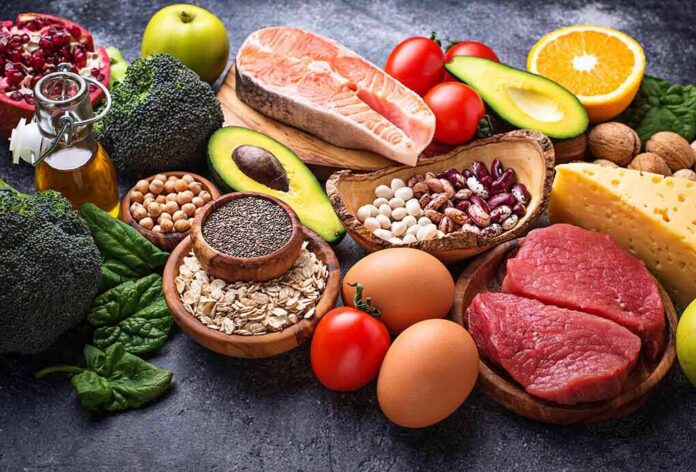
Harvard researchers followed more than 100,000 adults and found that people who ate healthier diets in midlife were far more likely to reach age 70 free of major chronic disease and with good mental and physical function. Their plates leaned on fruits, vegetables, whole grains, legumes, nuts, and healthy fats, with fewer ultra‑processed foods, sugary drinks, and red or processed meats. That is not wellness‑blog wishful thinking; it is hard, decades‑long data connecting daily meals to real outcomes.
The Nature Medicine study behind this work showed that people who improved their eating patterns between their 40s and 60s gained better odds of what researchers call “healthy aging.” That means not just being alive, but staying mobile, sharp, and largely independent. Healthy eating patterns came in different flavors—Mediterranean style, plant‑forward, and other recognized models—but they shared one core idea: more nutrient‑dense food, fewer empty calories. That is a simple rule, but it gets more important as the years add up.
Why your body’s midlife upgrades demand a diet upgrade
By your 40s, metabolism usually slows, hormones shift, and muscle mass starts to slide if you do nothing. You burn fewer calories, yet your cells and organs still need protein, fiber, vitamins, and minerals to stay strong. That gap is why experts push “nutrient dense” eating—more value per bite. You can no longer treat your stomach like a storage unit for snacks and sugar and hope your joints, brain, and blood vessels keep up the work quietly.
Guides for middle age point to the same pattern: hold weight in a healthy range, focus on whole foods, and keep alcohol modest. Women dealing with perimenopause or menopause face extra hits to bone density, muscle, and sleep, so advice often stresses more calcium, vitamin D, and protein, plus higher fiber and lower sodium. That might sound like a scolding, but it is closer to preventive maintenance. You do not wait for your roof to cave in before you fix it; you would be foolish to treat your body with less care than your house or truck.
Protein and fiber become quiet heroes after 40
Protein demand rises with age because you lose muscle faster and build it slower. Many dietitians now suggest around one gram of protein per kilogram of body weight for midlife adults, with some women over 65 or in menopause aiming closer to 1.2 grams. Spread through the day, that intake supports strength, balance, and metabolic health instead of letting you drift into weak and tired “normal aging.”
Fiber does just as much heavy lifting. It steadies blood sugar, supports gut health, and helps manage cholesterol, all of which tie into heart disease risk. Sources aimed at older adults often push totals around 21–30 grams per day, depending on sex. That means plenty of vegetables, fruit, whole grains, and legumes. From a common‑sense conservative view, this looks less like a fad and more like taking personal responsibility: eat in a way that keeps you off avoidable medications and out of avoidable surgery.
The Mediterranean pattern and other proven playbooks
The Mediterranean diet and similar patterns show up again and again in aging research. These models rely on vegetables, fruits, legumes, whole grains, nuts, olive oil, and moderate fish, with limited red meat and sweets. Studies tie them to lower cardiovascular events, better inflammatory profiles, more muscle mass, and better mobility in older adults. You do not need to move to Greece; you only need to push your plate closer to that mix most days.
Public health guidance for people over 50 now often uses simple plate rules: fill half your plate with vegetables, a quarter with whole grains, and a quarter with lean protein. That framework is not political; it is practical. It respects budget limits by favoring beans, lentils, and seasonal produce. It respects independence by helping people avoid the spiral where bad diet leads to chronic disease, which leads to lost work, rising bills, and dependence on government programs they never wanted.
Calories down, quality up: a sober midlife trade
Most major medical sources agree that, as you age, you usually need fewer total calories but better nutrition in each calorie. That is why many clinicians tell midlife patients to trim daily intake, especially from soda, sweets, and refined snacks, while raising fiber, protein, and key micronutrients. Calorie trimming is not about chasing magazine covers; it is about lowering the load on joints, the heart, and blood sugar control.
There is no strong evidence base claiming that this general direction—fewer empty calories, more nutrient‑dense foods—is harmful in midlife. Skeptics may question how strong the long‑term data is or how much any one nutrient matters, but the broad pattern holds. You cannot control everything about aging, yet you can control what you put in your grocery cart. That fits the conservative belief that choices have consequences, and that planning ahead beats blaming others later.
Sources:
newscientist.com, ashleyknutrition.com, independent.co.uk, drbojana.com, courses.lumenlearning.com, foxnews.com, healthywomen.org, youtube.com, hsph.harvard.edu, hopkinsmedicine.org, pmc.ncbi.nlm.nih.gov, health.clevelandclinic.org, healthline.com, healthinaging.org, helpguide.org, health.harvard.edu
© totalconservative.com 2026. All rights reserved.