
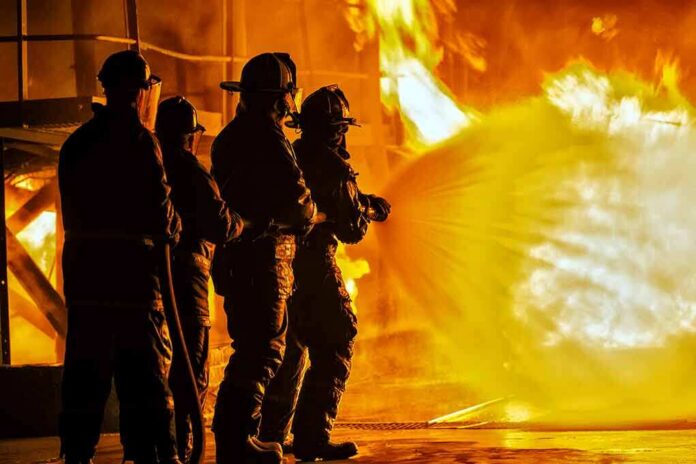
Driven by hot winds, the Norte Fire raced into San Clemente and San Juan Capistrano, burning homes and forcing evacuations under dangerous conditions.
Story Snapshot
- Officials reported 465 acres burned and homes damaged or destroyed near Via La Mirada.
- Evacuation orders covered zones in both San Clemente and San Juan Capistrano.
- Strong Santa Ana winds and dry fuel helped the fire spread quickly.
- Damage counts varied as crews shifted from fast estimates to formal inspections.
Wind-Driven Fire Damages Homes and Triggers Evacuations
California’s fire agency said the Norte Fire started on October 16 near Portico Del Norte and Eminencia Del Norte in San Clemente. The blaze grew fast in heat and wind, reaching about 465 acres by late afternoon. Fire officials reported homes were damaged or destroyed, with four homes near Via La Mirada in San Juan Capistrano listed as “impacted” in early updates. Local outlets and the Orange County Fire Authority also cited at least six homes damaged or burned as assessments continued.
Authorities ordered evacuations in multiple mapped zones to move people out of harm’s way. Mandatory orders covered San Clemente Zones 12 and 13 and San Juan Capistrano Zones 4, 5, and 10, according to official incident updates. Cities opened community shelters for evacuees. Officials urged residents to leave early, avoid closed roads, and keep the area clear for engines and aircraft working the fire line. Command posts warned the public to stay away from the scene.
Why Early Damage Numbers Often Do Not Match
Early reports often differ because field crews first flag structures as “impacted” during the heat of the fight. Later, trained inspectors sort buildings into set categories: affected, minor, major, or destroyed. California’s Damage Inspection program defines “destroyed” as more than 50 percent loss. That means “four homes impacted” can refer to the same group that later appears as “six damaged or destroyed,” once teams survey each site in detail.
Media tallies also change as agencies merge separate lists and remove duplicates. Homes counted during active fire attack may be reclassified after closer checks. Some houses suffer cosmetic damage, like melted trim, while others lose roofs or interiors. A cautious read of early numbers helps avoid false conflicts. Different phrasing can describe the same set of homes at different stages of review. That pattern has shown up in many past fires across Southern California.
Conditions That Turned a Brush Fire Into a Neighborhood Threat
Onshore fuels around the foothills were dry, and strong Santa Ana winds pushed flames downhill and across canyons. Those winds can carry embers far ahead of the main front. Embers then land on roofs, decks, or vents and start spot fires at random points. That jumpy spread pattern explains how one street may be hit while the next is spared. Fire behavior experts have documented this risk during Santa Ana events across decades of Southern California fires.
NORTE FIRES CALIFORNIA
🔥Homes destroyed by the fast-moving San Clemente wildfire in California
Oct 17, 2026
The Orange County Fire Authority said the blaze had reached 570 acres and was zero percent contained.At least four homes off Via La Mirada in San Juan Capistrano… pic.twitter.com/Cw01f87JFD
— Sid (@Trending_Sid) October 17, 2026
Officials warned people to clear leaves from gutters, move flammables away from walls, and check attic and crawl space vents for ember screens. Those steps do not stop every loss, but they cut the chance that a single ember destroys a house. Cities also plan traffic flow for evacuations and place temporary refuge areas. National guidance shows that practice and clear instructions save time when minutes matter during wind-driven fires.
What Residents Should Watch Next
Containment numbers, damage counts, and evacuation maps change as crews push lines and inspectors enter neighborhoods. People should look to official incident updates for fresh data on road closures, shelters, and repopulation. When agencies post a unified damage count, it reflects on-the-ground inspections rather than early radio reports. That final tally will also separate destroyed homes from those with minor or major damage under state standards.
Local leaders will likely review what worked and what failed. After-action reviews often adjust alert timing, zone maps, and shelter plans. They also inform work to harden homes, clear brush, and improve power and communications. These steps matter because wind and fuel will continue to test the region. A steady focus on basics—defensible space, safe evacuations, and clear public messages—can save homes and lives in the next wind event.
Why This Matters Beyond One Fire
Both longtime residents and recent arrivals want safety, honest numbers, and fast help when danger hits. This fire shows the gap between what the public hears in the first hours and what the final record shows days later. That is not spin; it is the shift from urgent estimates to verified counts. Clear updates, plain language, and standard damage terms help families plan and rebuild with fewer surprises, and help trust grow after the smoke clears.
Sources:
youtube.com, fire.ca.gov, abcnews.com, abc7.com, ktla.com
© totalconservative.com 2026. All rights reserved.