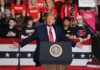
President Trump said Abdul El-Sayed is “absolutely Muslim Brotherhood,” warning, “we’re not going to let that happen.”
Story Highlights
- Trump tied El-Sayed to the Muslim Brotherhood and urged voters to block him from the Senate.
- A 2012 post from El-Sayed’s half-sister referenced their mother’s past “activism” in the Brotherhood.
- El-Sayed denied any ties and publicly disavowed the group during the campaign.
- Media coverage emphasized the dispute and the lack of direct evidence linking El-Sayed personally.
Trump’s Charge And The Campaign Flashpoint
President Trump recorded an Oval Office video saying Abdul El-Sayed was “absolutely Muslim Brotherhood” and telling voters, “The last thing we need is Muslim Brotherhood in the United States Senate.” The statement became a late-race flashpoint in Michigan’s Senate contest. Trump and Republican nominee Mike Rogers pressed the concern as a national security risk and a character test for higher office, while Democrats and several outlets pushed back on the framing and evidence cited so far.
Trump also blasted El-Sayed after the televised debate and on social platforms, using sharp language that cast El-Sayed as a radical figure. Those posts fueled days of follow-up coverage and talk-radio focus. Rogers echoed the theme on the trail and asked El-Sayed to disavow the Brotherhood by name. The push made ideological vetting a centerpiece of the closing argument to voters who worry about terrorism, extremism, and foreign influence in American politics.
The Evidence Cited And Its Limits
The claim at issue draws on a 2012 social media post from El-Sayed’s half-sister. She wrote she had “an amazing talk with my mom about her activism in the Muslim Brotherhood during the early 70s while she was in college.” Reporters said the post resurfaced this fall during the Senate race. Outlets noted they had not seen records tying El-Sayed himself to the organization or confirming operational links, transactions, or membership by him.
The Detroit News reviewed the dust-up and reported that no evidence had been produced showing El-Sayed had personally affiliated with the Muslim Brotherhood. That conclusion added to broader coverage that treated the charge as a campaign attack lacking a documented tie to El-Sayed’s actions. The gap between a family anecdote and a personal link remains the core evidentiary issue in this dispute as voters assess risk and credibility.
El-Sayed’s Denials And Disavowal
El-Sayed denied ties in interviews, town halls, and on the debate stage. He said he had never discussed the Muslim Brotherhood with his mother and was not raised by her. When asked to disavow the organization, he answered, “Sure, yeah, absolutely.” He later said he had clearly condemned the group and argued that being Muslim does not imply dual loyalty or conflict with the United States Constitution, which he called his guiding standard.
El-Sayed criticized the attack as hearsay based on a social post, not on verified records. He framed the issue as a test of fairness and common sense in politics. Supportive coverage underscored his on-record disavowal and the lack of proof of a personal tie. That messaging aimed to blunt the charge and refocus voters on policy, while Republicans kept the spotlight on national security, vetting, and the duty to ask hard questions before handing a Senate seat to any candidate.
How Voters Can Weigh The Risk
Michigan voters now face a simple choice. Trump and Rogers argue that even a whiff of Brotherhood influence around a would-be Senator is unacceptable. They say vigilance is common sense after years of terror threats and weak borders. El-Sayed says the claim is baseless and rooted in identity attacks, not facts. Media reports highlight his denials and the limited record. The result is a stark contrast over standards for evidence and the level of risk Americans should tolerate.
Trump Labels Michigan Senate Candidate El-Sayed a Jihadist at Port Huron Rally
President Trump arrived in Port Huron, Michigan, on October 25 for a midterm campaign rally supporting Republican Mike Rogers.
He has repeatedly described Democratic nominee Abdul El-Sayed as a… pic.twitter.com/ZuuKB6ktjA
— AMERICAN VALUES ALLIANCE (@XAmericanValues) October 25, 2026
For constitution-minded readers, the stakes are clear. The Senate sets foreign policy, confirms national security leaders, and oversees intelligence funding. A single vote can shift support for Israel, border enforcement, or counterterror rules. Demands for full transparency, document trails, and clear disavowals are not bigotry; they are due diligence. Until stronger records surface, Republicans will press for answers, and Democrats will call it a smear. Voters will decide which standard protects the country best.
Sources:
thehill.com, cnn.com, huffpost.com, detroitnews.com
© totalconservative.com 2026. All rights reserved.