
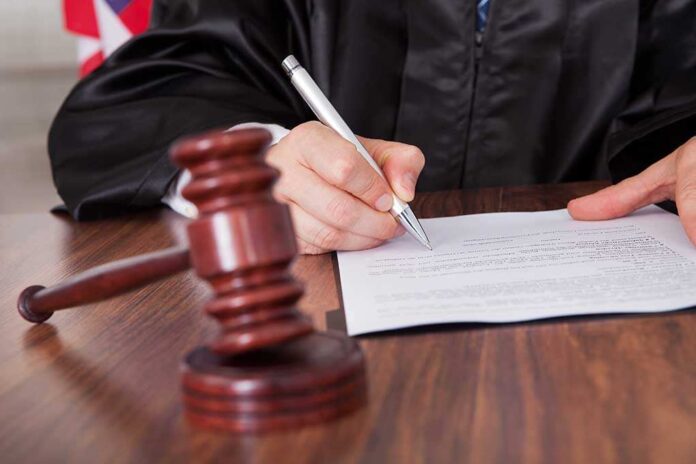
A Milwaukee County Circuit Court judge has been found guilty of helping an illegal immigrant evade federal immigration agents, marking a stunning fall from grace for someone sworn to uphold the law.
Story Highlights
- Milwaukee Judge Hannah Dugan convicted of obstructing federal immigration enforcement
- Judge actively helped illegal immigrant avoid ICE detention during court proceedings
- Case represents rare prosecution of judicial official for immigration-related misconduct
- Conviction raises questions about judicial activism versus law enforcement cooperation
When the Gavel Falls on the Judge
Judge Hannah Dugan’s conviction sends shockwaves through Wisconsin’s legal community and beyond. Federal prosecutors successfully argued that Dugan deliberately interfered with Immigration and Customs Enforcement operations within her own courtroom. The case highlights a growing tension between local judicial officials and federal immigration authorities, particularly in sanctuary jurisdictions where cooperation with ICE remains politically contentious.
Dugan’s actions represent more than judicial overreach; they constitute a fundamental betrayal of her oath to uphold federal law. When judges begin picking and choosing which laws to enforce based on personal political beliefs, the entire foundation of our legal system crumbles. This conviction serves as a necessary reminder that no one, regardless of their position, stands above the law.
The Courtroom Conspiracy Unfolds
The specifics of Dugan’s interference paint a picture of calculated obstruction. Rather than allowing ICE agents to perform their lawful duties, she actively worked to prevent the detention of an individual who had no legal right to remain in the United States. This wasn’t a momentary lapse in judgment or a misunderstanding of protocol; it was a deliberate decision to prioritize political ideology over legal obligations.
Federal immigration law exists for legitimate reasons, including national security and public safety. When local officials undermine these efforts, they create dangerous precedents that encourage further illegal immigration and embolden those who would flout our nation’s sovereignty. Dugan’s conviction demonstrates that federal authorities will hold accountable those who interfere with lawful immigration enforcement, regardless of their political motivations.
Consequences of Judicial Activism
This case exemplifies the dangerous trend of judicial activism where personal politics trump legal duty. Judges wield enormous power within our system, and with that power comes the responsibility to apply law fairly and consistently. When judges begin operating as immigration activists rather than impartial arbiters of justice, they corrupt the entire judicial process and undermine public trust in our courts.
The conviction also raises uncomfortable questions about how widespread such interference might be across the country. If federal prosecutors felt compelled to pursue criminal charges against a sitting judge, one must wonder how many similar incidents go undetected or unprosecuted. The message here must be clear: judicial robes do not provide immunity from criminal prosecution when judges violate federal law.
A Warning Shot Across the Bow
Dugan’s guilty verdict serves as a stark warning to other judicial officials who might consider similar interference with federal immigration enforcement. The Department of Justice has demonstrated its willingness to prosecute even high-ranking local officials when they obstruct lawful federal operations. This sends a crucial message that cooperation between local and federal authorities remains essential for effective law enforcement.
Moving forward, this case should prompt serious reflection within judicial circles about the proper role of local courts in federal immigration matters. While judges maintain significant discretion in their courtrooms, that discretion has limits, particularly when it comes to interfering with federal law enforcement activities. The rule of law depends on all officials, from street patrol officers to federal judges, respecting their respective roles and jurisdictions within our constitutional system.