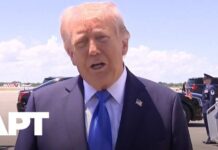
Trump’s direct warning about a hostile alliance between Russia, China, and North Korea puts America’s security commitments and conservative values under intense global scrutiny.
Story Snapshot
- President Trump held critical calls with European leaders and Ukraine’s Zelenskyy to address the ongoing Ukraine conflict and possible ceasefire.
- Trump publicly alleged Russia, China, and North Korea are conspiring against the United States, triggering a dismissive Kremlin response.
- European allies reaffirmed support for Ukraine amid uncertainty about U.S. security guarantees and shifting diplomatic rhetoric.
- Ceasefire negotiations remain fragile, with global adversary alignment threatening U.S. interests and alliance unity.
Trump’s High-Stakes Diplomacy and Allegations of Adversary Conspiracy
In August 2025, President Donald Trump led a series of high-level diplomatic events with European leaders and Ukraine’s President Zelenskyy, focusing on the urgent need for a ceasefire in Ukraine and robust security guarantees for Kyiv. These efforts culminated in a White House summit and a joint call bringing together officials from the UK, France, Germany, Italy, Poland, Finland, NATO, and the EU. Trump’s outreach signaled a shift from skepticism to cautious openness regarding security commitments, yet his public comments soon overshadowed the talks. Amid these developments, Trump asserted that Russia, China, and North Korea were actively conspiring against the United States, adding volatility to an already tense geopolitical landscape.
Trump’s public accusation was met with an unusual response from the Kremlin, which expressed hope that his statement was delivered “not without irony.” This rhetorical deflection aimed to minimize alarm and ridicule the seriousness of the claim, signaling both irritation and a desire to avoid further escalation. European leaders, meanwhile, doubled down on their pledge to support Ukraine, emphasizing unity and resilience in the face of rising threats. However, Trump’s unpredictable approach to foreign policy left both U.S. allies and adversaries uncertain about the extent of American commitments, raising questions about alliance strength, deterrence, and the preservation of Western interests.
Shifting U.S. Security Commitments and Alliance Strain
The ambiguity surrounding U.S. security guarantees for Ukraine has intensified since Trump’s return to the presidency. While European nations continue to advocate for robust support, the details of America’s involvement remain unclear, causing concern among defense and security experts. The risk of miscalculation grows as Trump’s rhetoric diverges from traditional diplomatic norms, with experts from Chatham House and the Council on Foreign Relations warning that unpredictability may embolden adversaries and unsettle allies. The potential for a broader Russia-China-North Korea alignment further complicates the strategic environment, challenging the cohesion of NATO and the EU at a pivotal moment for transatlantic security.
Ongoing ceasefire negotiations have yet to yield concrete outcomes. European officials play a critical mediating role, but uncertainty about U.S. reliability persists. This ambiguity has direct implications for Ukraine’s sovereignty and the future security architecture of Europe. Defense sectors in both the U.S. and Europe are bracing for increased demand, while energy markets react to the instability caused by the conflict and fluctuating diplomatic commitments. Trump’s willingness to consider security guarantees represents a significant shift, but the lack of clarity threatens to undermine progress and embolden adversarial powers seeking to exploit Western divisions.
Implications for Conservative Values and U.S. Interests
For American conservatives, Trump’s assertive stance against global adversaries aligns with longstanding concerns over national sovereignty, the erosion of constitutional principles, and the threat posed by hostile foreign alliances. The Kremlin’s attempt to mock or minimize Trump’s warning underscores the seriousness of the challenge facing the United States. As the Biden administration’s policies on globalism and alliance management recede, Trump’s approach foregrounds individual liberty and national strength. However, the unpredictable nature of his statements and the ambiguity of U.S. commitments risk undermining the very principles of limited government and reliable defense that many conservatives hold dear. The ongoing conflict in Ukraine thus serves as a test of America’s resolve, its alliances, and its ability to defend core values against determined adversaries.
NEW – Kremlin hopes Trump’s post about conspiring was ‘not without irony’https://t.co/zKUPJjfjuk
— Insider Paper (@TheInsiderPaper) September 3, 2025
The broader impact of these developments extends beyond immediate diplomacy. Political polarization within the United States intensifies as Americans debate the merits of Trump’s foreign policy strategies. War fatigue in Europe and Ukraine, economic instability, and strains within NATO raise the stakes for all parties involved. The precedent set by current negotiations and alliance dynamics will shape future relations with Russia, China, and North Korea, with lasting consequences for constitutional protections, conservative priorities, and America’s global standing.
Sources:
Prime Minister’s call with European leaders and the President of the United States: 13 August 2025
Major Takeaways from Trump’s Meeting with Zelenskyy and European Leaders
Trump’s Ukraine Summit Was a European Damage Control Operation—It Succeeded, For Now