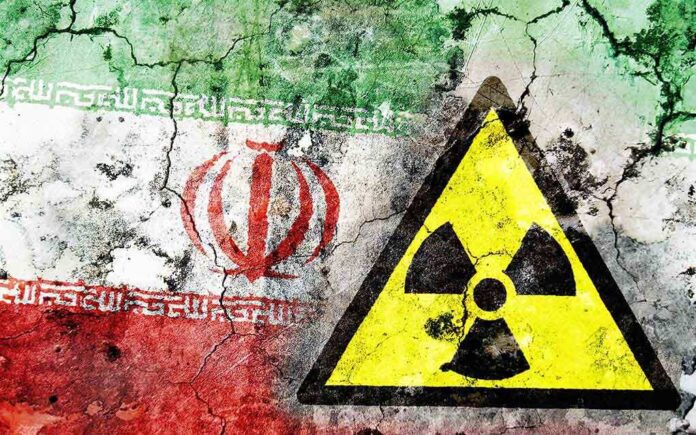
Iran has enlisted Russia and China in a coordinated diplomatic assault to dismantle Western nuclear oversight mechanisms, directly challenging America’s ability to enforce international sanctions and prevent Iranian nuclear breakout.
Story Highlights
- Iran, Russia, and China are working together to eliminate the UN “snapback” sanctions mechanism before its October 2025 expiration
- The coordinated opposition threatens to strip Western powers of their primary tool for preventing Iranian nuclear weapons development
- France, Germany, and the UK are considering triggering automatic UN sanctions reimposition while they still can
- The dispute exposes how America’s JCPOA withdrawal under Trump complicated efforts to contain Iran’s nuclear ambitions
Iran Builds Anti-Western Nuclear Coalition
Tehran has successfully recruited Moscow and Beijing to help demolish the Joint Comprehensive Plan of Action’s “snapback” mechanism, which allows automatic reimposition of UN sanctions against Iran for nuclear violations. The three-nation alliance represents a direct challenge to Western diplomatic leverage and America’s broader nonproliferation strategy. According to analysis from the Washington Institute, this coordinated opposition aims to eliminate Western powers’ most effective tool for nuclear enforcement.
The timing reveals Iran’s strategic calculation. With the snapback provision set to expire in October 2025, Tehran recognizes this as potentially its last opportunity to permanently escape multilateral sanctions enforcement. Iranian officials have warned that any snapback activation would end all diplomatic engagement, while Russian and Chinese diplomats publicly question the mechanism’s legal validity following America’s 2018 JCPOA withdrawal.
October Deadline Creates Urgent Western Dilemma
France, Germany, and the United Kingdom face an increasingly narrow window to preserve their nuclear oversight capabilities. These European powers have signaled they may trigger snapback sanctions if Iran refuses to return to compliance or negotiate a replacement agreement. The mechanism was specifically designed to bypass Russian and Chinese Security Council vetoes by making sanctions automatic unless a resolution to continue relief passes.
The approaching deadline creates a use-it-or-lose-it scenario that Iran clearly hopes to exploit. War on the Rocks analysis indicates that Iran has deliberately escalated uranium enrichment activities to force this confrontation, calculating that Western powers lack the political will to reimpose comprehensive sanctions. This represents a dangerous gamble that could backfire if European allies decide they have no choice but to act.
America’s JCPOA Exit Complicates Enforcement
President Trump’s 2018 withdrawal from the Iran nuclear deal created legal ambiguities that Tehran, Moscow, and Beijing now exploit to challenge Western sanctions authority. While Trump’s decision reflected justified concerns about the deal’s inadequate restrictions on Iranian nuclear development, it inadvertently provided Iran’s allies with arguments to contest snapback legitimacy. The U.S. attempted to trigger snapback in 2020, but other participants rejected America’s standing as a non-participant.
This situation demonstrates the complex consequences of multilateral agreement structures that can constrain American sovereignty while failing to effectively contain rogue regimes. Iran has exploited these structural weaknesses to advance its nuclear program while maintaining enough international support to avoid complete isolation. The current standoff reveals how authoritarian powers coordinate to undermine American-led international order.
Strategic Implications for American Security
The Iran-Russia-China coordination on nuclear issues extends far beyond diplomatic maneuvering to represent a fundamental challenge to American global leadership. These three powers increasingly view sanctions enforcement as Western coercion rather than legitimate nonproliferation policy. Their success in potentially dismantling snapback mechanisms could establish precedents that weaken America’s ability to address future nuclear threats from North Korea or other hostile regimes.
The broader implications for American taxpayers and national security are severe. Billions spent on sanctions enforcement and diplomatic engagement could prove worthless if authoritarian powers can simply wait out legal deadlines and coordinate opposition to established mechanisms. This coordination also signals deeper military and economic partnerships that threaten American interests across multiple domains, from nuclear technology to conventional military capabilities in the Pacific and Middle East.
Sources:
The Washington Institute for Near East Policy – Snapback Sanctions on Iran: More Bark Than Bite
UNC Kenan-Flagler Business School – The Iran Nuclear Deal: Oil Snapback Sanctions
War on the Rocks – How Iran Overplayed Its Hand
Iran Wire – How the Snapback Mechanism Brings Back Sanctions on Iran