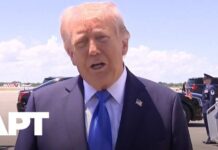

President Trump’s decision to keep Chinese student visa levels steady—despite past calls for crackdowns—has left many conservatives questioning whether America’s national security and core interests are being sidelined for institutional profit.
Story Snapshot
- Trump reverses course, allowing 600,000 Chinese students over two years with no demand for concessions from Beijing.
- Move contradicts earlier administration efforts to restrict visas for students linked to the Chinese Communist Party or sensitive academic fields.
- Critics warn policy could expose American campuses to security risks, while universities defend the financial benefits.
- The debate reveals deep tensions between national security advocates and higher education lobbyists.
Trump’s Policy Shift on Chinese Student Visas Ignites Conservative Debate
In a sharp reversal, President Trump announced that the United States will maintain current levels of Chinese student visas, specifically allowing approximately 600,000 students from China to study in the U.S. over the next two years. Trump insisted there would be “no quid pro quo” with Beijing, rejecting earlier proposals to use these visas as bargaining chips in ongoing trade negotiations. This stance runs counter to previous administration directives that sought sweeping restrictions on visas for Chinese nationals tied to the Communist Party or STEM fields—moves widely supported by national security hawks and many in the conservative base.
The Trump administration had previously signaled aggressive action against Chinese student visas, citing credible fears of espionage, intellectual property theft, and the infiltration of U.S. campuses by actors connected to the Chinese government. In May 2025, Senator Marco Rubio and other lawmakers championed proposals to revoke visas for students engaged in sensitive research or with direct ties to the CCP. These efforts reflected longstanding conservative priorities—defending American innovation, securing the homeland, and prioritizing Americans’ interests in the face of globalist academic and economic pressures.
Universities Prioritize Revenue Over Security: Stakeholders and Motives
American universities, facing declining domestic enrollment and ongoing budget shortfalls, have lobbied intensely to keep their lucrative pipeline of Chinese students intact. These students, paying full tuition and often supporting costly graduate research programs, now represent a foundational revenue stream for many institutions. Critics argue that this financial dependence has made universities willing to overlook or downplay national security threats, putting institutional profit above American values and the safety of research. Policy analysts warn that “it’s all about the bottom line for them, and American values suffer in the process.” Higher education groups have pushed back against even modest efforts to limit visa durations, warning of dire financial and reputational consequences if Chinese student numbers wane.
Meanwhile, national security agencies remain vigilant. While the administration has not announced new restrictions, continued monitoring of Chinese students on U.S. campuses is expected. Congress, led by figures like Rubio, continues to press for tighter controls, underscoring the tension between the executive branch’s pragmatic approach and legislative calls for a harder line. The decision highlights a power struggle between those who believe openness benefits the country and those who see unchecked access as an invitation for foreign influence and espionage.
Short-Term Stability, Long-Term Uncertainty for American Institutions
For now, the president’s decision delivers short-term relief to universities and Chinese students who feared sudden crackdowns or mass revocations. The White House clarified that the 600,000 figure simply maintains the status quo, not an increase. However, this policy leaves many conservatives uneasy, given ongoing reports of intellectual property theft and the use of student visas as cover for espionage. The broader debate remains unsettled: Should America prioritize the economic and academic benefits of international student flows, or draw a firmer line to defend national sovereignty and technological leadership?
Long-term, continued scrutiny of student activities and campus partnerships with foreign entities is likely. The risk remains that future policy reversals could abruptly alter the landscape—impacting not only Chinese nationals but also the financial stability of U.S. higher education.
Expert Analysis: Risks, Rewards, and Conservative Values at Stake
Experts on both sides of the aisle acknowledge that Chinese students provide significant economic and intellectual contributions to American campuses. Yet security analysts emphasize that open-door policies carry real risks of espionage and technology transfer, especially in critical fields. Academic leaders contend that overly restrictive measures would hurt research and innovation, while policy analysts argue that universities’ financial motivations too often override concerns about protecting American interests and values. The ongoing debate underscores the challenge facing conservative policymakers: balancing the undeniable benefits of educational openness with the urgent need to secure the homeland and uphold core constitutional principles.
Trump on Keeping Chinese Students in U.S. Schools: ‘I Don’t Want Anything in Return’ https://t.co/W0DQVrE4sv
— Jim Geraghty (@jimgeraghty) September 2, 2025
As the Trump administration charts this new course, many in the conservative grassroots remain watchful—demanding clear assurances that national security, constitutional rights, and traditional values won’t be compromised at the altar of globalist profit and academic prestige.
Sources:
Trump’s Chinese student visa push sets off alarm bells: rising CCP influence in US
Trump defends policy on Chinese international students
Proposal to limit US student visa durations draws criticism