
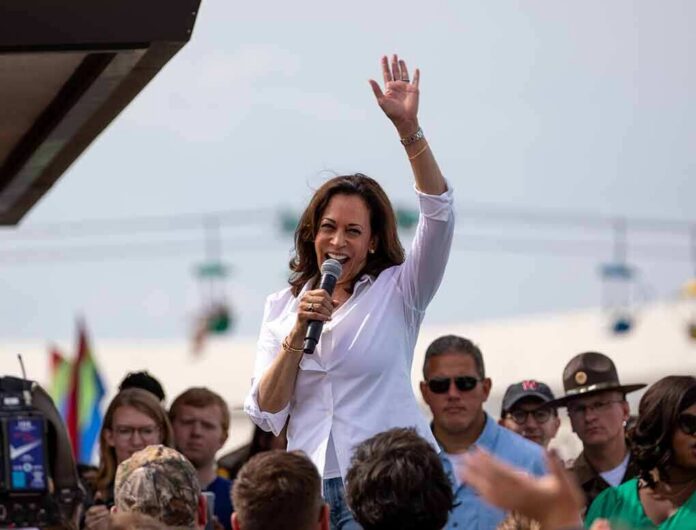
Kamala Harris told a New Hampshire crowd Democrats should expand the Supreme Court to 13 justices and “be ruthless” in pursuing structural change if they win.
Story Highlights
- Harris backed expanding the Supreme Court to 13 justices and tied it to broader reforms.
- She said Democrats must “be ruthless,” clarifying she meant firm accountability, not cruelty.
- She urged a fresh look at the Electoral College and said the popular vote should matter.
- She also cited priorities like statehood for Puerto Rico and Washington, D.C., and changing campaign finance rules.
Harris Calls For A 13-Justice Supreme Court
Kamala Harris said Democrats “have to expand the Supreme Court” and proposed a 13-member bench during a recorded event in Manchester, New Hampshire. She linked the number to the count of federal circuit courts and cast the change as part of needed “structural work.” The remarks came while campaigning with New Hampshire Democrats, including Senate hopeful Chris Pappas. Congress, not the Constitution, sets the Court’s size, and has changed it several times in U.S. history.
Harris’s rationale cited the 13 circuit courts, but her comments did not include bill text, a timeline, or details on nominations. The pitch emphasized outcomes over process and aimed to energize supporters. Opponents often label such moves “court packing.” Supporters argue Congress has lawful power to adjust the Court’s size, a step taken before for practical and political reasons. Her event did not announce specific legislation or committee plans.
“Be Ruthless” Frame And What She Says It Means
Harris told the audience, “I think we have to be ruthless,” and then defined it as being uncompromising on accountability and consequences. She added that “ruthless” did not mean cruel. The phrasing drew attention because the word can suggest harsh tactics, yet her explanation focused on firm follow-through. The event video places these remarks in a broader push for structural change if Democrats gain power after the next election.
The setting was a campaign-style fireside chat on reproductive rights and democratic reforms. Harris used the moment to argue that rules shape outcomes and that her party should not shy away from using lawful tools. The message fit a wider trend where both major parties see the courts as central to policy fights. Research shows the public reacts strongly to moves that appear to politicize courts, which can shape electoral backlash.
Electoral College, Statehood, And Money In Politics
Harris said the country should “take a critical look at the Electoral College,” and in other remarks said “the popular vote has to matter.” She did not specify a mechanism, such as a constitutional amendment or an interstate compact. She also mentioned statehood for Puerto Rico and Washington, D.C., and sought to overturn the Citizens United campaign finance ruling. These ideas point to a broader program, not only a court-size change.
Changing the Electoral College would be complex. Some scholars say replacing it by amendment is unlikely in the near term, which is why alternatives like interstate compacts or allocation changes draw interest. Each path carries legal and political hurdles. Harris’s comments set goals but stopped short of naming the exact legal tools she would use to get there, leaving room for follow-up questions on method and timing.
Why This Push Matters In Today’s Politics
The fight over institutions reflects a deeper split: whether to keep rules steady or change them when outcomes seem skewed. Congress has the power to expand the Supreme Court, and it has done so before. But many voters bristle at changes that feel partisan. Proposals framed as neutral fixes tend to fare better than ones framed as political payback. Harris’s pitch combines lawful authority with hard-edged language, which could rally allies and mobilize critics at once.
Sources:
thegatewaypundit.com, patch.com, newhampshirepoliticalreporter.com, youtube.com
© totalconservative.com 2026. All rights reserved.