
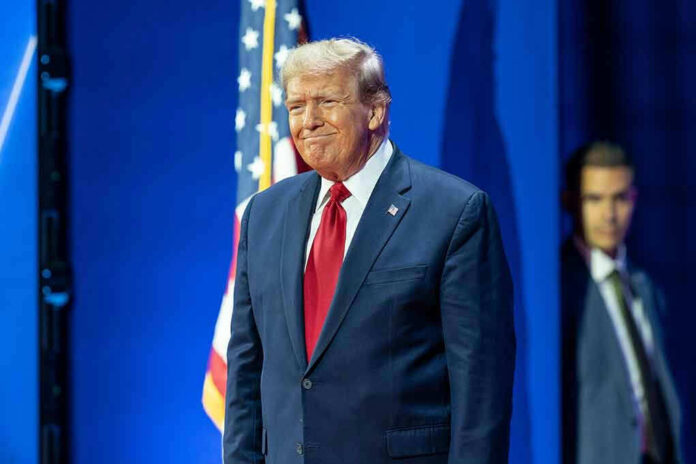
Top Republicans now openly question if Donald Trump’s second term is dooming the GOP to midterm disaster.
Story Snapshot
- Trump’s approval plunged from over 50% in January 2025 to 36-39% by December, with 60% disapproval.
- Republican strategists criticize misaligned priorities like tariffs over inflation relief.
- GOP faces darkening 2026 prospects, with Democrats leading generic ballot by 5.3 points.
- Even Republican approval of Trump slipped 7 points to 84%, independents at 25%.
- Government shutdown and economic woes fuel intra-party alarm.
Trump’s Second Term Starts Strong
Donald Trump began his second term in January 2025 with majority approval exceeding 50%. Republicans celebrated a perceived realignment after 2024 gains with Hispanics, independents, and young voters. The administration quickly passed major tax legislation, claimed victory in ending the Israel-Hamas war, and slashed illegal border crossings. Optimism peaked as GOP leaders eyed a mandate for bold reforms.
These early wins masked brewing troubles. Public priorities shifted to inflation, wages, and health care. Trump emphasized immigration, tariffs, and executive power instead. Voters rated economic conditions fair or poor at 74%, with 71% noting higher prices since his inauguration.
Approval Ratings Plunge Amid Economic Pain
Gallup recorded Trump’s job approval at 36% by fall 2025, the lowest of his second term, with 60% disapproval. YouGov/Economist polls showed 39% approve and 57% disapprove by December, a net -19. Republicans’ support dropped 7 points to 84% in one month. Independents hit 25%, their worst ever.
Voters blamed Trump over Biden for economic woes by more than two-to-one. Only 23% thought conditions improved; 14% felt better off than a year prior. Issue ratings soured: immigration fell 9 points, economy 6 points. Congress approval among Republicans collapsed from 54% to 23% post-shutdown.
Republican Elites Sound the Alarm
Prominent Republicans and strategists voiced deepening concerns. Brookings analysis warned Trump’s slump darkens 2026 midterm prospects. GOP strategists highlighted misaligned focus: 50% of Americans prioritized economy or health care, only 21% Trump’s top issues. Overreach on agency cuts, Medicare reductions, and ICE funding alienated swing voters.
Party insiders fretted over governance turbulence. A prolonged government shutdown exacerbated losses in off-year elections. Even MAGA base showed softening, with divides on symbolic issues like renaming the Kennedy Center. Congressional Republicans, facing 2026 defenses, saw their House edge flip to a 5.3-point Democratic lead.
These critiques align with common sense: elections reward results on pocketbook issues. Facts show Trump’s style energizes the base but repels independents crucial for victories. Conservative values demand fiscal discipline without chaos that hands Democrats ammunition.
Power Grabs Fuel Broader Concerns
Pew found 49% of Americans believe Trump exercises more presidential power than predecessors, deeming it harmful. Republicans split, but overall majorities worried. This perception intensified resistance to further executive actions on tariffs or program cuts.
Trump rates positive on crime (43%) and foreign affairs (41%), yet net negatives across nine issues. Erosion hit Ukraine (-10 points) and federal budget (-12). Intra-party anxiety mounts as base loyalty wanes slightly amid poor economic sentiment.
GOP Faces Midterm Reckoning
Brookings ties Trump’s decline to GOP vulnerabilities. Historical precedents like Bush post-Katrina or Obama after 2010 midterms show sagging second-term approvals breed party rebellions. Republicans risk House and Senate losses unless Trump pivots to voter priorities.
Strategists urge focus on inflation relief over cultural fights. Independents, key to 2024, now abandon him. Donors and leaders balance base loyalty against electoral math. Trump’s dominance persists, but slipping numbers open space for dissent grounded in data.
Sources:
YouGov/Economist Poll on Trump Approval
Brookings on Republican Midterm Prospects
Pew on Presidential Power Concerns