
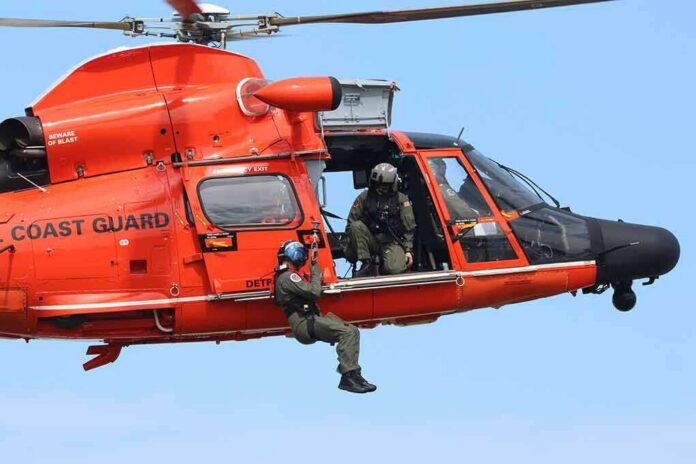
The U.S. Coast Guard launched air and surface crews to search off Nantucket after the Federal Aviation Administration reported losing contact with a Boston-bound Gulfstream jet carrying six people early Saturday.
Story Snapshot
- Coast Guard teams are searching off Nantucket for a missing Gulfstream G100 from Bermuda to Boston.
- Officials said six people were on board when contact was lost early Saturday.
- Search-and-rescue is underway at sea, where the Coast Guard leads response efforts.
- Authorities have not released identities, operator details, or a confirmed outcome yet.
What Officials Reported About The Missing Flight
Coast Guard leaders said they sent planes and boats to look for a missing jet off Nantucket on Saturday, October 3, 2026. Outlets reported the Federal Aviation Administration told responders it lost contact with a Gulfstream G100 that left Bermuda and was headed to Boston. Reports also said six people were on board the aircraft. These details came in same-day coverage based on Coast Guard updates shared with media and on social platforms.
News reports described the search zone as off the coast of Nantucket, a maritime area under Coast Guard lead for search-and-rescue. Coverage did not include an incident number, tail number, or confirmed operator. Officials had not announced a rescue, recovery, or location of wreckage at the time of reporting. The focus remained on active search efforts, with air and surface crews sweeping likely areas based on last known position and route.
Where The Search Fits In The Rescue System
When a plane is overdue or loses contact, the Federal Aviation Administration triggers alert notices and works with rescue centers. For events at sea, the U.S. Coast Guard runs the search-and-rescue mission and coordinates assets. That split is standard under the National Search and Rescue Plan. The Coast Guard’s regional rescue centers direct searches, while aviation controllers share flight and radar data to guide the effort and refine the search box.
That structure often produces a short public window with few hard details. Early messages usually confirm only the lost contact, the aircraft type, the route, and headcount. Flight numbers, operator names, and minute-by-minute timelines come later, after agencies compare logs and radar. Federal Aviation Administration policy also notes that alert notices inform local and federal partners to begin searches, not to confirm crash outcomes. That is why early reports stress “search launched” over findings.
What We Know, What We Do Not, And Why It Matters
As of the latest reports, these points are firm: the aircraft is a Gulfstream G100, the route was Bermuda to Boston, six people were aboard, and Coast Guard crews are searching off Nantucket. The Federal Aviation Administration loss of contact happened early Saturday. Officials have not released identities, the aircraft registration, or the operator. Media did not cite a formal Coast Guard case number or a precise last known time and position in their initial stories.
"Coast Guard Launches Urgent Search Off Nantucket After Boston-Bound Medical Jet Carrying 6 People Vanishes"
➡️ Emergency rescue crews with the U.S. Coast Guard have launched an urgent search operation over open water off the coast of Nantucket after a twin-engine medical jet…
— BreakinNewz (@BreakinNewz01) October 3, 2026
Families and the public want fast answers, but the ocean is large and search grids take time to cover. Radar, satellite-based tracking, and flight communications can help shrink the area. The Coast Guard blends those tools with aircraft and cutters to look for debris, signals, or survivors. That system is built to protect life first and confirm facts next. It can feel slow, yet it reflects a safety-first approach that both sides of our politics often say they want from government.
Why This Story Taps A Deeper Public Frustration
People across the aisle worry that institutions often speak in vague terms during crises. Aviation searches are a case where careful language is not spin but process. Saying “search launched” prevents false claims and keeps focus on rescue. At the same time, the demand for clear, prompt updates is fair. The best path forward is steady, sourced briefings from the Coast Guard and the Federal Aviation Administration as they verify each new detail and narrow the search.
What To Watch For Next
Key updates will include a confirmed last known position, any debris or signal finds, and identification of the aircraft operator and tail number. We may see a Coast Guard incident summary, a Federal Aviation Administration event notice, and, if needed, a National Transportation Safety Board inquiry. Each document fills a gap: where contact ended, how the search evolved, and what evidence guides next steps. Until then, the official mission stays centered on finding people alive.
Sources:
facebook.com, wcvb.com, nbcboston.com, nbcnews.com, faa.gov, pinkpillbox.com, news.uscg.mil
© totalconservative.com 2026. All rights reserved.