totalconservative.com — As the death toll from U.S. strikes on suspected drug boats quietly passes 200, many conservatives are asking a simple question: are we getting real security or just another shadow war with no accountability?
Story Snapshot
- At least 202 people have been killed in U.S. strikes on suspected drug boats since September 2025.
- The Pentagon has released tough rhetoric and video clips, but almost no public proof the blown-up boats were actually carrying drugs.
- A Pentagon watchdog has opened an evaluation, raising concerns about transparency, rules of engagement, and constitutional oversight.
- Conservatives now face a serious balance: crush cartels, but avoid an unaccountable permanent-war model turned on our own government’s say‑so.
Mounting Death Toll In A Little‑Scrutinized Campaign
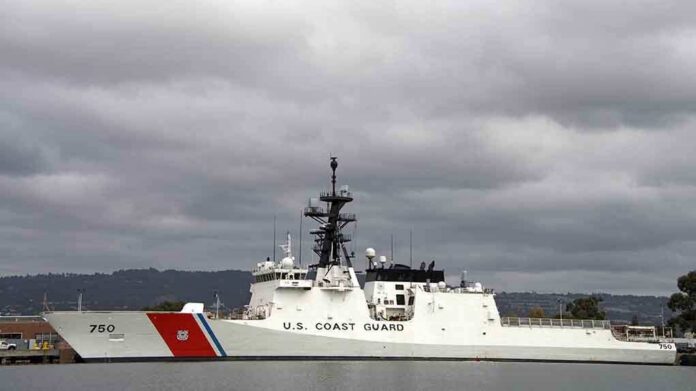
United States Southern Command has spent months running Operation Southern Spear, a lethal campaign against what it describes as drug-trafficking vessels moving through the Caribbean Sea and eastern Pacific Ocean.[2] As of early May 2026, open-source tallies and press reporting indicate at least 202 people killed in at least 61 strikes on 62 vessels, with a handful listed as missing and presumed dead.[1][2] Recent reporting notes new strikes this week in the eastern Pacific, killing additional crew members and pushing the toll beyond 200.[1][3] Supporters see a hard line against cartels, but the scope now looks less like occasional interdiction and more like an ongoing maritime air war.
Military statements say the targets are boats “engaged in narco-trafficking operations” on well-known smuggling routes and, in some cases, tied to designated terrorist organizations.[2] Video released to media outlets shows small vessels under way moments before being hit by powerful munitions that leave little chance of survival for anyone on board. The operation is framed as part of a broader effort to fight cartels and terrorism close to their source rather than waiting for fentanyl and other drugs to reach American streets.[2] For many readers, that goal fits a long-standing desire to hit criminal networks hard before they can poison another generation.
Serious Questions About Evidence And Rules Of Engagement
Even as the strikes continue, major outlets report that the Pentagon has provided almost no public evidence that the destroyed vessels were actually carrying narcotics.[1][2] Coverage notes that Southern Command repeatedly uses its standard narco-trafficking language in press releases, but declines to offer cargo forensics, residue tests, or chain-of-custody records that would prove the presence of drugs to the public.[1] A collection of legal and military experts has gathered analyses warning that this pattern—heavy reliance on official labels, light on verifiable proof—echoes broader post‑9/11 trends in counterterrorism and drug war operations. That gap between claims and testable evidence is exactly what has drawn the attention of the Pentagon’s own inspector general, who has opened an evaluation of the campaign.
Concerns are not limited to what was on the boats; they also extend to how force was used. Reporting based on survivor accounts and sources familiar with operational details describes at least one case where a second strike allegedly hit survivors after an initial attack, raising fears of a “double tap” scenario. CBS News has documented situations in which people first described as survivors were later added to the death toll after they disappeared at sea during the campaign. These accounts have fueled criticism from human-rights advocates who argue that, without clear battlefield conditions or transparent legal authority, such lethal actions look less like law enforcement at sea and more like targeted killings without due process. For conservatives who care deeply about proper rules of engagement for our troops, that lack of clarity is troubling.
Balancing Toughness On Cartels With Constitutional Limits
The campaign’s supporters emphasize the staggering human cost of drug overdoses at home and argue that America cannot afford to play defense forever. They see Operation Southern Spear as a way to put fear back into cartel captains and maritime smugglers who have long treated the Pacific and Caribbean as safe highways.[2] From that perspective, sustained strikes, destroyed vessels, and mounting enemy casualties are signs that Washington is finally treating narco‑trafficking as the national‑security threat it has become. Many in the conservative base have demanded exactly this kind of resolve after years of porous borders, soft prosecutions, and globalist trade deals that looked the other way at cross-border crime.
Death toll from US strikes on suspected drug boats passes 200 — via @NSlayton https://t.co/7U0VQN9OZe
— Jeff_Schogol (@JSchogol73030) May 31, 2026
At the same time, this audience also remembers how permanent “emergency” powers and secret kill lists grew under past administrations. The fact that over 200 people have been killed without the government publicly identifying who they were, what exactly they were carrying, or how each strike was cleared under U.S. and international law raises core constitutional questions.[1][2] A watchdog investigation suggests that even inside the Pentagon there is recognition that transparency and oversight have lagged behind the pace of operations. For those who believe in limited government and clear separation of powers, the answer is not to hamstring efforts against cartels, but to demand proof standards, congressional oversight, and rules that prevent any administration—current or future—from turning lethal force into an unreviewable habit just because it happens far from U.S. shores.
Sources:
[1] Web – Death toll from US strikes on suspected drug boats passes 200
[2] Web – US kills 2 more suspected drug traffickers in boat strike – Fox News
[3] Web – United States strikes on alleged drug traffickers during Operation …
© totalconservative.com 2026. All rights reserved.