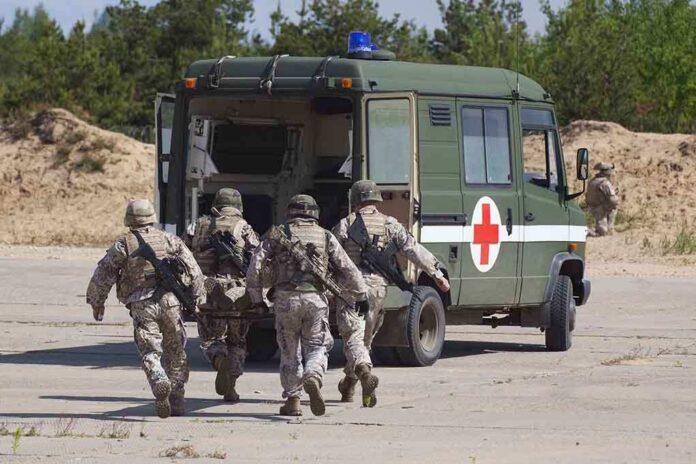
Washington is rushing ships and planes toward Venezuela for disaster relief, while rival stories about “aid” or “intervention” spread fast.
Story Snapshot
- U.S. Southern Command says forces are moving to provide airlift, logistics, and lifesaving help [2][3].
- President Trump ordered a rapid response and said the United States stands ready to help [4].
- Urban search and rescue teams from Virginia and Los Angeles are deploying with canines and tools [8].
- Questions remain about troops on the ground, timelines, and how broad the aid will be [1].
What The Pentagon And White House Have Confirmed
U.S. Southern Command said joint forces are moving to bring airlift, logistics, and lifesaving capabilities to support Venezuela after severe earthquakes. The command tied the effort to direction from the Department of Defense and said it is working with the State Department on relief operations. The statement did not say U.S. troops would enter Venezuela. That leaves uncertainty about any ground presence. The command also cited coordination with regional partners that have pledged aid [1][2][3][5].
President Donald Trump said the United States “stands ready, willing, and able to help,” and he directed federal agencies to move fast. His public message aimed to show urgency and a whole-of-government push. The report also described damage that will make logistics hard, including possible airport disruption near Caracas. The White House, however, has not set a dollar figure. Officials said it is too early to give a full cost or timeline for all aid deliveries [4][5][8].
Rescue Teams, Medical Aid, And Early Logistics
Fairfax County, Virginia, and Los Angeles County urban search and rescue teams are deploying. These teams usually include 30 to 60 members, canines, and specialized tools for collapsed buildings. A Disaster Assistance Response Team is moving to deliver and coordinate medical and other urgent help. These steps match the first phase after major quakes: save lives, clear access, and assess damage. Officials also flagged needs for airlift, staging, and secure landing zones as aid scales up [5][8].
Reports say overhead imagery is being used to assess damage along the coast and in areas that are still hard to reach. Imagery helps teams route supplies, prioritize neighborhoods, and spot blocked roads, fuel needs, and safe drop zones. Damage at airports can force reliance on military cargo hubs, short-field landings, or sea-based delivery. That is why planners are putting ships and planes in position to move people, equipment, and relief goods quickly [5][8].
The Debate: Humanitarian Help Or Strategic Overreach?
Some media and critics warn the military staging off Venezuela could look like an invasion, not aid. This view draws on a long pattern in the region where Washington frames missions as relief or law enforcement, while others see power plays. Skeptics also point to the January 2026 operation against Nicolás Maduro and past statements about U.S. control until oil sites are rebuilt. Those facts feed doubt, even as current messages stress saving lives now [7][15][21].
🚨 JUST IN: 🇺🇸🇻🇪 The US has sent military forces to Venezuela to help with earthquake relief and rescue efforts. pic.twitter.com/XEuUwFFVtt
— Chain Bucks Official (@MalikSaqibH) June 26, 2026
U.S. Southern Command did not confirm any troop entry into Venezuela, which keeps questions open. There is also no published timeline for when all ships and planes will arrive or how much they will carry. Officials have not given a full list of supplies beyond medical help and rescue gear. These gaps leave room for rumor. Clear updates on cargo, routes, and who is in charge on the ground would help the public judge the mission on facts, not spin [1][4][5].
Why This Matters For Americans Who Feel Let Down
Many Americans, left and right, doubt that Washington is honest or competent. They worry leaders chase politics first and leave regular people behind. This mission will be a test. If aid saves lives fast and stays transparent, it can show focus and skill. If plans drift, costs soar, or goals blur into politics, trust will erode more. Straight numbers, open contracts, and proof of delivery would guard against waste and calm fears of a hidden agenda.
What To Watch Next: Accountability And Results
Watch for three things. First, a public schedule for flights, ship arrivals, and offload sites to track delivery. Second, a clear chain of command that explains how U.S. teams work with Venezuelan authorities and partners. Third, a simple ledger of supplies delivered, people rescued, and clinics stood up. Independent checks by groups on the ground would add credibility. Facts, not slogans, will decide whether this is smart relief or another fight over power [1][3][5][8].
Sources:
[1] Web – US says it is sending military ships and planes to provide logistical …
[2] Web – US military helping plan Venezuela earthquake relief – Task & …
[3] Web – STATEMENT ON U.S. MILITARY SUPPORT TO VENEZUELA …
[4] Web – U.S. Southern Command (SOUTHCOM) – Facebook
[5] Web – Trump pledges rapid U.S. aid for Venezuela after deadly earthquakes
[7] YouTube – Spain Decides to Deploy Military Relief Teams After Earthquake In …
[8] Web – The U.S. is sending aid after back-to-back earthquakes … – Facebook
[15] Web – Why the US Response to Venezuela’s Earthquake Is a Massive L — …
[21] Web – Comparative Analysis of U.S., Russian, and Chinese Military …
© totalconservative.com 2026. All rights reserved.