
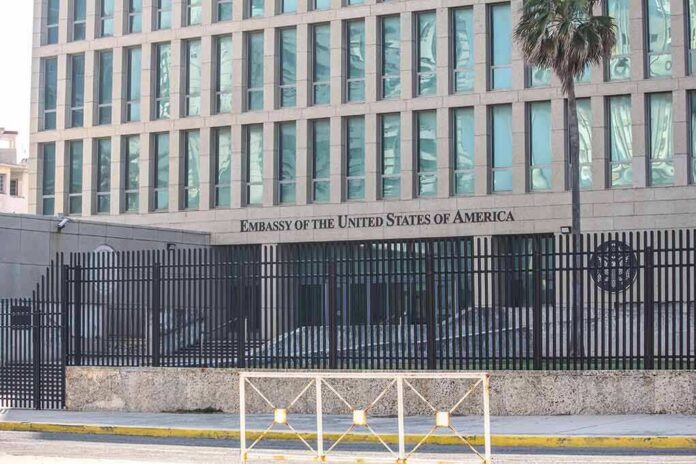
U.S. embassies across the Middle East issued near-identical security alerts telling Americans to stay vigilant and be ready for flight cancellations and airspace closures.
Story Snapshot
- Multiple U.S. embassies warned of a complex security environment and possible sudden escalation.
- Alerts advised Americans to prepare for flight cancellations, airspace closures, and travel delays.
- The State Department’s posts framed the guidance as region-wide, not country-specific.
- Embassy messages followed a standard template often used during fast-moving regional tensions.
What The Embassies Told Americans
U.S. embassies in capitals across the Middle East warned that the regional security environment “remains complex” with “potential for unforeseen escalation.” The alerts urged Americans to use heightened caution and to be ready for “flight cancellations, airspace closures, and travel disruptions.” The U.S. Embassy in Abu Dhabi and the U.S. Embassy in Amman posted this guidance in official alerts, while embassy accounts in Doha, Beirut, and Riyadh amplified the same language on social media.
Embassy notices emphasized practical steps. Travelers should review flight options, carry updated documents, and monitor embassy channels for changes. Americans were told to avoid large gatherings, vary routines, and keep communication plans with family. These measures are standard in periods of rising risk. They help citizens leave quickly if routes close or if airlines suspend service. The alerts did not name a specific group or a single planned attack, which is common for broad security warnings.
How Wide The Warning Reached
Coverage described the warnings as region-wide, with at least 11 U.S. embassies posting similar notices across Israel, Saudi Arabia, Iraq, Kuwait, Lebanon, Jordan, Bahrain, the United Arab Emirates, and Qatar. This pattern matched a coordinated approach rather than isolated posts. The aim was clear: inform Americans that risk is not limited to one border and that travel could face snap changes across several countries at once.
Social media posts from official embassy accounts supported that reach. The U.S. Embassy in Qatar flagged a “Security Alert” for September 1, repeating the call for vigilance and readiness for travel problems. The U.S. Embassy in Beirut and the U.S. Embassy in Riyadh shared similar alerts. These aligned messages showed a shared script and timing, which is how the State Department scales warnings during fast-moving events without exposing sensitive details.
Why The Language Sounds The Same
State Department alerts often use standard wording when risk rises across a region. This lets missions act fast when details are still developing. Using the same phrases keeps the message clear: conditions can change quickly, and Americans should be ready to move. This practice avoids revealing intelligence sources or tipping off potential attackers, while still alerting travelers to real constraints like closed airspace or sudden airport shutdowns.
The alerts’ focus on travel impacts reflects how modern crises unfold. Airspace can close with little notice. Airlines can reroute or cancel flights for crew safety and insurance reasons. Americans on business, faith trips, or vacation can get stuck if they wait. By pushing the same message across many posts at once, the State Department reduces confusion and helps citizens decide whether to delay trips or leave sooner if they can.
What This Means For Travelers And Families
Americans in the region should check flight status often, confirm backup routes, and keep passports and visas within reach. People planning trips should review embassy pages and sign up for the State Department’s traveler enrollment program. Families stateside should keep contact plans simple and frequent. If airlines begin to trim schedules, options can vanish fast. Prepared travelers can change plans early, before seats fill or borders tighten.
The Bigger Picture For A Weary Public
Many Americans feel leaders do not level with them until problems spill over. These alerts show a different approach: warn early, even if details are limited. The notices do not solve the deeper conflicts that drive risk, but they do respect the public’s need to plan. In a time when people doubt institutions, clear, repeatable guidance that helps families avoid danger is a basic duty government must meet.
Sources:
njsr.com.ng, yahoo.com, avapress.com, ground.news, x.com
© totalconservative.com 2026. All rights reserved.