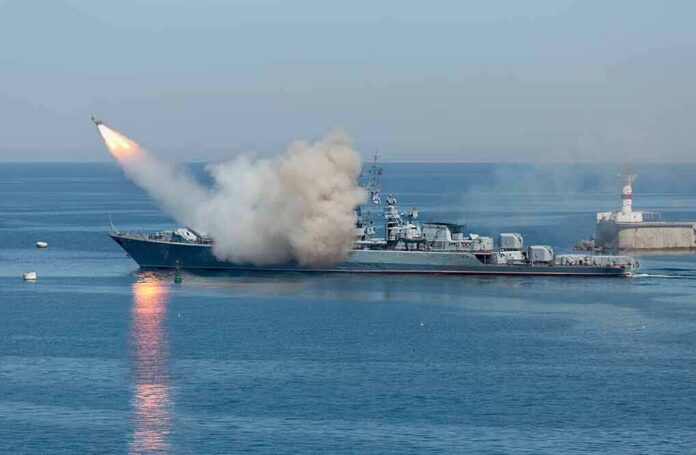
U.S. forces hit two Iranian rocket launchers on Larak Island to stop what commanders called an “imminent” minelaying threat in the Strait of Hormuz, and Iran fired back at U.S. bases in Jordan.
Story Snapshot
- CENTCOM said the strike was a limited, precise action to protect shipping.
- U.S. officials said Iran was preparing rockets with sea mines near key lanes.
- Iran condemned a violation of sovereignty and claimed a right to retaliate.
- Iran’s Revolutionary Guard said it hit U.S. bases in Jordan in response.
What U.S. commanders say happened and why it matters
U.S. Central Command said American forces struck two Iranian rocket launchers on Larak Island after observing preparations to deploy sea mines into the Strait of Hormuz. Officials described a “limited, precise action” meant to stop an immediate risk to civilian mariners and global trade routes. The Strait carries a large share of the world’s oil shipments. Even a rumored mine can push insurers to halt coverage and shippers to reroute, raising prices for families and businesses far from the Gulf.
American officials said the strike came after efforts to clear mines from shipping lanes in recent weeks. They said Iranian forces were seen preparing to launch rockets designed to scatter sea mines, which would threaten any tanker that passed near them. The military framed the move as defensive and narrow in scope, hitting only the two launchers involved. That claim supports the idea that the action aimed to prevent harm rather than escalate into a wider war.
How Tehran responded and the dispute over legality
Iran’s Foreign Ministry called the Larak strike a violation of its sovereignty and territory. It said Iran used its “legitimate” and “inherent” right of self-defense and vowed a firm response to any further aggression. Iran’s Islamic Revolutionary Guard Corps said it launched missiles and drones at U.S. bases in Jordan and claimed damage to maintenance and fighter support sites there. These counterstrikes deepen a tit-for-tat cycle that regional watchers have warned could drag in neighbors and disrupt trade.
Both sides used legal language to justify force. The United States spoke of an imminent threat to civilians at sea, which is the typical standard for self-defense. Iran cited sovereignty and self-defense to justify retaliation for the strike on its island. The supplied public record does not include a released U.S. legal memo or sensor footage that would help outsiders judge the imminence claim. That gap leaves the debate to competing official statements rather than shared evidence.
Why sea mines turn small moves into big shocks
Analysts note that sea mines have outsized influence in narrow waters like the Strait of Hormuz. One device, or even a credible warning about one, can cause shipping to pause and insurers to balk. That alone can raise costs, delay deliveries, and rattle energy markets. Experts say this is why both Iran and the United States move quickly when minelaying is suspected and why the risk of error is high without transparent proof. Clearing suspected mines can also take months and cost hundreds of millions of dollars.
The pattern is familiar. One side says it acted to prevent harm and keep trade moving. The other says it faced aggression and had to answer force with force. The public often sees quotes and headlines before any hard imagery or logs emerge. That favors fast narratives over careful checks. People at home then feel the costs in higher fuel prices and shipping delays, while leaders and agencies argue over facts that the public cannot independently verify.
What Americans across the spectrum worry about now
Voters on the right and left share a basic concern: Washington often moves fast abroad without showing clear proof to the public. Many remember long wars, rising prices, and leaders who ask for trust but release little data. If the United States had strong evidence of an imminent mine threat, showing declassified images or a short summary could strengthen confidence. If Iran’s claims of casualties and damage are true, independent checks would help test those statements too.
Energy security is on the line. The Strait links global oil and gas flows to family budgets. Each strike-and-retaliation cycle adds risk premiums that show up in prices at the pump and on utility bills. That is why clarity matters. Releasing limited but concrete proof, and explaining the legal basis in plain terms, would help the public judge the tradeoffs. It would also signal that leaders answer to citizens first, not to talking points written behind closed doors.
Sources:
cnn.com, iranintl.com, yahoo.com, saudigazette.com.sa, reuters.com, islamtimes.com, fortune.com
© totalconservative.com 2026. All rights reserved.