America is urging NATO to boost readiness now, warning that Vladimir Putin could test the Alliance if Europe lets its guard down.
Story Highlights
- NATO’s strategy labels Russia the most direct threat, demanding full-spectrum readiness.
- U.S. Ambassador to NATO Matthew Whitaker pressed allies to prepare for possible Russian moves.
- NATO leaders pledged major capability and support investments at the Ankara Summit.
- Analysts expect hybrid attacks and pressure below open war, not just tank invasions.
What Washington Told Allies And Why It Matters
United States Ambassador to NATO Matthew Whitaker said allies must be ready in case Russia attacks. He delivered the message in an exclusive interview, stressing that preparation and unity deter aggression. NATO’s own strategy names Russia as the most direct threat to allied security. It says the Alliance must be able to defend every member state. That is the standard. That is the promise. Readiness is not posturing. It is how peace holds.
President Trump, asked about the risk, said he does not believe Russia will strike NATO territory. His public confidence signals deterrence is working. It also puts pressure on Europe to meet pledges and close gaps. Strong forces, clear lines, and stocked arsenals keep a test from becoming a crisis. The United States can lead. But Europe must carry its share to keep our troops safe and our commitments credible.
Russia’s Threat: Tanks At The Border Or A Shadow War
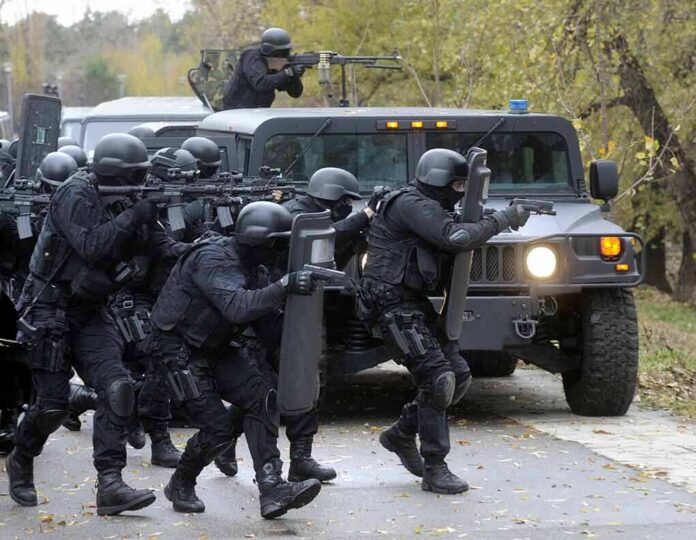
NATO officials and experts point to a rising risk of gray zone pressure. That means sabotage, cyberattacks, energy blackmail, disinformation, and covert probes. These moves hit power grids, rail hubs, and ports, and they aim to scare voters and split allies. Analysts warn that Russia will likely escalate these hybrid tactics in the near term. That pressure can come without crossing the line into open war, but it still does real harm if we are not ready.
NATO’s doctrine already addresses this mix of threats. It calls for layered deterrence, steady exercises, strong logistics, and honest stockpiles. It also backs rapid attribution and coordinated responses to hybrid attacks. The end goal is simple. Do not let Moscow think it can chip away at one ally and get a free pass. If the Alliance answers quickly and in sync, tests fail and costs rise. That protects freedom, markets, and families from chaos.
What NATO Just Promised At Ankara
Allied leaders at the 2026 Ankara Summit reaffirmed their ironclad pledge to defend every inch of allied land. They tied that pledge to real investments in capability, training, and support for Ukraine. The declaration highlighted the long-term nature of the Russian threat and the need to fund deterrence at scale. Words matter, but money, munitions, and maintenance matter more. Ankara put numbers and timelines behind a firm stance.
Whitaker has pushed for this since before his Senate confirmation. He pressed allies to expand contributions, raise readiness, and prepare for hybrid threats. He emphasized that strength across all 32 members is what keeps the peace. That message echoes the Reagan rule: peace through strength. When our guard is up and our cupboards are full, adventurism looks like a bad bet for any foe.
Balancing Confidence With Common Sense
Some intelligence views suggest Russia may probe NATO lines to test unity. Others say Moscow is unlikely to launch a full invasion soon. That mix can confuse the public debate. Here is the plain view: hope for calm, prepare for storms. Allies should shut every easy door to sabotage, harden bases, protect energy links, and drill rapid repair plans. These steps are cheap compared to a crisis. They also fit President Trump’s call for allies to do more, faster.
🚨❄️ NATO MOVES MISSILE FORCES INTO THE HIGH NORTH 🚨
American, British and Norwegian forces are conducting Operation Atlantic City 26 across Norway’s strategically vital Arctic region.
🎯 U.S. forces reportedly staged long-range missile equipment near Trondheim.
🚀 On remote… pic.twitter.com/AXZKCQBJfN
— Gunnys Adventures (@DerrickSalas9) September 2, 2026
For conservatives, the core principles are clear. Secure borders, strong industry, and reliable energy keep our nation safe and our costs down. We do not salute globalist mission creep. We do back a lean, tough Alliance that deters war so our troops stay out of one. That means Europe meets spending goals, builds ammo stockpiles, and protects its grids. America leads with strength and prudence. Moscow understands resolve backed by real muscle, not slogans.
Bottom Line For U.S. Families And Taxpayers
Deterrence is cheaper than war. Training today is cheaper than rebuilding tomorrow. If NATO stays serious, Putin’s tests will fail before they start. That shields our economy from shocks, our sons and daughters from combat, and our Constitution from panic laws after a crisis. The path is simple: fund readiness, harden targets, call out hybrid attacks fast, and stand firm together. Do that, and this story ends with peace, not headlines.
Sources:
feedpress.me, belfercenter.org, atlanticcouncil.org, nato.int, usatoday.com, en.wikipedia.org, russiamatters.org, cna.org
© totalconservative.com 2026. All rights reserved.