President Trump approved death by U.S. Army firing squad for Fort Hood terrorist Nidal Malik Hasan, moving a long-delayed military death sentence toward action.
Story Snapshot
- Pentagon said Defense Secretary Pete Hegseth recommended firing squad; President Trump approved it.
- Army Secretary will set the time and place for Hasan’s execution.
- Hasan was convicted in 2013 for the 2009 Fort Hood attack that killed 13 and wounded dozens.
- This would be the first U.S. military execution since 1961, an exceptionally rare step.
Pentagon Outlines Approval Chain And Next Steps
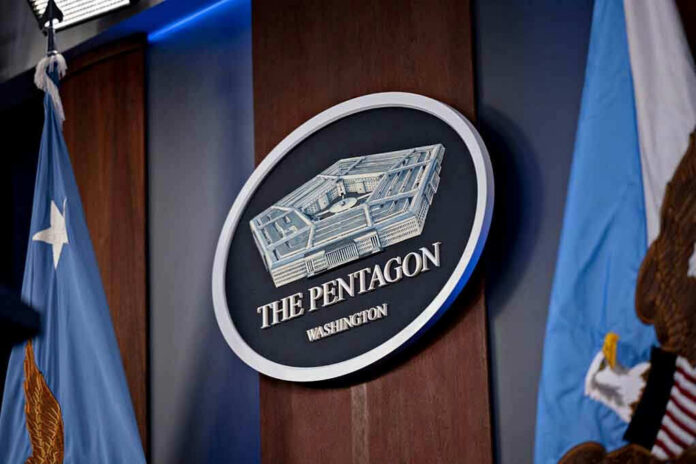
The Pentagon announced on October 5, 2026, that Defense Secretary Pete Hegseth recommended death by firing squad for Nidal Malik Hasan, and President Trump approved that recommendation. Pentagon spokesman Sean Parnell stated the Secretary of the Army will set the time and place of the execution. That means logistics, security, and protocol now move to the Army for scheduling, with no public date yet shared by the department or service leadership.
Reporters tracked the approval chain across several outlets, which matched the Pentagon’s description. Each account said Hegseth made the recommendation, President Trump approved it, and the Army Secretary would determine the details. That consistency signals a coordinated and final decision within the department. No additional paperwork has been released publicly, but the Pentagon’s statement is clear on who decided what and how the process will proceed inside the Army.
What Hasan Did And Why The Sentence Stands
A military jury convicted Hasan in 2013 for murdering 13 people and wounding more than 30 others during the 2009 Fort Hood shooting. The panel sentenced him to death under the Uniform Code of Military Justice. News reports note that appeals in military and federal courts ran their course for years before this week’s announcement. The conviction and death sentence have been part of the record since 2013, placing the case in the rare category of confirmed military capital punishment.
The Pentagon’s move does not reopen guilt or innocence. It implements the sentence the court-martial already imposed. Families of the fallen waited more than a decade for the government to act. The Army Secretary’s role now focuses on carrying out the sentence with safety, discipline, and adherence to military law. That includes preparing a secure site, assembling a qualified firing squad, and following medical and legal steps before and after the execution.
Why Firing Squad, And How Rare This Is
Firing squad has deep roots in military justice, especially in wartime discipline, but it is uncommon in modern America. The United States military has not executed anyone since 1961, and firing-squad executions in the military trace back to the mid-1940s. That history explains why this method appears in a military context more than in civilian prisons, where lethal injection became dominant in recent decades. Hasan’s case would mark a break from decades of inactivity in military capital cases.
🚨Trump has approved the execution of Nidal Hasan, the former U.S. Army psychiatrist convicted of killing 13 people at Fort Hood, Texas, in 2009.
🔷 Hasan opened fire on soldiers who were waiting at a medical clinic, killing 13 people and injuring 32 others.
🔷 He was convicted… pic.twitter.com/TiF05C1dO3
— Leah_לאה (@Weisslbj333Leah) October 6, 2026
The Pentagon’s choice underscores a priority on certainty and speed over methods that face drug shortages or extended litigation. Outlets covering the announcement highlighted that the Army Secretary will handle the schedule, while President Trump and Secretary Hegseth fixed the method. For many service members and families, the step reads as long-overdue justice for a terrorist attack on a U.S. base. It also signals that under this administration, deadly attacks on Americans will meet firm consequences.
Sources:
nampa.org, upi.com, cnn.com, washingtonexaminer.com
© totalconservative.com 2026. All rights reserved.