
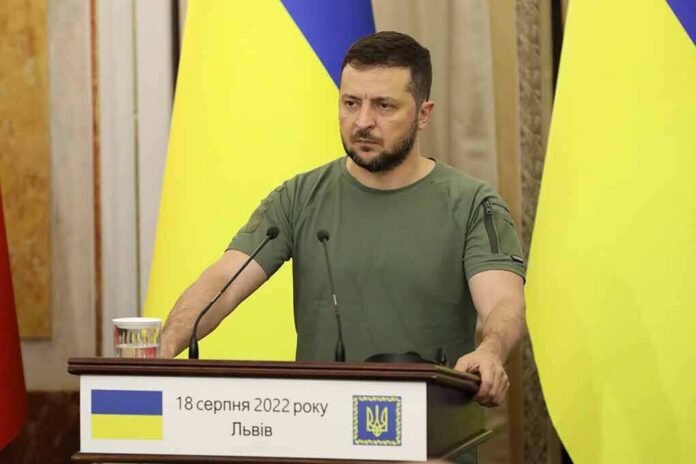
President Trump openly urged Ukraine to replace Volodymyr Zelenskiy, tying the call to refinery strikes and stalled peace efforts.
Story Snapshot
- Trump said Ukraine should “get a new president,” blaming Zelenskiy for missed peace deals.
- Trump warned Kyiv to stop hitting Russian oil refineries, linking strikes to wider risks.
- Ukraine’s wartime law bars elections under martial law, complicating any quick replacement.
- Zelenskiy says Ukraine is ready to pursue a “just agreement” to end the war.
Trump’s Demand and the Stated Rationale
President Trump told reporters it is “time for Ukraine to get a new president,” arguing that Volodymyr Zelenskiy rejected several chances to end the war. Trump did not release documents or terms for the alleged deals. He paired the leadership call with a warning to halt Ukrainian strikes on Russian refineries, saying such attacks risk wider fallout. Major outlets reported the comments after a public clash over a diesel arrangement and refinery strikes that Trump opposed.
Trump framed the issue as urgency to stop energy shocks and move talks forward. He said he had told Zelenskiy not to hit refineries and accused him of choosing conflict over settlement. Reporting connects his pressure campaign to a dispute about Russian diesel exports and Ukraine’s targeting of energy sites. The statements place energy security and negotiation timing at the center of Trump’s case for a leadership change in Kyiv, even as he provided no specific proposal text.
Ukraine’s Legal Roadblock to Snap Elections
Ukraine’s law under martial law blocks national elections. The Institute for the Study of War states that the current government remains constitutional and elections cannot occur while martial law stands. That makes any near-term vote to replace Zelenskiy legally out of reach without a ceasefire or a lift of emergency conditions. Ukrainian voices have also argued that trying to vote during active fighting would be unsafe and could fracture the country during an existential war.
Ukrainian political figures and civic groups have said that postponing elections protects national survival. Reports describe a broad wartime consensus that elected officials serve until new elections can occur. This framework is common in countries under invasion or heavy bombardment. It means outside demands for a quick leadership swap collide with Ukraine’s own legal rules and practical barriers, like displaced voters and troops at the front, who could not vote freely or fairly during ongoing attacks.
The Dispute Over Refineries and Peace Prospects
Trump drew a direct line between refinery strikes and global risks, urging Kyiv to stop attacks that could hit fuel prices and trade. Coverage tied this to a reported diesel arrangement and a broader push to calm energy markets. Critics of the strikes argue they can escalate costs and strain allies. Supporters argue that refineries power Russia’s war machine, and hitting them is a lawful way to limit Moscow’s ability to wage war and pressure Ukraine on the battlefield.
On negotiations, Ukraine says it is ready to move “quickly toward a just agreement” that addresses ongoing attacks and national security. Kyiv’s position stresses that talks should reflect the reality of Russian strikes and the need for air defense. That stands apart from claims that Zelenskiy refuses diplomacy. The official statement suggests Ukraine wants talks that do not trade away core interests or reward aggression, especially while Russia continues to demand territorial concessions.
Why This Fight Resonates in the United States
American voters see a familiar pattern: leaders talk big while problems drag on. Many on the right blame elite deals, energy shocks, and endless aid. Many on the left see a push to force a foreign democracy to swap leaders under fire. Both sides worry that powerful actors shape outcomes behind closed doors. The refinery debate feeds that view, since it mixes war policy with diesel flows and market impact without a clear public record of any concrete peace terms.
“President Trump called for Ukraine to replace Volodymyr Zelenskiy as president and railed against attacks on Russian oil infrastructure, a day after announcing a diesel supply deal with Russia” https://t.co/DmlSk8yWB0
— Vi Marie (@vtorrean) October 11, 2026
Research on war endings adds a caution. Leadership changes can sometimes help talks, but the effect is small on average and depends on battlefield facts and home politics. Wars usually end when both sides see a deal as better than more fighting. That pivot takes security guarantees, real leverage, and clear terms. Calls to replace a leader do not fix those deeper barriers by themselves, especially when a country’s laws block quick elections under martial law.
What to Watch Next
Watch for any release of specific peace proposals that Trump says Zelenskiy rejected. Clear terms, dates, and participants would help the public judge the claim. Track whether Ukraine changes its refinery-strike policy and whether that links to shifts in aid or intelligence sharing. Follow legal steps in Kyiv tied to martial law and election timing. And monitor Russia’s stance on territorial demands, which remains the core obstacle to a durable settlement, regardless of who leads Ukraine.
Sources:
leadership.ng, bbc.com, 24tv.ua, ground.news, unn.ua, meduza.io, kyivpost.com
© totalconservative.com 2026. All rights reserved.