A rear-end crash between two high-speed trains on Spain’s Madrid–Andalusia line killed dozens and shut the corridor, reviving fears about rail safety on even the most advanced routes.
Story Highlights
- Authorities reported a rear-end collision on the Madrid–Andalusia high-speed line, halting traffic.
- Regional officials said a stopped train was hit from behind by another going the same way.
- Early death tolls ranged widely, but all reports confirmed dozens killed and many injured.
- The trains were identified as Renfe and Iryo services traveling south from Madrid.
What Happened On Spain’s High-Speed Corridor
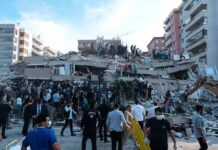
Spain’s rail infrastructure authority said two high-speed trains collided in a rear-end crash on the Madrid–Andalusia corridor, forcing a full shutdown of traffic on the line. Regional officials in Castilla-La Mancha said both trains traveled in the same direction and that the trailing train struck the tail of a stopped train. Reports located the wreck in Toledo province, on the busy Madrid–Seville route, with nearby towns cited differently across outlets. Emergency teams pulled survivors from derailed cars and moved the injured to hospitals.
Local authorities and major outlets reported “dozens” dead. Some reports cited at least 39 fatalities, while another placed the toll at 46, reflecting updates during a fast-moving rescue. Officials cautioned that counts could change as crews searched wreckage and hospitals updated patient status. The government suspended rail traffic on the corridor to secure the scene and clear debris. Investigators began gathering records from dispatch, signal systems, and onboard data to learn why protection layers failed.
Train Identities, Route, And Early Physical Picture
News reports identified the trains as a Renfe high-speed service and an Iryo high-speed service headed south from Madrid toward Seville. Photos and statements described heavy damage consistent with a high-energy rear impact, with at least two cars derailing and coming off the track toward an embankment or ditch. The location was reported between towns in Toledo province, but outlets differed on the exact pair, a common mismatch during breaking coverage. The essential facts remained clear: a following high-speed train hit the rear of another on the main corridor.
Rail operators and infrastructure managers rely on layered safeguards to prevent this kind of event. Those layers include signaling, dispatcher rules, train-control systems, and driver procedures. When a front train stops or slows sharply, the following train must receive clear warnings and have time and space to brake. Technical literature notes rear-end crashes often combine sudden deceleration up front with not enough braking distance behind. When multiple defenses slip at once, a single error can turn deadly at high speed.
Why The Numbers And Details Shift In Early Hours
Emergency scenes often produce shifting casualty numbers. Hospitals update conditions. Search teams move through wreckage. Different agencies give partial counts at different times. In Spain’s crash, major outlets quoted local officials with at least 39 dead, while another put the toll at 46, even as the rescue continued. The spread does not change what is settled: a severe rear-end collision on a national high-speed artery with mass casualties and a full line shutdown reported by the rail authority.
Location labels can also vary at first. Reporters often use the nearest well-known towns when exact kilometer posts are not yet public. Outlets named different town pairs in Toledo province along the same Madrid–Seville corridor. Investigators will later publish precise coordinates, train numbers, and timeline data. Until then, the consistent core is the corridor, the direction of travel, and the fact pattern of a stopped lead train struck from behind, as relayed by a regional spokesperson.
What Investigators Will Seek And Why It Matters
Investigators will pull signal logs, dispatcher communications, and onboard event recorders to confirm speeds, braking, and warnings. They will check if a dispatcher cleared a movement into an occupied block, if a signal displayed the right aspect, or if a driver missed a restriction. They will also review maintenance and software records. Prior research points to signal problems and human error as common roots in train collisions, especially where speeds are high. Each layer is crucial when seconds make the difference.
Spain High-Speed Train Crash: Death Toll Rises to 68, Investigation Underway
Read : https://t.co/z47YffAJYh#SpainTrainCrash #Spain #TrainAccident #Renfe #Iryo #BreakingNews #RailSafety #WorldNews
— The IndustrialPunch (@industrialpunch) October 28, 2026
For travelers, the stakes are simple: trust that the system guards against a single point of failure. For workers, clear rules and reliable tools mean life or death at speed. For taxpayers, the promise of modern rail is safety and speed together. When those promises break, people across the political spectrum see a pattern they know too well: systems that cost a lot but still fail in the clutch. Transparent answers and real fixes must follow, not just blame.
Sources:
irishtimes.com, independent.co.uk, ianslive.in, thenews.com.pk, cbc.ca, link.springer.com, ar5iv.labs.arxiv.org
© totalconservative.com 2026. All rights reserved.