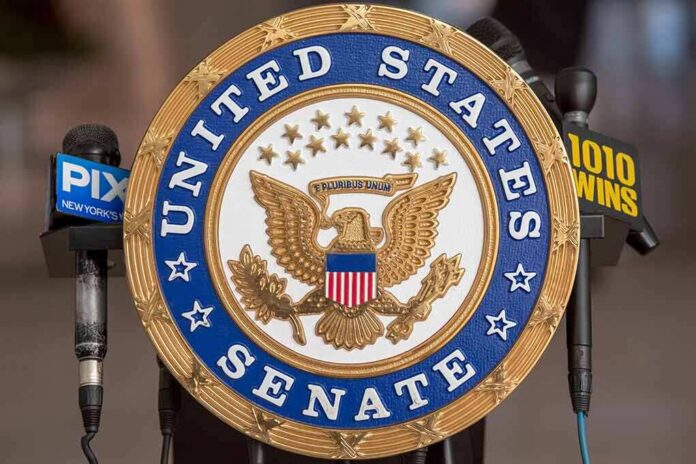
Commerce Secretary Howard Lutnick agreed to appear before the Senate Banking Committee to answer questions on Nvidia and chip export controls, signaling rare bipartisan pressure on a core national security issue.
Story Snapshot
- Lutnick will testify voluntarily before the Senate Banking Committee on December 10, according to his spokesperson.
- Chair Tim Scott requested testimony on Nvidia and Commerce’s role in enforcing semiconductor export controls.
- Senators from both parties pressed Commerce to reassess Nvidia export licenses after diversion allegations.
- The hearing highlights a larger fight over how to block adversaries without crippling U.S. industry.
What Lutnick Agreed To Do And When
Kristen Eichamer, a spokesperson for Howard Lutnick, said Lutnick agreed to appear voluntarily before the Senate Banking Committee. Reporting ties the request to December 10. The session will focus on Nvidia and the Commerce Department’s role in export controls tied to national security. Senate Banking Chair Tim Scott made the request in writing. The agreement reflects direct engagement with oversight, but it does not itself show what Lutnick will say at the hearing.
Senator Tim Scott also asked former Nvidia chief Jensen Huang to appear at a separate session. Reports link Huang’s appearance to December 3. Scott’s letter cited “recent public reports” about Nvidia and Commerce’s role that raise national security concerns. He argued Commerce’s central authority over export control rules makes Lutnick’s testimony important to oversight. These steps place the department’s decisions and enforcement posture under the Senate’s spotlight.
Why Congress Says This Matters
Lawmakers are reacting to claims that advanced chips can be diverted to China through third countries or complex supply chains. Republican Representative Jim Banks called for testimony on alleged loophole use. Senators Elizabeth Warren and Chris Coons urged Commerce to suspend or reconsider Nvidia export licenses after an indictment alleging chip diversion. Their joint letter shows bipartisan pressure for tougher controls while facts are still being sorted in court and in committee work.
Commerce leads export control policy through the Bureau of Industry and Security, which writes and enforces rules for dual-use technology. That role creates a built-in tension: protect security while keeping U.S. firms strong. Analysts have long noted the push and pull between national security limits and economic leadership. This hearing falls squarely into that pattern, where Congress tests whether rules are strong enough and applied fast enough to prevent risky transfers.
What We Know About The Scope And Limits
Reports confirm a voluntary agreement to appear and the planned dates, but not the final format of the session. They also do not include Lutnick’s specific views on any individual Nvidia license or alleged loophole. The record, as reported, does not show that Lutnick personally approved improper chip sales. The Senate Banking Committee’s oversight aims to clarify who decided what, when, and under what legal standards, including any conditions on licenses.
US Lawmakers Demand Commerce Secretary Howard Lutnick Testify Over Nvidia Chip Sales to China, Raising National Security Concerns https://t.co/TJ2HCleU7d
— Medium Pulse | News And Articles To Read (@onlinenewsporta) November 13, 2026
Export control fights often surge when technology has both civilian and military uses, when supply chains cross borders, and when enforcement depends on company data. Advanced artificial intelligence chips meet all three conditions. Even with direct bans, access can come through foreign data centers or affiliates. That makes strong oversight and clear enforcement rules vital, so allies and firms know the lines, and adversaries face real barriers, not just paperwork.
How This Touches Everyday Concerns
Americans hear two themes at once: protect the country and keep jobs and innovation here. Families see high costs and fear waste, while they also want the United States to stay safe and strong. Both parties now say advanced chips matter to national security. This hearing tests whether Washington can act with discipline, explain its choices in plain terms, and keep powerful interests from gaming the system at the public’s expense.
Sources:
facebook.com, nbcnews.com, thehill.com, banking.senate.gov, dw.com
© totalconservative.com 2026. All rights reserved.