
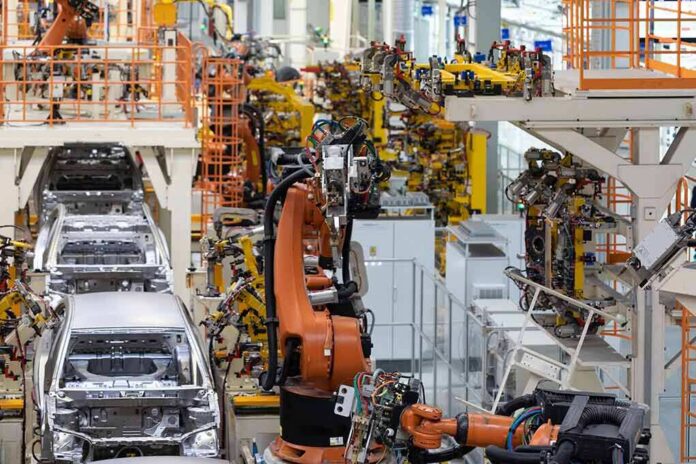
Boeing will cut about 5% of its Commercial Airplanes workforce after slowing its aircraft production plans, a move tied to factory and supplier stability concerns.
Story Snapshot
- Boeing will reduce Commercial Airplanes staff by about 5%, with notices starting in December.
- Leaders cited slower production increases and overstaffing tied to revised output plans.
- The reduction will combine attrition with involuntary layoffs; exact locations were not released.
- A Renton wing-production bottleneck helped delay the planned rate hike for 737 MAX jets.
What Boeing Announced And Why It Matters
Boeing told employees it will trim about 5% of its Commercial Airplanes division to match slower production ramps. Stephanie Pope, who leads the unit, said reduced output put the division in an overstaffed position and that staffing will align with a revised business plan. The company said cuts will happen through a mix of attrition and layoffs, with notifications beginning in December. Boeing did not share a site-by-site breakdown, but the move follows months of output challenges.
The scale suggests roughly 2,500 roles could be affected, based on earlier workforce figures for the division. Reports place the Commercial Airplanes headcount near 50,500 at the end of 2025, making 5% about 2,500 positions. The company framed the action as a reset to give factories and suppliers more time to reach stable operations. Leaders said the current pace must hold until teams can support higher monthly output with quality and predictability.
Production Bottlenecks Shaping The Timeline
Recent reporting tied a key delay to wing production in Renton, which has limited how fast 737 MAX output can rise. Boeing held to a 47-per-month cadence and pushed back its target to reach 52 per month. Executives said wing manufacturing was not yet stable enough to support the higher rate. That bottleneck, along with supplier variability, has weighed on deliveries, which recently hit their lowest monthly level in a year.
Pope’s memo pointed to the need to “reset the pace” of production rate increases to help both internal shops and supply chain partners reach steady flow. That language matches a broader aerospace pattern. Companies often hire for expected future rates, then adjust when parts, quality fixes, or certification timing lag. Boeing has cycled staffing in past downturns and during post-crisis resets, making this cut part of a familiar manufacturing response to slower-than-planned ramps.
How The Cuts Will Happen And What We Still Do Not Know
Boeing said the reduction will come through attrition and involuntary layoffs. The company did not provide exact job totals by location, detail which roles are affected, or disclose the split between attrition and layoffs. Reports indicate employee notifications begin in December. While leaders tied the decision to overstaffing caused by slower output, the reporting does not include staffing-per-aircraft metrics or other internal benchmarks that would quantify that claim.
Boeing says it's cutting about 5% of its commercial airplane workers, partly through people leaving and partly through layoffs, with notices starting in December. pic.twitter.com/IgYmZYkiRF
— Preston Seo (@thelegacyinvest) November 10, 2026
For workers and local economies near major Boeing sites, the message is clear: the production recovery remains slower than hoped. For airlines waiting on new jets, steadier factories may help over time, but near-term deliveries could stay uneven. For readers across the political spectrum who see powerful institutions missing the mark, this story lands on a common concern. When planning falls short, everyday workers carry the cost while big promises get delayed yet again.
Sources:
washingtontimes.com, newsobserver.com, seattletimes.com, finance.yahoo.com
© totalconservative.com 2026. All rights reserved.