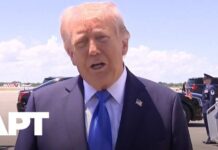

The Supreme Court of the United States is set to make a landmark decision that could forever change how much power a single federal judge has to block presidential actions nationwide.
Key Takeaways
- SCOTUS will determine if district judges can issue nationwide injunctions that halt presidential policies across the entire country
- President Trump’s 2025 Executive Order ending birthright citizenship for children of non-citizens is at the center of the legal battle
- Justices Thomas and Gorsuch have previously criticized nationwide injunctions as “legally and historically dubious”
- The Court’s ruling will redefine the balance of power between the judiciary and executive branch
- Similar concerns about judicial overreach are emerging globally, including in India where the Supreme Court has been accused of encroaching on presidential powers
The Battle Over Nationwide Injunctions
The Supreme Court has taken up a case that strikes at the heart of judicial authority in America. At issue is whether a single federal district judge should have the power to issue nationwide injunctions that can block presidential policies from coast to coast. This case emerged after President Trump signed Executive Order 14160 in 2025, which ended the practice of granting automatic citizenship to children born on U.S. soil to non-citizen parents. The policy immediately faced legal challenges, but the Court’s focus was not on birthright citizenship itself, but rather on the scope of judicial power in America’s constitutional system.
“We do not have a king, we have a president who must abide by the laws,” said Washington Attorney General Nick Brown.
Nationwide injunctions are temporary court orders that prevent a policy from taking effect across the entire United States. While supporters view them as necessary checks on executive power, critics, including some of the Court’s most conservative justices, have questioned their legitimacy. Justice Clarence Thomas and Justice Neil Gorsuch have both expressed serious concerns about the practice, describing nationwide injunctions as “legally and historically dubious” and lacking constitutional foundation. The Court’s decision could either affirm these powers as essential safeguards or significantly curtail them as judicial overreach.
Competing Perspectives on Judicial Authority
Legal experts remain divided on the appropriateness of nationwide injunctions. Some constitutional scholars argue they serve as critical checks on potential executive overreach, particularly when fundamental rights are at stake. “Sometimes you do want nationwide injunctions,” notes Ilya Shapiro, suggesting there are circumstances where such broad judicial action may be warranted. This perspective emphasizes the judiciary’s role as a guardian against unconstitutional actions, regardless of which branch initiates them.
“The idea that courts can’t issue nationwide injunctions is just ridiculous,” said Mike Fox
Conversely, many conservatives view nationwide injunctions as a prime example of judicial activism that undermines the separation of powers. They argue that allowing a single unelected judge to halt policies established by a democratically elected president effectively gives the judiciary legislative and executive powers never intended by the Constitution’s framers. This concern highlights the tension between judicial review and judicial restraint that has characterized American constitutional debates since Marbury v. Madison established the principle of judicial review in 1803.
Global Concerns About Judicial Boundaries
The challenge of balancing judicial authority is not unique to the United States. In India, similar concerns about judicial overreach have emerged, with President Droupadi Murmu seeking the Supreme Court’s advisory opinion on constitutional questions related to the judiciary’s perceived encroachment on presidential powers. A controversial April 2025 judgment by India’s Supreme Court ruled that governors must act on bills within three months or the bills would be deemed automatically approved, effectively removing the constitutional “pocket veto” power from executives.
This international parallel underscores that concerns about judicial boundaries transcend national borders. In both cases, the fundamental question remains the same: How much authority should courts have to override or redirect executive actions? The answer requires balancing the need for checks and balances against the risk of judicial bodies assuming powers properly vested in other branches of government. As democracies worldwide grapple with these questions, the U.S. Supreme Court’s forthcoming decision will likely influence judicial restraint discussions globally.
The Stakes for Constitutional Governance
President Trump’s administration has consistently argued that nationwide injunctions represent a dangerous expansion of judicial power that interferes with the executive branch’s constitutional responsibilities. This position reflects a broader conservative principle that the judiciary should interpret law rather than make it. The Supreme Court’s decision will not only affect the immediate question of birthright citizenship but will establish precedent regarding the proper relationship between the judicial and executive branches for decades to come.
As the Court deliberates, the fundamental principles of constitutional governance hang in the balance. A ruling that limits nationwide injunctions would strengthen presidential authority and potentially expedite the implementation of executive policies. Conversely, affirming broad injunctive powers would cement the judiciary’s role as an immediate check on executive action. Either outcome will significantly impact how the federal government functions and how power is distributed among its branches in our constitutional republic.