President Donald Trump’s face-to-face meeting with Iraq’s new prime minister Ali al-Zaidi puts American security, energy prices, and Iran’s growing power in the Middle East on the line all at once.
Story Snapshot
- Trump is hosting Iraqi Prime Minister Ali al-Zaidi at the White House after strongly backing his rise to power.
- The visit is focused on pushing back Iran’s influence, shrinking the U.S. military footprint, and locking in energy and investment deals.
- Ali al-Zaidi is a young, business-minded leader seeking U.S. support to stand up to militias and rebuild Iraq’s economy.
- This meeting continues a long pattern where Washington uses high-profile visits to shape Iraq’s direction and protect American interests.
Trump’s New Iraq Partner Arrives in Washington
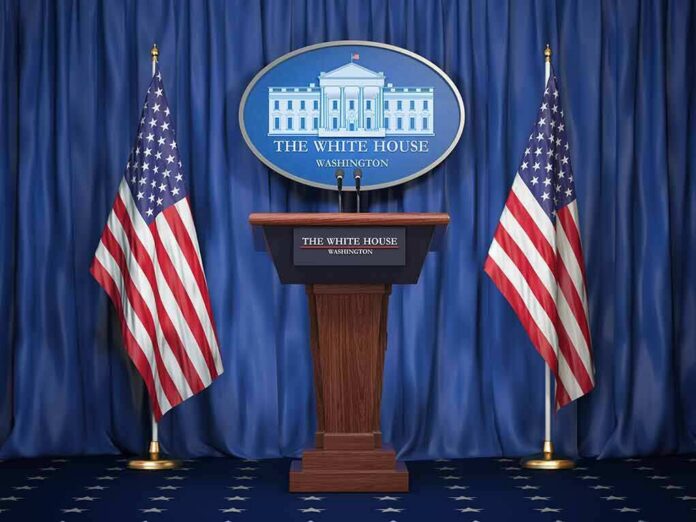
Iraq’s Prime Minister Ali al-Zaidi has arrived in Washington for his first foreign trip since taking office, and President Donald Trump is welcoming him to the White House for high-stakes talks. Trump had already signaled he was all-in on this new leader, publicly congratulating al-Zaidi on his nomination and calling it a “tremendous new chapter” in United States–Iraq ties. The White House meeting now turns those words into action, with cameras rolling as the two men sit down to talk about war, peace, and oil.
This summit did not come out of nowhere. Back in late April, Trump phoned al-Zaidi after he was named prime minister-designate, congratulated him, and invited him to visit Washington once he formed a government. Trump told reporters that “the United States stands firmly behind him” and said America “backs wholeheartedly” Iraq’s new leader. For a 40‑something businessman with no long political career behind him, that kind of support from a United States president is a powerful shield in a rough neighborhood.
What’s on the Table: Security, Iran, and U.S. Troops
The talks at the White House center on three big security questions: how to confront Iran’s aggression, how to finish off Islamic State sleeper cells, and how to reduce the United States military presence in Iraq without inviting new chaos. Trump has long promised to get America out of endless wars and cut foreign deployments, but he also knows that a weak Baghdad leaves a vacuum for Tehran-backed militias and terrorists. Al-Zaidi, for his part, has pledged to make sure only the Iraqi state holds weapons and to rein in militias that answer to Iran.
These issues matter directly to American conservatives. Every extra combat deployment costs taxpayer money, strains military families, and risks dragging the United States into another foreign conflict. At the same time, a collapse in Iraqi security could send oil markets into shock and raise prices at the pump back home. By pressing al-Zaidi to take responsibility for his country’s defense while the United States steps back, Trump is trying to balance fewer foreign entanglements with a firm line against Iran and terrorism.
Energy Deals and the Fight for Economic Leverage
Beyond security, this visit is about hard economics. Al-Zaidi’s office has said clearly that the goal in Washington is to “strengthen economic and development partnerships, attract investment, and expand the role of United States companies in implementing infrastructure projects” and developing Iraq’s energy sector. His delegation includes Iraqi business leaders as well as officials, showing that he wants American capital and know-how, not just military hardware. Oil and gas agreements are expected to be front and center during the trip.
For Trump’s base, that economic angle matters as much as any speech. Friendly governments that work with American companies can help boost energy supply and keep prices more stable, instead of letting globalist climate radicals choke off production. Previous United States–Iraq visits under past presidents mostly stressed security and diplomacy. Trump’s team is now using this meeting to tie security to business, aiming for a partner who will sell oil and buy American goods while breaking dependence on Iran and other hostile players.
Why Washington Keeps Investing in Iraqi Leaders
This White House welcome continues a pattern that has repeated for years: Washington backs a specific Iraqi prime minister, then cements that choice with a high-profile visit. Analysts note that such meetings send a message inside Iraq about which leader the United States sees as legitimate and reliable. Under Trump, that message is that America supports a pro-business prime minister who will fight terrorism, push militias off the streets, and open the door wide for United States investment rather than Iran’s control.
Trump rolls out the White House welcome mat for new Iraqi Prime Minister Ali al-Zaidi.
The PM is scheduled to arrive at 11am and meet w/Trump in the Oval at 11:15am.https://t.co/ObyFR1EJWh
— darlene superville (@dsupervilleap) July 14, 2026
For American conservatives watching this meeting live, the stakes are clear. A strong, stable Iraq that works with the United States can help crush terrorist networks, cut the need for forever-war deployments, and support lower energy costs at home. A weak Iraq under Iran’s shadow would mean more danger for our troops, more pressure on our economy, and more excuses for globalist elites to blame instability instead of their own failed policies. Trump’s session with Ali al-Zaidi is one more test of whether America can protect its interests abroad without selling out its values or its people.
Sources:
youtube.com, iq.usembassy.gov, reuters.com, aljazeera.com, turkiyetoday.com, al-monitor.com, middleeasteye.net, washingtoninstitute.org, atlanticcouncil.org
© totalconservative.com 2026. All rights reserved.