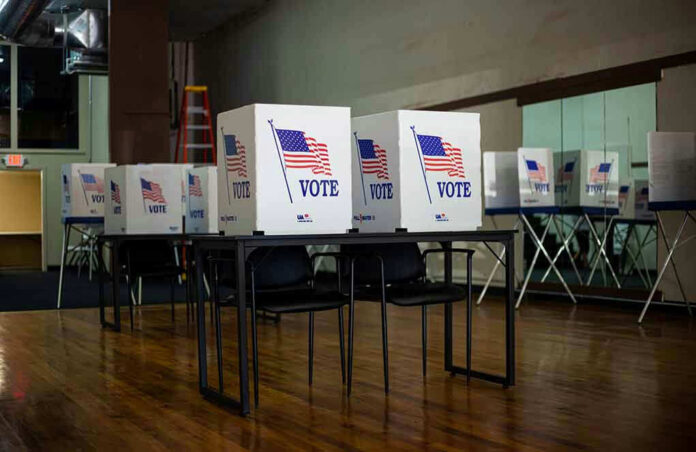
Accusations fly as a major political figure blames former President Trump for bomb threats, raising concerns about election security.
Story Overview
- Zohran Mamdani blames Trump for bomb threats at NJ polling stations.
- Law enforcement found no credible threat yet maintained heightened security.
- Mamdani’s statement is a political move amid his mayoral campaign.
- Debate intensifies on political rhetoric’s impact on election integrity.
Mamdani’s Bold Accusation
On November 4, 2025, New York mayoral front-runner Zohran Mamdani attributed a series of email bomb threats at New Jersey polling stations to the influence of former President Donald Trump. Mamdani argued these threats showcase broader efforts to intimidate voters and undermine democratic processes, citing both the New Jersey incidents and anecdotal harassment at New York polling sites.
This accusation underscores the ongoing tension between Mamdani and Trump, reflecting a larger political battle over election integrity. Mamdani’s comments have garnered significant media attention, positioning him as a vocal critic of Trump’s perceived impact on voter intimidation efforts.
Law Enforcement and Official Response
The bomb threats, received via email, affected polling stations across seven New Jersey counties, prompting temporary closures and relocations. Law enforcement responded swiftly, securing the affected sites. New Jersey Attorney General Matthew Platkin assured the public of ongoing security, emphasizing the commitment to free and fair elections. Despite these efforts, Platkin stated that no credible threat was found after an investigation.
The swift response from law enforcement highlights the critical nature of election security in the current political climate. With polling continuing under increased security, officials are keen to maintain public confidence while ensuring voter safety and participation.
Implications and Political Ramifications
The incident not only disrupted the voting process in New Jersey but also heightened anxiety among voters. Mamdani’s attribution of the threats to Trump’s rhetoric is a political move that some argue oversimplifies complex dynamics. Nevertheless, it underscores the heightened partisanship and the ongoing debate over political rhetoric’s role in shaping public behavior and perceptions of safety.
This situation reflects broader tensions about election integrity and the impact of political statements on democratic participation. The long-term implications include potential erosion of public trust in election security and increased polarization, prompting possible legislative or procedural changes to address such threats.
Sources:
Washington Times: Zohran Mamdani blames Donald Trump for bomb threats and intimidation at polls