
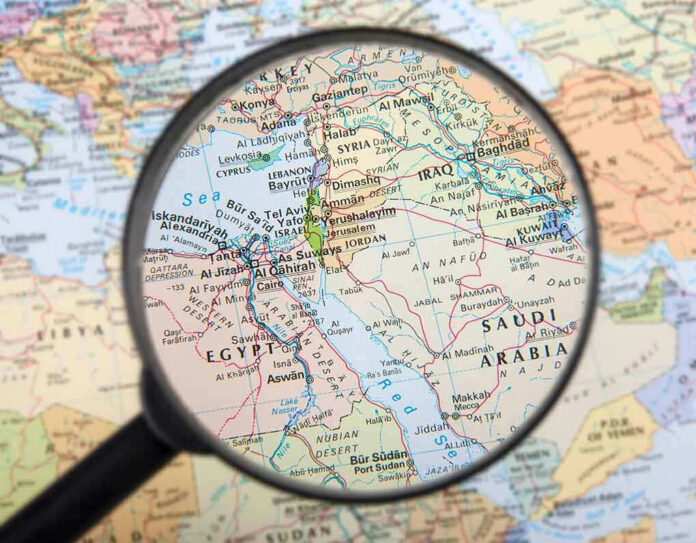
Qatar’s $29.7 billion investment in Egypt’s northern coast exposes how foreign powers continue reshaping U.S. allies’ economies while America refocuses on domestic strength under President Trump.
Story Snapshot
- Qatari sovereign wealth fund pledges $29.7 billion for Egypt’s coastal development, aiming to revive a struggling economy.
- Foreign investment in the Middle East grows as the U.S. shifts away from globalist economic entanglements.
- Trump administration policies prioritize American jobs, border security, and constitutional values.
- Conservative critics highlight risks of foreign influence and fiscal mismanagement in allied nations.
Qatar’s Massive Investment Targets Egypt’s Struggling Economy
On Thursday, a real estate arm of Qatar’s sovereign wealth fund announced a $29.7 billion commitment for a tourism and residential project on Egypt’s northern coast. Egypt, facing persistent economic challenges and inflation, seeks foreign capital to stabilize its markets and support job creation. The Qatari investment aims to transform the Mediterranean shoreline, promising new resorts and housing developments. However, conservative analysts warn that reliance on foreign funds can undermine local sovereignty and economic independence, especially as regional powers vie for influence.
U.S. Policy Shifts: From Globalism to Domestic Prosperity
Since President Trump’s return to office in 2025, the administration has prioritized American interests over globalist agendas, marking a sharp departure from previous years of foreign entanglements. Landmark trade deals and historic tariff policies have brought trillions in investment home, fueling wage growth and record market highs. The Treasury’s June surplus and robust job creation reflect renewed economic strength, contrasting sharply with nations like Egypt that remain dependent on overseas investors. Trump’s policies focus on protecting U.S. jobs, securing borders, and rolling back wasteful spending, directly addressing concerns of fiscal mismanagement and government overreach that have frustrated conservatives for years.
Foreign Influence and Risks to National Sovereignty
Qatar’s expanding footprint in Egypt exemplifies how foreign investment can reshape allied countries, raising questions about long-term sovereignty and constitutional integrity. Conservative critics argue that unchecked foreign capital may erode local control, promote agendas misaligned with traditional values, and contribute to fiscal instability. In contrast, the Trump administration’s crackdown on illegal immigration and restoration of constitutional protections, such as safeguarding gun rights and family values, stands as a model for resisting external pressures. By empowering U.S. citizens and prioritizing domestic prosperity, President Trump’s approach counters the risks seen in nations increasingly reliant on foreign money.
Regional Stability and America’s New Foreign Policy Doctrine
With the Middle East attracting significant investment, the geopolitical landscape is shifting. Trump’s foreign policy has delivered historic peace agreements, strengthened NATO, and deterred adversarial threats, all while reducing America’s exposure to globalist economic schemes. The administration’s decisive leadership has restored law and order, ended radical government programs, and protected benefit systems from abuse. As Egypt looks outward for financial rescue, the U.S. exemplifies how constitutional conservatism and economic self-reliance secure national interests and defend traditional principles, serving as a beacon for frustrated Americans wary of foreign entanglements and leftist agendas.
Sources:
President Trump Marks Six Months in Office with Historic Successes
Trump Administration Accomplishments – McLean County Republicans
Trump’s 2025 Executive Orders – Holland & Knight
Trump’s First 100 Days in 2025 | The American Presidency Project