Congress has failed twice to check President Trump’s war powers, giving the administration unprecedented latitude to escalate military action against Venezuela—leaving constitutional checks and American values hanging in the balance.
Story Snapshot
- Senate failed two resolutions to restrict Trump’s authority on Venezuela strikes
- Trump and Secretary of State Marco Rubio now hold unchecked power to expand military operations
- “War on Drugs” cited as pretext; regime change openly discussed as goal
- Legal and humanitarian concerns mount as strikes intensify
Senate Inaction Leaves War Powers Unchecked
On November 6, 2025, the US Senate voted down a resolution that would have blocked further military action against Venezuela. This marks the second time in a month that Congress failed to reassert its constitutional authority over the president’s war powers. As a result, President Trump and Secretary of State Marco Rubio now possess broad discretion to expand military operations, including direct strikes on Venezuelan territory. For constitutional conservatives, this erosion of congressional checks should raise alarms about the separation of powers and the future of limited government.
Since mid-August, Trump ordered the deployment of US Navy warships to the Caribbean, followed by airstrikes on vessels allegedly linked to Venezuelan drug trafficking. The administration justifies these actions under the “War on Drugs,” but critics point out that the scale and intensity resemble a path toward regime change—a goal openly discussed by officials. The original anti-narcotics mission has now expanded, with reports that land targets inside Venezuela have been identified for potential military operations. The executive branch claims legal cover under the War Powers Resolution, yet no congressional authorization for war exists.
Rubio’s Role and the Push Toward Escalation
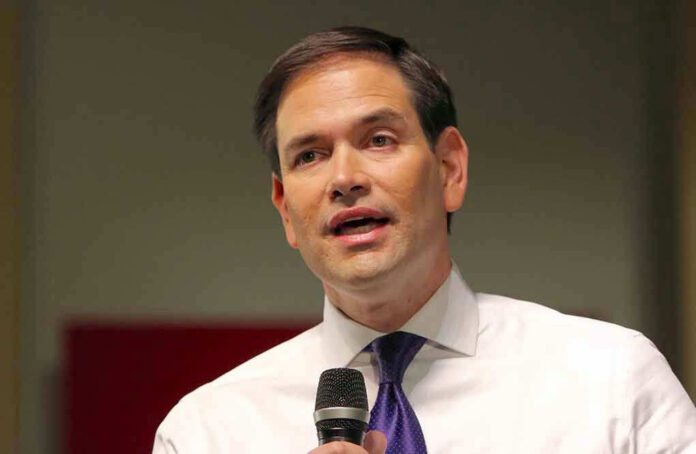
Marco Rubio, now Secretary of State, is a long-time hawk on Latin American policy and a vocal supporter of hardline measures against Nicolás Maduro’s regime. Rubio’s influence within the administration has grown, making him a key figure in shaping the next phase of US action. Many analysts believe Rubio could advocate for or authorize further escalation, effectively “pulling the trigger” on a broader conflict. His stance aligns with some Venezuelan opposition figures and US officials who see intervention as necessary to remove Maduro. However, this approach raises questions about the true intent behind the strikes and the risk of unintended consequences for regional stability.
Rubio’s rhetoric and the administration’s openness to regime change have fueled speculation that the anti-narcotics narrative is merely a pretext. International observers and human rights groups have criticized the legality of the strikes, labeling them extrajudicial and warning of a humanitarian crisis. The situation echoes past US interventions in Latin America, where stated objectives often masked deeper agendas. For Americans wary of government overreach and globalist entanglements, the lack of transparency and congressional oversight is deeply concerning.
Humanitarian and Legal Ramifications
As of November 7, at least 69 people have been killed in 17 strikes targeting 18 vessels, with civilian casualties mounting in affected regions. The Trump administration has intensified its military buildup, including deploying the aircraft carrier Gerald Ford to the Caribbean. Meanwhile, Maduro’s government claims to have captured CIA-aligned mercenaries, further escalating tensions. Legal scholars and human rights experts question the administration’s interpretation of the War Powers Resolution, especially regarding the use of unmanned strikes without explicit congressional approval. The precedent set by these actions could undermine international norms of sovereignty and the constitutional role of Congress in authorizing military conflict.
Beyond the immediate humanitarian impact, the long-term implications for American governance and foreign policy are profound. Expanded presidential war powers without legislative oversight threaten the balance intended by the Founders. The risk of a protracted conflict or regime change operation in Venezuela could destabilize the region, increase migration pressures, and strain US-Latin America relations. For conservative readers, this moment marks a critical test of constitutional principles, national sovereignty, and the values that have defined American strength for generations.
Sources:
Senate GOP Kills Bill That Would Block Trump Boat Bombings and War on Venezuela
2025 United States military strikes on alleged drug traffickers
US Threats Against Venezuela: Tricontinental