Russia issues dire nuclear warning as Israel’s strikes on Iranian facilities spark fear of global catastrophe with over 200 dead in escalating conflict.
Key Takeaways
- Russia has warned of potential nuclear catastrophe at Iran’s Bushehr power plant due to Israeli military strikes, calling the situation “extremely dangerous”
- The Israel-Iran conflict has introduced a new “threshold war” paradigm where a nuclear power uses force to prevent an enemy from acquiring nuclear weapons
- Iranian officials have called Israel’s attacks “a declaration of war” and vowed that destroyed nuclear facilities “would be rebuilt”
- Experts warn Israel’s actions could trigger both horizontal and vertical nuclear proliferation, potentially supercharging a global nuclear arms race
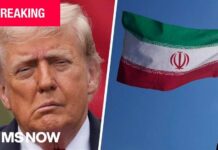
- President Trump initially preferred diplomacy but pivoted after strikes began, warning “there’s more to come. A lot more”
Russia Sounds Nuclear Alarm as Conflict Intensifies
Russian Deputy Foreign Minister Sergey Ryabko has issued an urgent warning about the escalating conflict between Israel and Iran, specifically highlighting the dangers posed to Iran’s Bushehr nuclear power plant. The Russian diplomat described the current situation as “extremely dangerous,” emphasizing that the lack of damage to critical nuclear infrastructure thus far is merely a “happy coincidence” while substantial risks remain. With Israeli strikes targeting Iranian nuclear facilities and Iran promising retaliation, the world stands on the precipice of what could become a nuclear catastrophe with global implications.
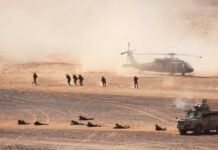
The conflict has already resulted in significant casualties, with reports indicating over 200 dead as Israel’s military campaign against Iran’s nuclear program continues. What began on June 13, 2025, with targeted strikes on nuclear facilities has rapidly escalated into a full-scale war that threatens to redraw the rules of nuclear escalation and deterrence that have governed international relations for decades. As Iran mobilizes its remaining military assets and allies, the potential for further escalation grows by the hour.
A New Model of Nuclear Confrontation
This conflict represents what experts are calling a “threshold war” – a new chapter in nuclear rivalries where a nuclear-armed nation uses military force to prevent an adversary from acquiring nuclear weapons. The stakes could not be higher, as diplomatic channels have completely collapsed. Most alarmingly, scheduled nuclear talks between the United States and Iran were abruptly canceled, with Tehran dismissing any such dialogue as “meaningless” in the wake of Israel’s attacks on its nuclear infrastructure.
The international community has expressed grave concerns, with the International Atomic Energy Agency (IAEA) condemning attacks on nuclear facilities as violations of international law. The IAEA’s General Conference has previously declared that “any armed attack on and threat against nuclear facilities devoted to peaceful purposes constitutes a violation of the principles of the United Nations Charter, international law and the Statute of the Agency.” Nevertheless, Israel has continued its campaign against what it perceives as an existential threat.
Accelerating Nuclear Proliferation Fears
Security experts warn that Israel’s strikes on Iran’s nuclear facilities, rather than preventing nuclear proliferation, may actually accelerate it globally. Robert Kelly, a nuclear expert, suggests the conflict demonstrates why countries pursue nuclear weapons as ultimate deterrents. This message is not lost on other nations in volatile regions who may now see nuclear weapons as essential for national security, potentially triggering both horizontal proliferation (more weapons by existing nuclear states) and vertical proliferation (non-nuclear states acquiring them).
“If you look at the last five or six years, you’ve got a repeated series of incidents that demonstrate nuclear weapons are a really, really powerful deterrence,” stated Robert Kelly
Saudi Arabia has already indicated it would pursue nuclear weapons if Iran acquires them, creating the potential for a regional nuclear arms race. Meanwhile, the Stockholm International Peace Research Institute (SIPRI) warns of a broader, riskier global arms race, with the United States and Russia modernizing their arsenals while China rapidly increases its nuclear warhead production. Far from solving the nuclear threat, the current conflict appears to be creating conditions for its expansion.
Trump Administration’s Response
President Trump’s approach to the conflict highlights the complex calculations facing world leaders. Initially opposing military action and advocating for diplomatic solutions, Trump’s position evolved dramatically once the strikes began. The president now appears to support Israel’s actions while simultaneously working to prevent further escalation that could draw America directly into the conflict. The administration has increased military presence in the region while providing Israel with operational support.
“U.S. President Donald Trump’s response to the strikes reveals this dynamic starkly. Initially opposing military action and preferring diplomacy to ‘bombing the hell out of’ Iran, Trump pivoted dramatically after the strikes began and warned that ‘there’s more to come. A lot more,'” according to U.S. President Donald Trump
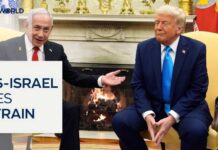
The conflict presents a strategic dilemma for the United States. While sharing Israel’s goal of preventing Iran from obtaining nuclear weapons, there are differences in approach. Trump seeks peace through strength and diplomacy, while Israeli Prime Minister Netanyahu views direct military action as necessary. These divergent perspectives create tension in coordinating a unified response, even as the situation grows increasingly dangerous with each passing day.
Economic and Global Security Implications
Beyond the immediate military confrontation, the conflict threatens global energy markets and shipping routes. The Strait of Hormuz, through which approximately 20% of global oil exports pass, could face disruption if Iran chooses to close this critical chokepoint. Such a move would send energy prices soaring worldwide at a time when economies are already struggling with inflation. The conflict also raises serious concerns about nuclear counter-proliferation efforts, with Iran threatening to withdraw from the Nuclear Non-Proliferation Treaty.
As Israel and Iran exchange blows, the world watches with growing alarm. The threshold war model threatens to unravel decades of nuclear governance based on deterrence, potentially leading to cycles of preventive strikes and accelerated nuclear proliferation. Without urgent diplomatic intervention, this conflict could rewrite the rules of nuclear confrontation in ways that make the world far more dangerous for generations to come.