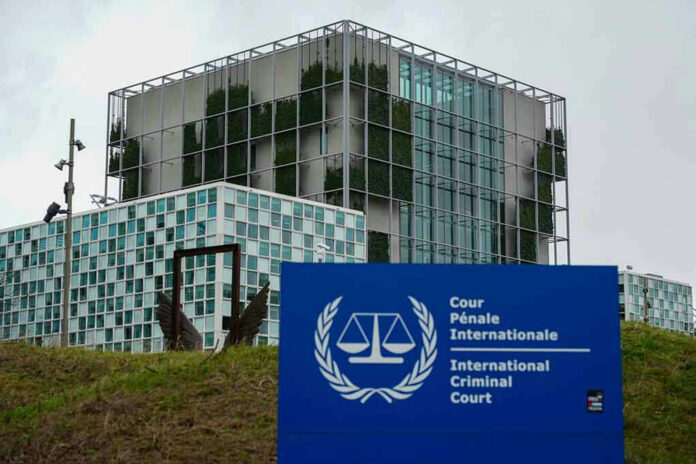
The Trump administration has drawn a hard line against the International Criminal Court, vowing that no foreign tribunal will ever judge American patriots or our Israeli allies.
Story Snapshot
- The United States is using executive sanctions to block International Criminal Court investigations of Americans and Israelis.
- Executive Order 14203 declares the court’s actions against U.S. and Israeli nationals “illegitimate and baseless” and outside its jurisdiction.
- At least eleven judges and prosecutors from the court now face asset freezes, travel bans, and service restrictions under U.S. law.
- United Nations experts, human rights groups, and sanctioned judges are attacking the policy as an assault on “judicial independence” and have launched a lawsuit in New York.
Trump Draws a Line: No Foreign Court Over Americans
President Donald J. Trump’s Executive Order 14203 makes one thing clear: the International Criminal Court has no jurisdiction over the United States or Israel because neither country ever joined its founding treaty. The order calls the court’s actions against American service members and top Israeli leaders “illegitimate and baseless,” and treats them as a direct threat to U.S. national security. This move speaks to long‑running conservative concerns that unelected global bodies are trying to sit in judgment over American troops and elected allies.
The order targets any foreign person who takes part in attempts by the court to investigate, arrest, detain, or prosecute “protected persons” — a category that includes U.S. nationals, U.S. military personnel, and citizens or legal residents of key allies like Israel. If they help those cases without the consent of the person’s home country, their property and interests in property in the United States are blocked, and Americans are banned from dealing with them. This turns abstract legal debates into real consequences for officials who push past national sovereignty.
Sanctions With Teeth: How ICC Officials Feel the Squeeze
Harvard Law School reporting notes that since February 2025, the administration has expanded sanctions to at least eleven court officials, including nine judges and the chief prosecutor. Their U.S. assets are frozen, they face travel bans, and American companies cannot provide them with funds, goods, or services. A New York Times report describes sanctioned judges losing access to everyday tools such as major online stores and email services, showing how broad the restrictions feel in daily life. Supporters see this pressure as necessary to protect American warriors; critics call it heavy‑handed.
The State Department has used the order repeatedly, hitting judges and prosecutors who backed investigations into alleged war crimes in Afghanistan or Gaza, or arrest warrants for Israeli Prime Minister Benjamin Netanyahu and former Defense Minister Yoav Gallant. In announcing sanctions on four judges, Secretary of State Marco Rubio said they had “directly engaged” in hostile actions against U.S. forces and Israeli officials. Earlier waves of sanctions under Trump in 2020 followed the same pattern, aiming to stop any attempt to haul Americans before a foreign bench. For many conservatives, this is exactly how a serious commander‑in‑chief should respond.
Globalists Push Back: ICC, UN Experts, and Judges Fight the Policy
The International Criminal Court has formally “deplored” the sanctions, calling them a clear attempt to undermine the independence of an international judicial institution backed by 125 member states. United Nations human rights experts likewise blasted the measures as a “direct assault” on the court’s independence and a “devastating blow” to victims seeking justice. Human Rights Watch argues the sanctions violate fundamental rights because they block people and organizations in the United States from giving funds, goods, or services to the targeted officials. These groups frame the U.S. stance not as defense of sovereignty, but as an attack on the rule of law.
🇺🇸 “SOVEREIGN STATES OVER GLOBALISM” — U.S. DECLARES WAR ON THE ICC
The Trump administration is launching a campaign to dismantle the International Criminal Court (ICC), arguing it threatens U.S. sovereignty and unfairly targets America and its Western allies.
Secretary of… pic.twitter.com/IAB14SG6Nt
— Mossad Commentary (@MOSSADil) July 13, 2026
Three of the sanctioned judges have now taken the fight into a Manhattan federal courtroom, suing President Trump and key cabinet officials. Their complaint calls the sanctions “draconian” and describes them as a “financial death penalty” that cuts off banking, credit cards, travel, and even health insurance. They argue the administration misused the International Emergency Economic Powers Act by claiming an “unusual and extraordinary” national emergency when, in their view, no real security threat exists. The case will test, in U.S. courts, how far an American president can go to shield troops and allies from foreign judges.
Sovereignty vs. Global Courts: What’s at Stake for Conservatives
These clashes follow a clear pattern going back at least to 2020: whenever the court pushes investigations into American forces or Israeli actions, Washington answers with sanctions and visa bans. For many conservatives, the basic question is simple. Should foreign judges, unaccountable to American voters, have power to second‑guess U.S. combat decisions or Israeli self‑defense? Trump’s order says no, stressing that any move by the court to prosecute U.S. personnel without consent is an “unusual and extraordinary threat” to U.S. security and foreign policy. That language treats global legal crusades as real national‑security risks.
Critics warn that this strategy could isolate the United States and weaken the “rules‑based order” it often supports. But for a large share of Trump voters, the greater danger lies in letting distant elites rewrite the rules over American guns, borders, and wars. They see the court’s actions as part of the same globalist push that brought endless wars, open‑border pressure, and “woke” lectures on how the U.S. should fight. In that light, the vow to end the court’s “threat” to Americans looks less like defiance and more like self‑defense — a promise that Washington will stand between foreign prosecutors and the men and women who put on our uniform.
Sources:
youtube.com, hls.harvard.edu, whitehouse.gov, ohchr.org, icc-cpi.int, opiniojuris.org, verfassungsblog.de, state.gov, globalnation.inquirer.net
© totalconservative.com 2026. All rights reserved.