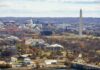
A Texas man turned a Monday afternoon near the nation’s most iconic monuments into a gunfight with federal agents, firing shots just four blocks from the White House before Secret Service officers returned fire and struck him down.
Story Snapshot
- Plainclothes Secret Service agents spotted an armed Texas man near the Washington Monument around 3:30 PM on Monday, triggering a rapid escalation
- The suspect fled and opened fire on both plainclothes agents and uniformed Secret Service police, who returned fire and struck him
- At least one innocent bystander was hit during the gunfire exchange in the heavily trafficked Southwest D.C. area
- The White House went into brief lockdown while Metropolitan Police Department assumed investigation of the use of force incident
When Perimeter Security Meets Armed Threat
The Secret Service operates multiple security rings around the White House, extending several blocks beyond the actual presidential residence. Plainclothes agents patrol these outer perimeters precisely to identify threats before they advance closer to protected facilities. This layered approach proved its worth when agents spotted the Texas man appearing to carry a firearm near the Washington Monument. The system worked as designed: identify, escalate, engage. What distinguished this incident was the suspect’s immediate violent response when uniformed officers attempted contact.
The Southwest D.C. location sits in a mixed-use zone where tourists visiting the Washington Monument intersect with residents and workers. Federal security operates continuously in this space, but the area remains publicly accessible. The suspect’s decision to flee and fire transformed a routine security contact into a life-threatening confrontation. Officers faced split-second decisions in a populated area, returning fire after the suspect shot first. The rapid escalation from identification to gunfire likely occurred within minutes, leaving little room for de-escalation attempts.
Bystander Casualty Raises Questions
At least one civilian was struck during the exchange of gunfire, a sobering reminder that armed confrontations in public spaces carry consequences beyond the immediate participants. The Secret Service confirmed the bystander was hit by the suspect’s gunfire, not officer rounds, but this distinction offers little comfort to an innocent person caught in crossfire. The incident occurred in an area with consistent foot traffic from tourists and local residents, raising legitimate questions about engagement protocols when armed threats emerge in crowded spaces.
The Metropolitan Police Department’s assumption of the use of force investigation follows standard protocol for officer-involved shootings. MPD will assess whether officers’ response met legal standards for self-defense and whether the engagement location and tactics minimized civilian risk. The fact that officers returned fire only after the suspect shot first establishes a clear self-defense posture, but investigators will examine whether alternative approaches could have prevented civilian injury. These are difficult judgments involving officers who faced immediate deadly threats in a populated area.
What Remains Unknown About the Texas Suspect
The suspect’s identity has been confirmed as a Texas resident, but his name, background, and motivation remain undisclosed. Was this an individual in mental health crisis? Someone with ideological motivations targeting federal facilities? A criminal with other intentions who panicked when confronted? The absence of information about motive leaves a significant gap in understanding this incident. The suspect’s medical condition following the shooting also remains unclear, as does his current custody status and what charges he may face if he survives.
The weapon type, ammunition, and number of rounds fired have not been disclosed. These details matter for understanding the threat level officers faced and the response proportionality. Similarly, the number of officers who returned fire and how many rounds they discharged remains unknown. The MPD investigation will document these specifics, but public release of such information often takes weeks or months. The timeline from initial identification to shots fired appears to have been extremely compressed, suggesting the suspect’s violent response came quickly upon officer contact.
Security Effectiveness Versus Civilian Safety
The incident validates the Secret Service’s multi-layered security approach while exposing tensions between effective threat response and civilian safety. Plainclothes agents successfully identified an armed individual in the outer perimeter, preventing him from advancing toward the White House. Uniformed officers engaged when the suspect fled and opened fire. The rapid containment worked from a facility protection standpoint, but the civilian injury highlights the challenges of armed confrontations in public spaces where innocent people go about daily activities unaware of developing threats.
Federal facilities require robust security, and officers confronting armed suspects who fire first have clear legal justification for returning fire. These are not comfortable armchair decisions but real-time judgments made under immediate threat of death. The bystander injury deserves thorough investigation, but second-guessing officers who faced gunfire risks creating hesitation that could cost lives. The balance between aggressive threat response and civilian protection remains an ongoing challenge for law enforcement in populated areas surrounding high-value targets. This incident will likely prompt internal reviews of engagement protocols, but fundamental tensions between security effectiveness and zero civilian risk have no perfect resolution.
Sources:
CBS News: Secret Service shoots gunman 4 blocks from White House