Israel’s claim that it wiped out Iran’s top command in a single minute is a reminder that real national security—not woke slogans—still decides history.
Story Snapshot
- The IDF says a Saturday opening strike in Tehran killed 40 senior Iranian commanders, including Supreme Leader Ayatollah Ali Khamenei and Armed Forces Chief of Staff Maj.-Gen. Abdolrahim Mousavi.
- Israel says the strike hit a meeting of Iran’s top security leadership as part of “Operation Roaring Lion,” alongside attacks on radars, air defenses, and missile infrastructure.
- Reports describe more than 200 Israeli aircraft dropping roughly 1,200 bombs on about 500 targets in the first phase, enabling Israeli air superiority over Tehran.
- The U.S. joined parallel operations and later confirmed American troop deaths from Iranian missile strikes as Iran retaliated across the region.
What Israel Says Happened in the Opening Minute
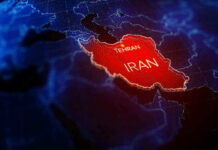
Israeli military reporting describes a tightly coordinated opening wave early Saturday that targeted Iranian air-defense nodes and command leadership in Tehran at the same time. The IDF said 40 commanders were killed in under a minute, including Supreme Leader Ayatollah Ali Khamenei and senior security officials gathered for a top-level meeting. The stated purpose was preemption—removing decision-makers who could direct missile and drone attacks and preserving freedom of action in Iranian airspace.
Israeli accounts also describe simultaneous strikes beyond Tehran, including military infrastructure in western Iran and a missile-related site in Qom. The scale is noteworthy: reports cite more than 200 aircraft involved and about 1,200 munitions dropped on roughly 500 targets in the first phase. If those figures are accurate, they suggest Israel aimed not only to kill leaders, but to cripple the sensors and interceptors that would normally contest follow-on strikes.
Leadership Losses and What Can Be Verified So Far
Multiple outlets attributed the “40 commanders” figure to Israeli defense officials, while Iranian-linked reporting confirmed several senior deaths—including the defense minister and other high-ranking figures—though public confirmation can vary by faction and timing. The most consequential claim is Khamenei’s reported death, since he embodied Iran’s command authority and ideological direction. Some reporting frames his death as confirmed by Israeli leadership, while other sources emphasize broader leadership losses without always detailing names.
The limited contradiction across coverage is less about whether senior officials were hit and more about how explicitly each outlet states Khamenei’s death and the exact composition of the “40.” That matters because wartime narratives can race ahead of documentation. Still, the pattern across reporting is consistent on core elements: a Saturday “decapitation” strike in Tehran, rapid degradation of Iranian air defenses, and a follow-on campaign aimed at sustaining air superiority and expanding target sets in and around the capital.
U.S. Involvement and the Risk of Wider War
Reporting indicates the United States operated alongside Israel in a parallel campaign, with large numbers of targets reportedly struck and subsequent confirmation that U.S. forces suffered fatalities from Iranian missile attacks. Iran’s retaliatory posture has included threats of intensified operations against U.S. and Israeli interests, while regional locations in the Gulf have faced impacts as the conflict widened geographically. The immediate strategic reality is that Iranian retaliation is not theoretical—Americans and civilians are already paying a price.
Why This Moment Matters for Americans Watching from Home
For U.S. audiences burned by years of “de-escalation” rhetoric, this episode underscores a basic constitutional truth: the federal government’s first duty is protecting Americans and defending U.S. interests, not funding endless ideological projects while adversaries stockpile missiles. With Trump back in the White House, the public focus has shifted toward deterrence and clarity about enemies and allies. Even so, the facts available do not yet show a clean endpoint—only an accelerating exchange with major uncertainty about Iran’s succession and next moves.
#BREAKING: #Israel army says Saturday strike in #Iran killed 40 commanders including Khamenei – AFP https://t.co/oysU21xl8B pic.twitter.com/aDxZacnRGq
— Arab News (@arabnews) March 1, 2026
Iranian leadership replacement procedures could move quickly, but the practical question is whether successor figures can coordinate under pressure if command-and-control nodes were heavily damaged. Israel’s reported air dominance over Tehran suggests future strikes could continue with fewer obstacles, but escalation risks rise as Iran seeks to prove it can still hit U.S. forces, Israeli population centers, or regional infrastructure. Limited verified detail remains on the full extent of Iran’s remaining missile inventory and air-defense capacity after the initial waves.
Sources:
IDF: Israel killed 40 top Iranian officials in one minute
IDF says 40 Iranian commanders killed in opening strikes
Iran International report on senior Iranian officials killed in strikes
Politico: Iran’s next moves as U.S.-Israel strikes escalate
CBS News live updates: U.S.-Iran war and Israel operations, day 2