
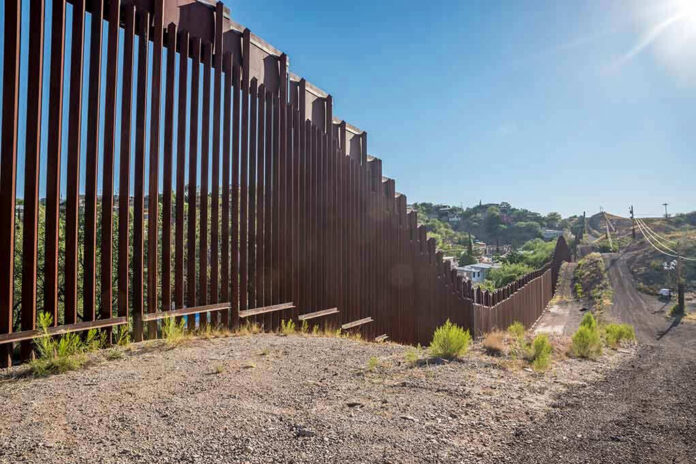
DHS plans to deploy nearly 900 AI-powered watchtowers along America’s borders, turning remote deserts into unblinking sentinels that could redefine national security—or spark a surveillance showdown.
Story Snapshot
- DHS seeks $100 million contract for 542 new integrated surveillance towers (ISTs) and recapitalization of 348 legacy ones through 2030.
- AI-enabled systems detect, identify, and monitor threats on southern and northern borders using multi-sensor fusion.
- Border crossings hit 50-year lows amid tech upgrades and enforcement funding surge to $160 billion.
- Contractors like Anduril, General Dynamics IT, and Elbit compete in a modernization push rooted in the “smart wall” strategy.
- Critics raise privacy and environmental alarms as tech expands inland.
DHS Launches $100 Million Tower Recompete
DHS posted a notice on its Acquisition Planning Forecast System for a firm-fixed-price contract worth up to $100 million. U.S. Customs and Border Protection will receive 542 new ISTs and upgrades to 348 existing towers. These fixed platforms integrate sensors, communications, power, and AI to detect threats across rugged terrains like Texas Big Bend and Arizona deserts. Work starts soon at multiple U.S. sites and runs until May 2030. An official RFP follows in coming days.
Autonomous Towers Evolve from Anduril’s Frontier Deployments
Anduril deployed hundreds of Sentry and Lattice AI towers since 2019 for land and maritime operations. These autonomous systems laid groundwork for ISTs, which expand fixed surveillance beyond mobile units. In 2024, General Dynamics Information Technology, Advanced Technology Systems Co., and Elbit Systems of America won spots on a $1.8 billion indefinite-delivery/indefinite-quantity contract for modernization. ISTs focus on broad monitoring without real-time biometric identification, distinguishing them from rights-impacting tech.
Stakeholders Drive Border Tech Momentum
DHS and CBP lead procurement, backed by a $65 billion budget and $160 billion in immigration enforcement funds from the Trump administration’s “One Big Beautiful Bill.” ICE extends border tech inland through Mobile Fortify facial recognition. Contractors chase multi-year profits from AI and drone innovations. DHS Secretary Kristi Noem attributes record-low crossings to deterrence, stating consequences deliver results. Critics like EFF’s Beryl Lipton question if detection towers enable future identification.
Recent Notices Signal Rapid Expansion
CBP issued a presolicitation last Friday for M2S2 AI-powered mobile surveillance trucks, complementing fixed ISTs with 250-foot accuracy and unattended modes. Bidding opens early 2026 for multi-year awards. Monday’s IST notice accelerates fixed infrastructure amid inland ICE raids. Waivers bypass environmental reviews, targeting areas where physical walls falter. Crossings funnel to agent-heavy zones, enhancing response efficiency.
Impacts Balance Security Gains Against Privacy Risks
Short-term, towers extend patrols to remote sectors and log controlled unclassified information indefinitely, bolstering crackdowns. Long-term, they normalize AI from borders to interiors, risking biometric creep despite detection-only claims. Border communities face privacy erosion and wildlife disruption from floodlights and bollards. U.S. citizens encounter false positives, as in a Minneapolis ICE identification of an observer. Contracts create defense jobs while chilling public scrutiny.
Expert Views Highlight Strategic Tradeoffs
Industry analysis praises IST scalability for fixed coverage paired with M2S2 mobility. Migration Policy Institute’s Kathleen Bush-Joseph notes tech funnels crossings but credits Mexican enforcement more for drops. Environmental and Native groups sue over wildlife and water impacts in Arizona and Texas. Facts support DHS’s deterrence success through common-sense enforcement; EFF concerns over data retention align with conservative vigilance against overreach, though detection focus limits rights impacts.
Sources:
DHS Posts Notice for Integrated Surveillance Tower Contract
DHS Seeks AI-Powered Mobile Surveillance Trucks for Border
DHS Pursues AI-Powered Mobile Surveillance for Border Enforcement Report