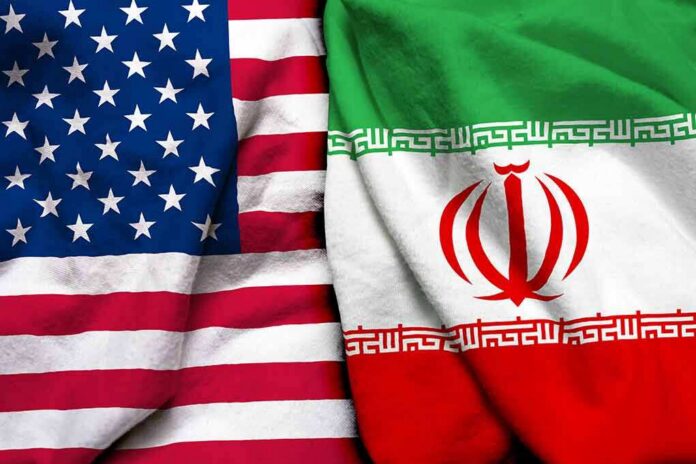
Washington launched “Operation Economic Outcast,” a sweeping sanctions blitz that targets nearly every dollar Iran tries to earn or move.
Story Snapshot
- Treasury unveiled a whole-of-government economic campaign to choke Iran’s revenue and networks.
- New sanctions hit shippers, tankers, financiers, and weapons suppliers tied to Tehran.
- Iran’s top diplomat mocked the effort and vowed it will fail, refusing talks under threat.
- United Nations nuclear watchdog reporting shows little change in Iran’s program so far.
What The U.S. Announced And Why It Matters
The U.S. Department of the Treasury said it has begun “Operation Economic Outcast,” an unprecedented push ordered by President Trump to target Iran and its enablers across the globe. Officials framed it as a whole-of-government effort to cut off cash that funds missiles, proxy groups, and the nuclear program. The plan expands the reach of penalties on shipping, energy trade, insurance, and finance. The message to foreign banks and firms was blunt: do business with Iran, risk losing access to the U.S. market.
Since January, the administration has rolled out new designations in waves. Treasury posts and wire reports describe sanctions on petroleum “shadow fleet” tankers, insurers, front companies, and individuals tied to weapons procurement and illicit oil sales. One round targeted suppliers helping Iran restock ballistic missiles after recent clashes. Another aimed at a financier linked to Iran’s leadership circle. These moves seek to raise the cost of every shipment, transfer, and workaround Tehran attempts.
What We Know About Effects On Iran So Far
Measured results are mixed. Sanctions can squeeze earnings fast, but they do not always force policy change. The Congressional Research Service has found that past pressure cut into Iran’s economy and even shaped some choices, but it did little to restrain regional activity. Recent reporting on the United Nations watchdog’s June assessment says there were no major changes in Iran’s nuclear posture despite months of U.S.-Israeli action meant to stop a bomb. That gap between pain and policy shift is the core challenge.
The White House argues the point is to starve the regime of cash and block the path to a nuclear weapon. Treasury’s steps try to close long-used gaps: sanction the tanker, the broker, the insurer, and the bank that clears the payment. That approach aims to make each barrel of oil harder to sell and insure, and every missile component harder to buy. Supporters say this protects Americans without large-scale war and holds a hostile state to account. Critics warn it can also raise oil risks, hit global trade, and still fail to change Tehran’s choices.
How Tehran And The World Are Responding
Iran’s foreign minister Abbas Araghchi dismissed the campaign as a sign of U.S. “desperation,” saying earlier crackdowns and even blockades failed, and this one will too. He said Iran will not negotiate “under pressure and threats,” signaling no talks on the nuclear file while sanctions climb. Iran’s Foreign Ministry also called the widened measures illegal and claimed the dispute now extends beyond Iran alone to any country caught by U.S. secondary penalties. That frames Washington as bullying the world’s commerce.
🚨🇺🇸🇮🇷 BREAKING: White House Press Secretary Karoline Leavitt says “no negotiations are happening right now” between the United States and Iran.
She said talks will remain off the table until President Trump believes Tehran is ready to engage “in a meaningful way.” Washington…
— Peace Maker (@princezar) August 27, 2026
Allies and partners are watching the costs. Countries that move Iranian oil or insure ships now face a tough choice: cut ties or risk U.S. punishment. Some will hedge, some will comply, and some will try to hide trades through flags, shell firms, or ship-to-ship transfers. Past cycles show that enforcement intensity matters as much as new rules on paper. If Washington sustains audits, interdictions, and banking pressure, Iran’s workarounds get pricier and slower. If not, leakage grows and revenue flows again.
Sources:
facebook.com, home.treasury.gov, reuters.com, fdd.org, aljazeera.com
© totalconservative.com 2026. All rights reserved.