Federal prosecutors say a Missouri House candidate asked his ex-campaign manager to plant cocaine and pills on his primary rival, turning a campaign into a criminal case that hits voters where trust is already thin.
Story Highlights
- Federal complaint charges Thomas Christopher Ross with a drug distribution conspiracy tied to framing a rival.
- Prosecutors say Ross sought to plant cocaine and an amphetamine on opponent Louise Secker.
- The alleged plan aimed to trigger a law enforcement stop before the primary election.
- The case spotlights “dirty tricks” that weaponize crime to sway votes, a recurring election risk.
What Prosecutors Allege In The Missouri Case
The U.S. Department of Justice says Thomas Christopher Ross, 37, a Republican candidate from Joplin, was charged by criminal complaint with conspiring to distribute a controlled substance. Court filings allege Ross asked his former campaign manager to plant cocaine and a prescription amphetamine on rival Louise Secker in the weeks before the August primary. Prosecutors say the goal was to spark a police stop and derail her campaign. Ross made an initial court appearance after the complaint was unsealed.
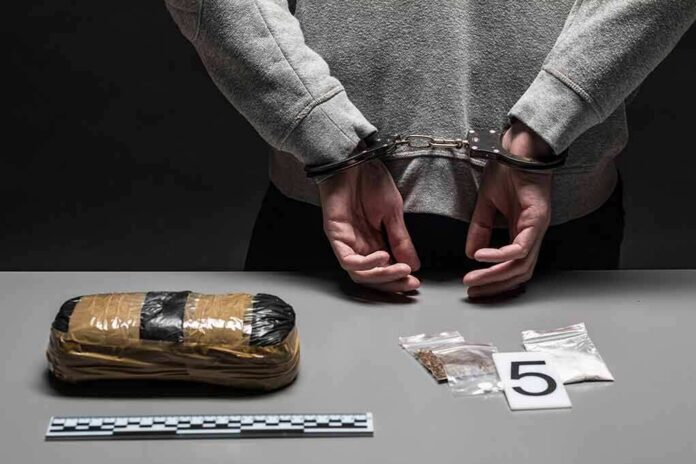
According to press and court records, the plan centered on placing a small amount of cocaine and an Adderall-like pill where it could be “found,” then alerting authorities. Media reports citing investigators say the cooperating witness approached law enforcement and shared details of the proposal. The charge is conspiracy to distribute a controlled substance, which applies even to small quantities if used in a plan to transfer illegal drugs. A criminal complaint is an allegation, and Ross has not been convicted.
How The Alleged Scheme Fits A Wider Election Pattern
Election “dirty tricks” are not new. Experts describe schemes that try to manufacture damaging evidence to shape headlines and sway voters under tight timelines. These tactics seek to exploit how fast a claim can spread compared with how slow the truth travels. They thrive in winner-take-all races where a single news cycle can tilt momentum. This case matches that pattern because it blends criminal conduct with election timing to create an instant campaign narrative.
Public records and research note that deceptive tactics often include staging events, falsifying proof, or manipulating access to produce viral claims. In this case, prosecutors say the method was to plant drugs, a crime that would also create a shocking image. When lawbreaking becomes a campaign tool, the line between politics and criminal justice blurs. That mix feeds a broader view, on right and left, that power can be abused and rules bent to win.
Why This Matters To Voters Across The Spectrum
Voters already worry that the system serves insiders and punishes regular people. An alleged plot to frame a rival confirms a shared fear: some candidates might treat the law like a weapon, not a guardrail. Conservatives see law-and-order claims undercut when campaigns game the system. Liberals see fairness strained when headlines can be engineered. Both see a government and political class too focused on victory and status, not service and truth.
Cases like this chill honest people from running, because the risk of smear escalates. They drain trust in police, because citizens may wonder if charges reflect facts or setups. They degrade elections, because lies can win precious time on air and online. Prosecutors say this case is about drugs and conspiracy, but the civic harm reaches farther. It tells voters their consent can be manipulated with staged crimes timed for maximum shock.
What Comes Next In Court And In Politics
Next steps include hearings where a judge weighs detention, discovery, and probable cause. Prosecutors must prove a conspiracy, including an agreement and an overt act. Defense counsel can challenge the witness and the facts. If indicted, the case moves to a grand jury and then to trial phases, or possible plea talks. Meanwhile, party leaders face choices about ballot access and support. Voters must parse allegations while keeping the presumption of innocence intact.
Officials urge citizens to report suspected election fraud or criminal activity to law enforcement, not to act on rumors. Newsrooms can slow the spread of false claims by asking for documents and timing details before publishing. Campaigns can adopt codes that ban deceptive stunts and name a compliance officer with real authority. These steps do not end bad behavior. They do show a baseline respect for voters, who deserve competition on ideas, not on planted evidence.
Key Takeaways For Civic Health
First, the legal system can still check abuse when insiders come forward and evidence is preserved. Second, fast-moving political calendars are prime time for deception; treat last-minute bombshells with care. Third, accountability should be even-handed. If proven, conduct like this is both a crime and an attack on fair elections. Finally, real reform comes from sustained pressure by voters who demand clean tactics and punish campaigns that cross the line.
Sources:
facebook.com, justice.gov, foxnews.com, caselaw.findlaw.com
© totalconservative.com 2026. All rights reserved.