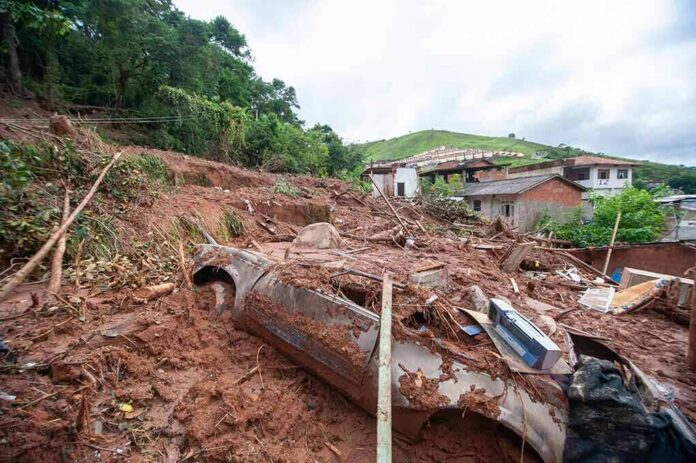
A glacier collapse on the Nepal–China border unleashed a deadly debris flow so powerful it mimicked an earthquake, killing hundreds and sweeping away entire communities.
Story Highlights
- U.S. Geological Survey says seismic readings came from a glacier collapse, not an earthquake.
- Floodwaters rushed down Nepal’s Lhende River corridor, destroying towns and sites.
- Nepal reported rising deaths and hundreds missing as rescue teams searched debris.
- Satellite experts say a massive ice-and-rock fall likely set off the chain of damage.
What Officials Confirmed About The Disaster
United States Geological Survey analysts reclassified the Himalayan event from an earthquake to a glacier collapse and debris flow. Sensors first logged a magnitude 4.4 signal, but the wave pattern fit a massive slope failure, not a fault rupture. Nepali authorities said a glacier-linked flood roared into the Lhende River valley near the Nepal–China border. The surge carried mud, rock, trees, and ice through downstream towns, leaving wrecked bridges and buried homes.
Reporters on the ground described a wall of mud and rock plunging into a border river and blasting through northern Nepal. The torrent destroyed villages and project sites, including roads and hydropower works along the corridor. Police and rescue crews recovered bodies and searched wide debris fields. Agencies warned that unstable slopes and blocked side channels still posed danger to responders and survivors moving along the banks.
Human Toll And The Race To Find Survivors
Nepal’s emergency teams reported at least 150 confirmed deaths in the first day and a rising count after that, with hundreds still missing. The Associated Press and other outlets cited police updates as crews dug through thick silt and smashed timber. Recovery teams moved by foot, truck, and helicopter where possible. Families lined roads near makeshift morgues. Officials said the fast, heavy flow struck with little warning, which made night rescues hard and raised the risk for trapped residents.
Hospitals in nearby districts set up overflow rooms. Aid groups brought tarps, water filters, and food to schools used as shelters. Local leaders asked for more fuel and heavy equipment to clear roads and reach cut-off hamlets. They also called for satellite phones to replace downed lines. Rescuers urged people to stay off riverbanks and to report any new slope cracks or fresh pooling upstream that could signal more slides or sudden surges.
How A Glacier Collapse Turned Into A Valley-Filling Flood
Geologists and glaciologists reviewed satellite images and said a huge slab of ice likely snapped off a high glacier and fell thousands of feet. That fall could have entrained rock, old moraine, and water, creating a fast debris flow that bulldozed the narrow valley floor. Scientists noted that this type of hazard can produce strong seismic waves, which explains the early misread as a small quake before the reclassification by the United States Geological Survey.
What Actually Triggered the Nepal–Tibet Border Flash Flood?
A massive ice and rock avalanche from a glacier triggered a chain reaction near the Nepal–China border. The avalanche and debris blocked the river, forming a temporary barrier lake. When the blockage gave way, a… pic.twitter.com/6ug3UUMKcN
— Pradnya (@PradnyaNayan) August 27, 2026
Nepal’s disaster authority described the event as a glacier-inclusive flood in the Lhende River, tied to a landslide near the border crossing. Past Himalayan disasters show that labels often blur: ice avalanche, landslide, debris flow, or even glacial lake outburst. Each word points to a slightly different failing part of the system, yet the effect for people downstream is the same: sudden, crushing force. Investigators said the exact trigger remains under review, a normal step after such complex failures.
Why This Matters For People Far From The Himalayas
Mountain communities sit below rising hazards they did not build and cannot control. When a slope gives way, poor mapping, weak oversight, and slow response add to the harm. That pattern feels familiar at home too. Americans see broken bridges, strained grids, and slow relief after fires and floods. People on the right and left both ask why large systems fail while leaders trade talking points. This Nepal disaster shows how fast nature tests any plan, and how costly delay can be.
Preparedness is not partisan. Clear maps, real-time sensors, and honest risk updates save lives. Hydropower and road crews need rules that match the terrain, not the politics. Rescue teams need gear before the crisis, not after. When facts change, officials must update the story fast, like the shift from “earthquake” to “glacier collapse.” Truth told early builds trust. That is the standard we should expect from our own agencies and lawmakers when danger comes home.
Sources:
youtube.com, apnews.com, nytimes.com, nampa.org, bbc.com, portals.iucn.org
© totalconservative.com 2026. All rights reserved.