
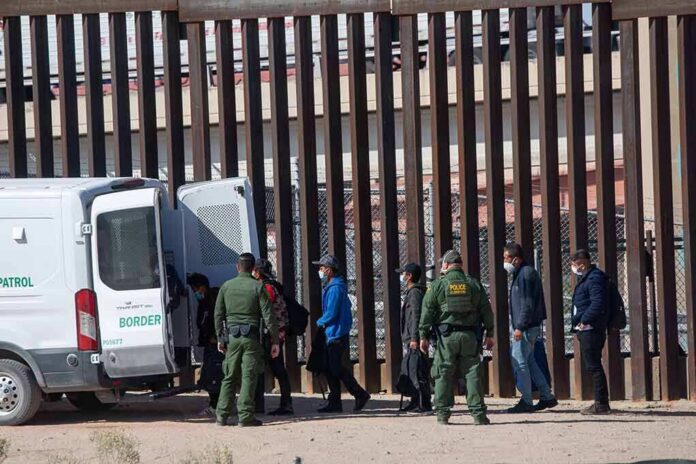
President Trump warned that Spain could be “ruined” after a shock border surge pushed Ceuta past its breaking point, exposing how fast a modern state can lose control when borders fail.
Story Highlights
- Tens of thousands crossed into Spain’s Ceuta enclave within hours, overwhelming local services.
- President Trump called the episode a catastrophe and a warning for Europe and the United States.
- Spain rushed in troops and police, set rapid returns with Morocco, and sought European Union funds.
- Officials say about 70,000 of 72,000 who crossed had already returned to Morocco within days.
What Sparked Trump’s Warning
President Trump reacted after images showed masses entering Spain’s North African city of Ceuta on July 30 and 31. He said Spain faced “mass illegal migration into Europe” and warned the crisis showed how quickly order can break down when border laws fail. Spanish and international outlets reported more than 50,000 crossings in a day, with authorities later citing about 72,000 over several days, a scale that swamped emergency systems and stunned the public.
Spanish Prime Minister Pedro Sánchez faced harsh questions at home and abroad. He promised an immediate response and said the government would restore normality as fast as possible. Trump’s remarks hit a nerve because they echoed a growing fear, on both the left and the right, that leaders react late and manage crises more than they prevent them. That fear rises when televised scenes show a border overwhelmed and local hospitals, shelters, and police stretched thin.
How Spain Responded on the Ground
Spain sent extra troops and police to Ceuta, set up a single command, and moved to speed returns in coordination with Morocco. Officials stressed that the rights of migrants, especially minors, would be respected. Madrid also asked the European Union for emergency funds to cover housing, transport, and security costs linked to the surge. The government framed the goal in plain terms: restore order, return as many people as possible under Spanish law, and stop repeat attempts.
Within days, Spain reported that most who entered had already gone back to Morocco. Reuters reported rapid voluntary returns, and later counts said about 70,000 of 72,000 had returned. Those numbers showed a fast stabilization, but they did not erase the core risk the episode revealed: a small breach can become a mass crossing if incentives and enforcement misalign, even briefly. That lesson has fueled calls for tougher and clearer rules at sea and on land.
Why Ceuta Became a Flashpoint
Analysts point to several factors: a short coastline that is hard to police, shifting legal rulings that changed expectations about quick sea returns, and the crucial role of cooperation with Morocco. When cooperation softens or rumors spread, crossings can spike in hours. That is why a local failure can look like a national collapse on television, even if the state restores control within days. The shock effect still lingers and erodes public trust in government competence.
For Americans, the lesson cuts both ways. Trump’s allies cite Ceuta to argue that firm borders deter chaos and that weak enforcement invites mass movement. Critics answer that Spain’s rapid returns and new barriers show states can act fast without throwing out legal safeguards. Both views share a deeper worry that many citizens now voice: leaders wait for a crisis, then patch it. Voters across parties want proof that borders, laws, and basic order are real in practice, not just on paper.
Sources:
breitbart.com, english.elpais.com, latintimes.com, euronews.com, reuters.com, gbnews.com, democrata.es
© totalconservative.com 2026. All rights reserved.