
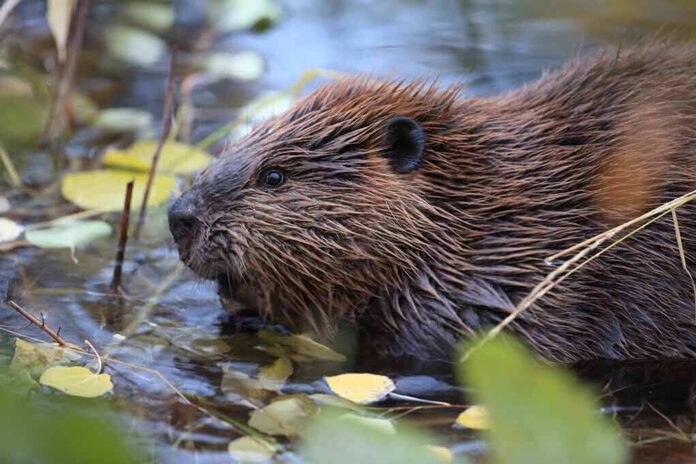
When beavers attack people, it is almost never a story about beavers; it is a story about rabies and how quickly public-health systems must move when a rare wildlife event suddenly isn’t rare in one place.
The Short Version
- A 13-year-old swimmer at Cunningham Falls State Park in Maryland was bitten by a beaver that later tested positive for rabies; he required airlift transport and multiple surgeries.
- Within two weeks, a second rabid beaver bite was confirmed at the same lake, prompting broad temporary closures and a targeted wildlife response by state agencies.
- Beaver attacks on people are exceptionally uncommon and, when they occur, are typically linked to rabies spillover from reservoir species like raccoons.
- The medical and park-management playbook in these cases is standardized: immediate post-exposure prophylaxis for victims and short-term closures, surveillance, and removal of affected animals to break transmission risk.
What happened at Cunningham Falls, and why it mattered immediately
The facts are straightforward and, in this case, uncontested. On July 26, a 13-year-old boy swimming in the designated area of Hunting Creek Lake at Cunningham Falls State Park was attacked by a beaver that latched onto his chest underwater and inflicted serious injuries to his chest and hand. He was flown to Johns Hopkins Hospital for treatment, including rabies post-exposure prophylaxis. The captured beaver was euthanized and tested positive for rabies, confirming what clinicians must assume the moment a wild mammal bites without provocation: treat aggressively for a nearly always fatal virus if symptoms are allowed to appear.
Public-health and park officials did not wait for a second data point. Swimming and water access were closed while wildlife officers searched for additional animals, and health authorities communicated risk and next steps to the community. When a second person—a 19-year-old fisherman—reported a bite less than two weeks later at the same lake and that beaver also tested positive, closures expanded to encompass more of the day-use and water areas as teams conducted surveillance and risk assessments. The logic here is not panic; it is containment. Two confirmed rabid beavers at the same water body in close succession imply active spillover in the local wildlife community.
How rabies shows up in unusual species—and why beavers are a red flag, not a reservoir
Rabies ecology in North America is dominated by regionally distinct “variants” maintained by reservoir hosts—raccoons in the East, skunks in parts of the Midwest and West, foxes in certain regions, and bats broadly. Beavers are not reservoirs. When a beaver is rabid, it is almost always a spillover incident: the animal acquired the virus from a reservoir species, developed encephalitis, and exhibited the disorientation or aggression that terrifies victims and galvanizes responders. A recent clinical case report and literature review underscores how anomalous these events are: documented beaver attacks on humans are rare, and national surveillance logged only dozens of rabid beavers across two decades—a trivial fraction of total rabies cases.
The practical takeaway is twofold. First, any abnormal beaver behavior—daytime aggression, inability to flee, circling in the water—is not “quirky wildlife”; it is a presumptive medical emergency for anyone exposed and a management problem for the park. Second, clusters in non-reservoir species, like two rabid beavers in one lake, usually point back to the reservoir system. Maryland’s closures and trapping around Hunting Creek Lake were designed to answer one question: is there enough virus circulating locally to keep generating spillovers, or have the known cases burned out? The response was proportional to that uncertainty.
The clinical playbook: timing, not species, determines outcome
In the exam room, species matters far less than timing. Once a bite breaks the skin, the decision tree is brutally simple: cleanse the wound, administer human rabies immune globulin infiltrated around the bite sites, and start the vaccine series on day 0, then days 3, 7, and 14 (for immunocompetent patients). If delivered promptly and correctly, post-exposure prophylaxis (PEP) is nearly 100% effective. If delayed until neurological symptoms begin, rabies is almost uniformly fatal. That is why the 13-year-old at Cunningham Falls received immediate PEP alongside surgical care for nerve and soft-tissue damage, and why confirmation that the beaver was rabid served to validate, not initiate, treatment.
The visible injuries in beaver attacks can be severe because the animal’s incisors are adapted to fell saplings; on a human chest or hand, they behave like paired chisels. Surgeons must manage deep punctures, crush and avulsion injuries, and potential neurovascular compromise. In this case, multiple operations were necessary to repair nerve damage, a reminder that even apart from rabies risk, the biomechanics of a beaver bite can leave lasting deficits without meticulous reconstruction and rehabilitation.
Why parks close—and how they reopen safely
Closing a popular lake in peak season is a hard call; reopening too early is worse. The playbook Maryland followed aligns with best practice: remove and test the implicated animal(s), conduct intensified surveillance of the water body and adjacent riparian corridors, and, when feasible, reduce potential sources of further exposure by targeted trapping around lodges and frequently used human access points. Communication is part of the intervention: advising visitors to avoid wildlife, keep distance around shorelines, and report abnormal behavior gives officials more eyes and earlier warnings. As officials confirmed the second rabid beaver and broadened closures, they were not only protecting swimmers and anglers; they were also creating the operational space to determine whether the cluster represented a transient spike or an ongoing hotspot.
Reopening is staged. Managers look for an absence of additional suspect animals over a defined monitoring window, negative tests from any trapped wildlife during that period, and practical confidence that the behaviors attracting people to the water—swimming, wading, shoreline play—no longer intersect with a heightened rabies risk. The criterion is not zero beavers; it is zero evidence of active rabies spillover persisting at that site.
A Maryland teen is recovering after a rabid beaver attacked him while he was swimming at Cunningham Falls State Park in Frederick County.
Dominick Cebula was 13 at the time of the July 26 attack. The beaver reportedly latched onto his chest, then bit his hand as he fought it… https://t.co/jLvFGdfWbj
— MDBayNews (@MDBayNews) September 16, 2026
The bigger pattern—and what to watch next
Context matters. In the same several-week span, another child was bitten by a rabid beaver at nearby Seneca Creek State Park, and local health departments cautioned residents to avoid handling or approaching wildlife that appears ill or unusually bold. None of this means beavers have become a new rabies reservoir; it means local conditions—reservoir prevalence, animal densities, seasonal movements—lined up briefly to push a low-probability event into public view more than once.
Practical guidance for families and frequent park users
The safeguards are simple and time-tested. Do not touch or approach wildlife, even if it seems friendly or sluggish. Keep at least two car-lengths of space around animals near shorelines and report any aggressive or disoriented behavior to park staff. If a bite or scratch occurs, wash the wound thoroughly with soap and water for 15 minutes and seek medical care immediately; do not wait for animal testing to start PEP. For pet owners using nearby trails, keep dogs leashed, current on rabies vaccination, and away from carcasses and dens. These are not overreactions; they are the small disciplines that make rare events stay rare.
Sources:
independent.co.uk, the-sun.com, newser.com, yahoo.com, the-express.com, news.maryland.gov, thedailybeast.com, dailymail.com, thecooldown.com, abcnews.com, aol.com
© totalconservative.com 2026. All rights reserved.